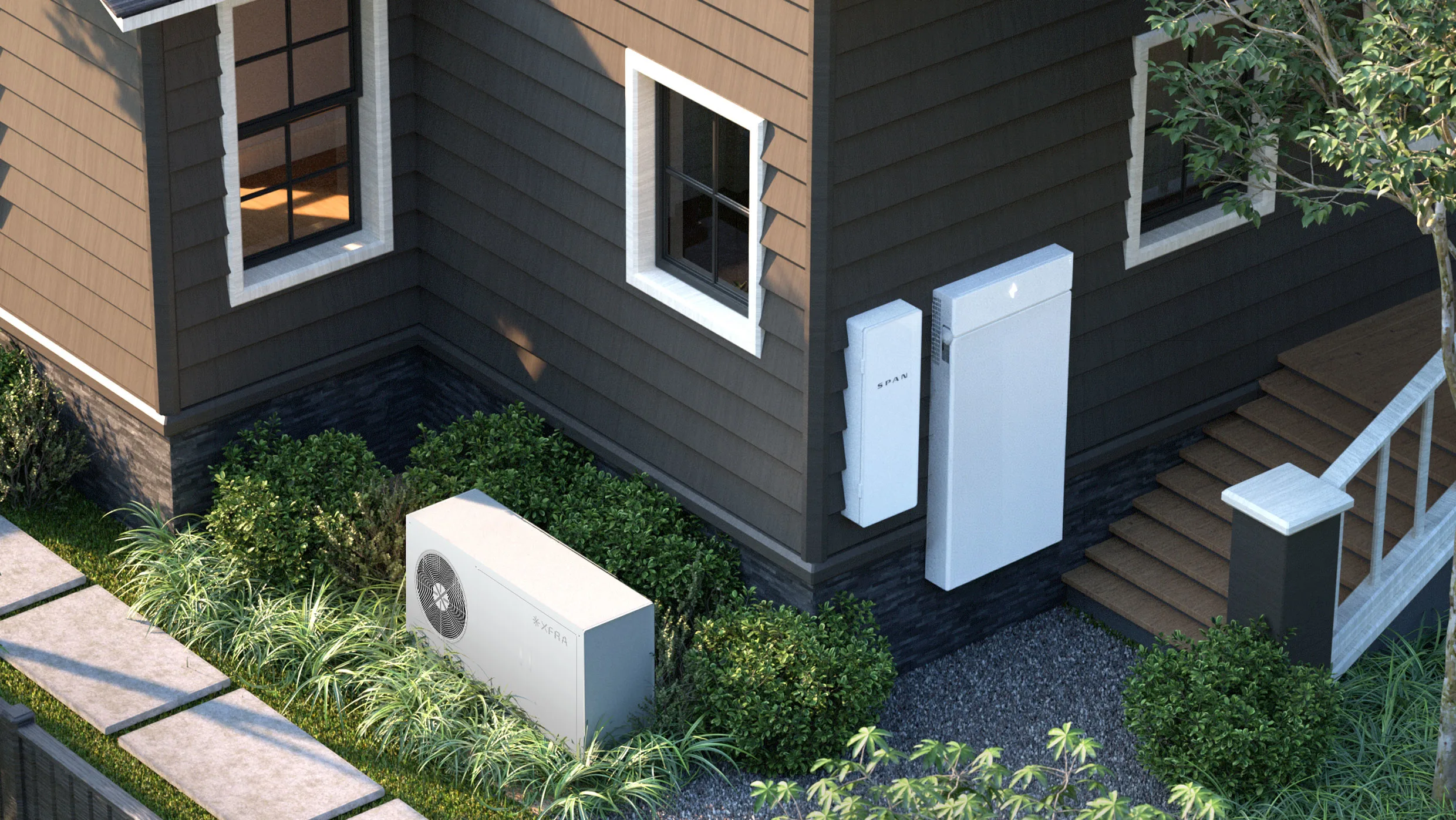
"Span says the average household uses only about 42% of the electricity allotted to it, and rarely reaches peak usage. Span's smart utility boxes detect that, and steer the extra available power over to the GPUs, which live inside a "node" that sits beside the house and looks something like an HVAC unit. The boxes contain 16 Nvidia GPUs, 4 AMD CPUs, 4 terabytes of memory, and a cooling system."
"In exchange for hosting a node, Span pays a big chunk of the homeowner's electricity and broadband internet bills. And there may even be advantages for putting the compute power closer to the end users that are using the chatbots or AI services, Span says. It's a cool idea on paper, but it's almost completely unproven in real-world use."
"Span has been prototyping the units but has yet to install any of them beside real homes. I asked Span VP Chris Lander if his company has done technical studies showing that its brand of distributed computing will be fast and robust enough to handle real AI workloads. "We've done a bunch of technical studies internally [and] a bunch of modeling for different kinds of workloads, both from the business point of view [and] the product point of view and from the technical architecture point of view," he replies."
Nvidia backs an effort to place mini data centers beside homes in HVAC-like boxes. The approach targets the main constraint in data center expansion: electrical grid retrofitting. Span proposes using power already allocated to households by detecting when homes use only part of their allotment and routing extra capacity to GPUs inside a nearby node. Each node contains 16 Nvidia GPUs, 4 AMD CPUs, 4 terabytes of memory, and cooling. Nodes can connect into a network for distributed computing workloads. Homeowners receive a share of electricity and broadband bills in exchange for hosting. The concept offers potential latency benefits by placing compute near end users, but real-world deployment remains largely unproven, with prototypes and internal modeling underway.
Read at Fast Company
Unable to calculate read time
Collection
[
|
...
]