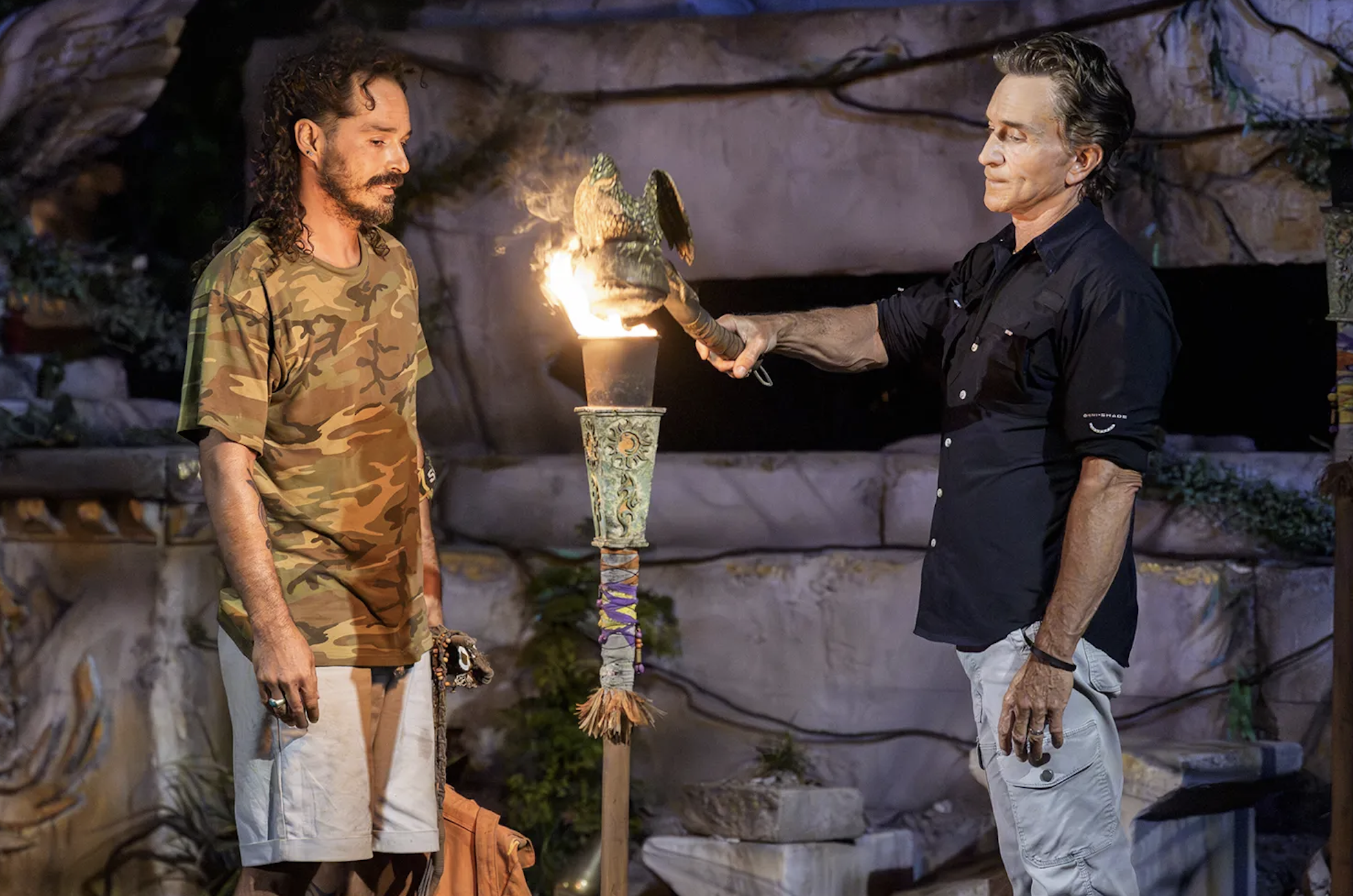
"There is nothing that sucks the life out of a good time like someone self-consciously asking whether you are having fun. Maybe a moment ago, you were having fun, but now, faced with their anxiety (or worse, their reassurance that certainly you are having a good time, maybe even the best you've ever had), your attention is diverted to them: the fear in this other person's eyes and their terror that it might not be everything they hoped it would be. Whatever fun was in the air is sucked out by the insistence that there is so much of it. That is how it feels to watch the 50th season of Survivor."
"As the first season with returning players in almost a decade, producers for Survivor 50 should be able to rely on the cast to create drama, intrigue, and mess. The players should be allowed to sabotage each other and ruin one another's opportunities. That is, after all, the point of the game. But instead of allowing the players to play, Survivor 50 has become a cautionary tale in over-production."
"Take the most recent episode as an example. The players have fully merged into one tribe. They have alliances and plans, hidden idols and secret enemies. If left alone, one assumes they would quickly turn on one another and create sufficient drama. But instead of letting this all play out for the viewer, long-time host and now showrunner Jeff Probst spends every episode insisting we are about to see "the biggest twist in Survivor history" or "the most dramatic tribal council in Survivor history." Maybe, but please... shut up about it!"
"Imagine Andy Cohen, at a Real Housewives reunion, saying "This is the most dramatic reunion in Real Housewives history," or Ariana Maddox coining the "most devastating breakup in Love Island history." That kind of opinion on a season of television does not get to be made by a show's production or its creators. The fans who watch the show get to decide whether the season they are watching is good, and whether they"
Survivor 50 feels like fun being drained by self-conscious insistence that everything is going well. Returning players are expected to create drama, sabotage, and intrigue, but production choices limit how naturally conflict unfolds. After a full merge, alliances, plans, hidden idols, and enemies should lead players to turn on one another, yet episodes repeatedly promise the biggest twist or most dramatic tribal council in the show’s history. This constant framing pulls focus from the game itself and replaces it with manufactured anticipation. The result is a cautionary tale about how over-production can undermine the audience’s ability to judge what is actually compelling.
Read at Defector
Unable to calculate read time
Collection
[
|
...
]