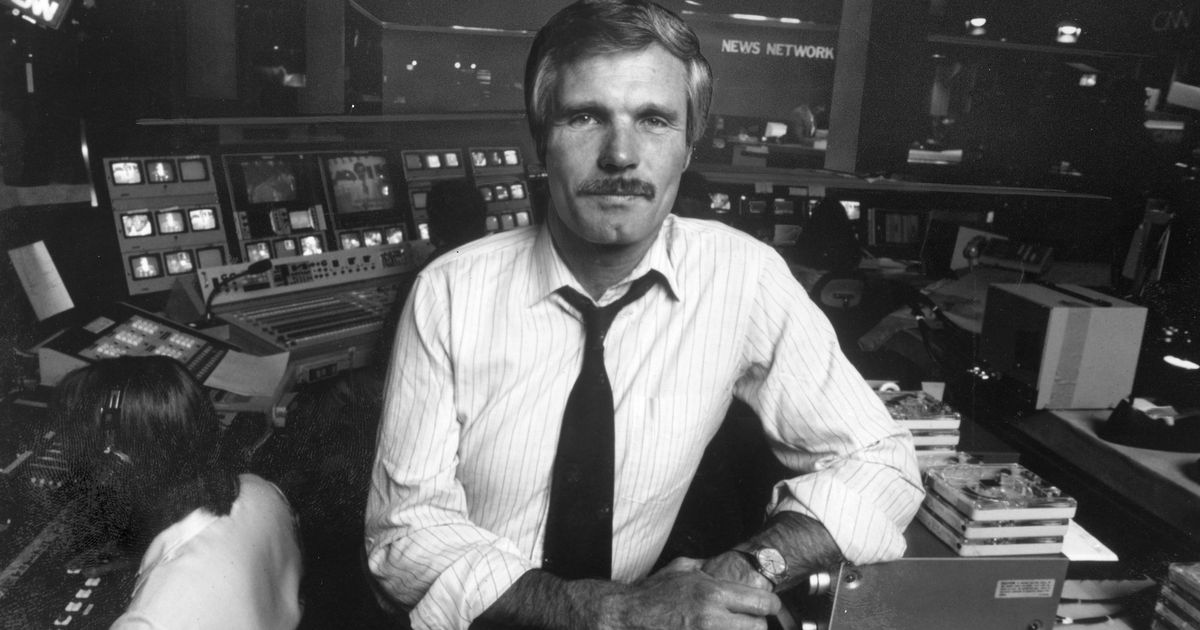
"While he didn't dream up the concept of cable TV or even launch its first culturally significant network - HBO gets that honor - Turner, an outsider who built his empire from Atlanta instead of New York or Hollywood, had an almost dogmatic belief in the industry's potential to break up the monopoly that the Big Three broadcast networks had maintained for decades."
"In 1976, Turner invested millions on the then-questionable notion that viewers around the country would be interested in watching an independent UHF TV station from Atlanta that aired reruns and baseball games. But thanks to the right programming choices and one brilliant bit of branding, Turner's "Superstation," WTBS, soon became must-see TV for millions of viewers."
"It wasn't nearly as sexy an idea as something like MTV, ESPN, or even Turner's own CNN, but it demonstrated that ABC, CBS, and NBC weren't the only places where general-entertainment programming, supported by advertising, could find an audience."
"The Superstation (now known simply as TBS) doesn't usually get talked about in the same breath as those aforementioned cable nets, but its impact was significant, particularly on Gen-X kids who were the first generation raised on cable. Before Viacom carved out a niche for retro TV with Nick at Nite and TV Land, Turner's Superstation served up a steady diet of syndicated sitcom reruns eve"
Turner built a cable empire from Atlanta with a belief that cable could challenge the long-standing dominance of the Big Three broadcast networks. In 1976, he invested millions in an independent UHF station from Atlanta that aired reruns and baseball games. Through programming choices and branding, WTBS became a widely watched “superstation,” proving that general-entertainment programming supported by advertising could succeed beyond ABC, CBS, and NBC. The superstation’s influence was especially strong for Gen-X viewers who grew up with cable. It provided a consistent stream of syndicated sitcom reruns before later cable channels specialized in retro television.
Read at Vulture
Unable to calculate read time
Collection
[
|
...
]