"James IV, King of Scots, never had to worry about elections. This freed him up to satisfy his voracious curiosity with strange experiments: according to one old tale, in 1493 he trapped two children, and a nurse who couldn't talk, on Inchkeith Island in the Firth of Forth. James hoped that the children, deprived of modern influences on their speech, would naturally return to the true, divine language. They supposedly came back speaking Hebrew; for Walter Scott, it was more likely they would scream like their dumb nurse, or bleat like the sheep and goats on the island."
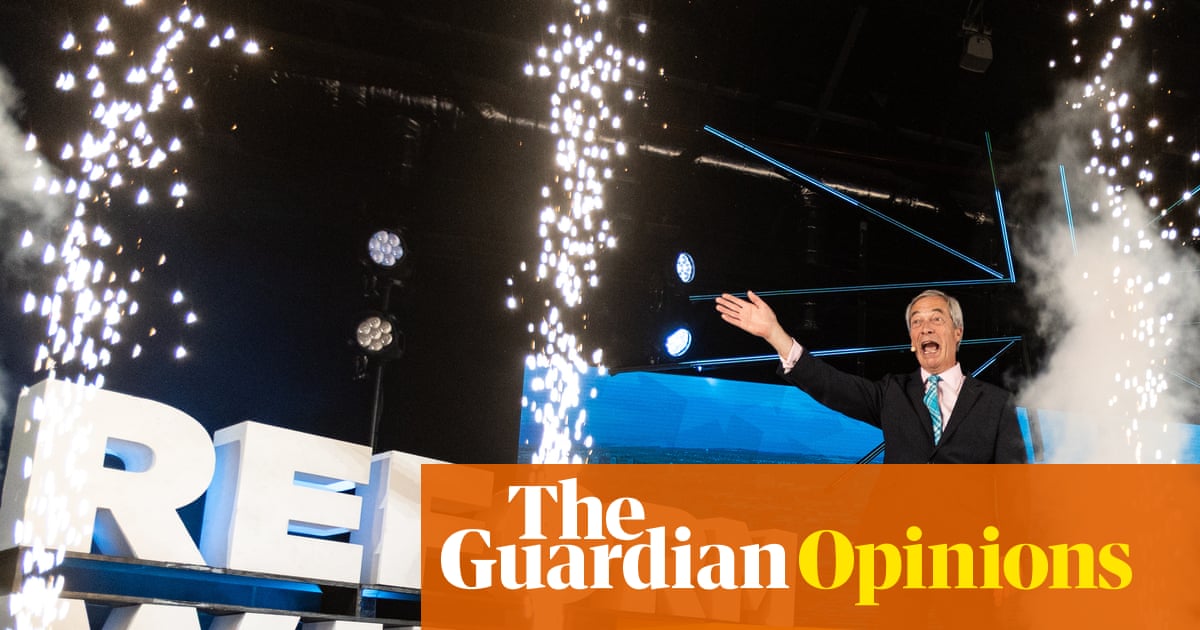
"Last week's Scottish parliament election promised an equally profane revelation. With Reform UK's arrival in Scottish politics, Kenny Farquharson predicted in the Times that election day will be remembered as the day Scottish exceptionalism died. Sheepish voters, dumbly following the rest of Britain, would finally espouse the rightwing populist nativism that had hitherto been halted at Hadrian's Wall. On the surface, the results do suggest a change in tone."
"Reform won 17 seats only two more than the Scottish Greens tying with Scottish Labour for second place. Its surge from nowhere to 16% of the vote is unprecedented at Holyrood, rivalled only by the SNP's 13-point rise in 2011. That is still a long way short of Reform's projected UK-wide share of about 27%. It is only thanks to Scotland's dual-vote electoral system that Reform can celebrate any real success, with all its seats coming from the regional list, elected by proportional representation."
"Its best constituency performance, using the first past the post system, was 34% in the fishing constituency of Banffshire and Buchan Coast, one of the few places in Scotland with a substantial pro-Brexit contingent. Even there, the SNP beat it to the seat by a few hundred votes. Reform's chief victims were the Conservatives, who sustained their worst ever result in Scotland. While polarisation over independence helped the Tories replace Labour as Holyrood's"
James IV’s lack of elections is linked to curiosity-driven experiments, including a tale about trapping children to see if they would return to a divine language. The narrative then parallels modern Scottish politics, where Reform UK’s entry is framed as a potential end to Scottish exceptionalism. Election results show Reform winning 17 seats and reaching 16% of the vote, an unprecedented rise at Holyrood, though still far below projected UK-wide support. Reform’s seat gains come entirely from the regional list under proportional representation, not from first-past-the-post constituencies. The Conservatives suffer their worst Scottish result, while Reform’s strongest constituency showing still falls short of winning seats, with the SNP retaining most advantages.
#scottish-parliament-election #reform-uk #electoral-systems #scottish-politics #independence-and-brexit
Read at www.theguardian.com
Unable to calculate read time
Collection
[
|
...
]