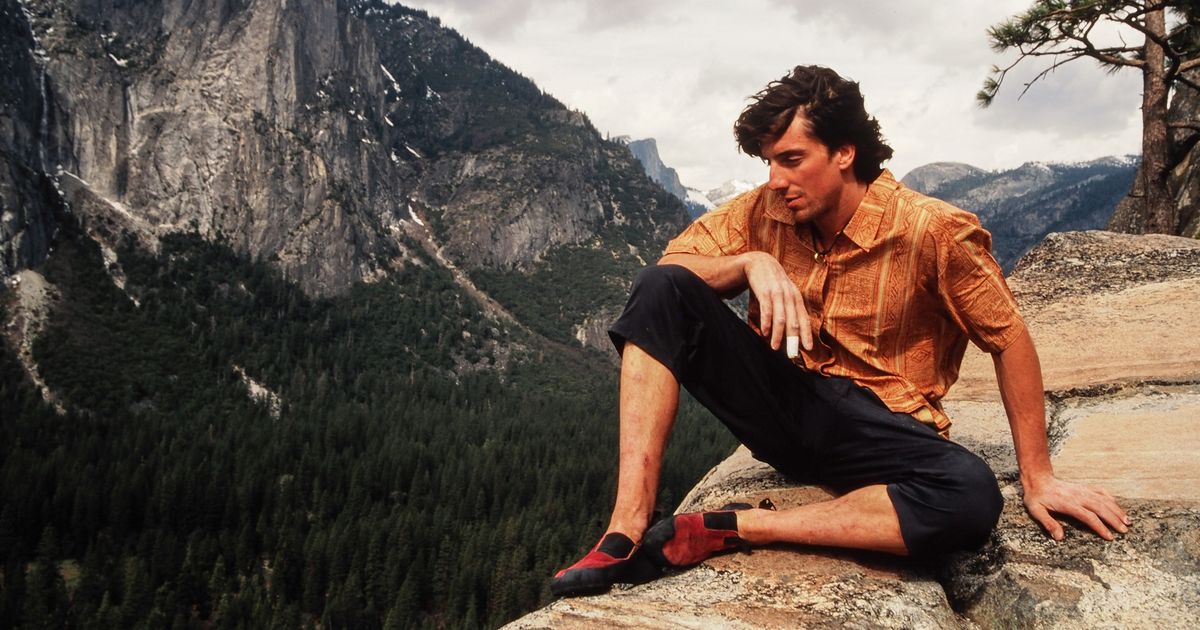
"From the opening minutes of the HBO docuseries The Dark Wizard, when mountain climber and BASE jumper Dean Potter describes his first memory as a dream of falling, it's clear that childhood experience shaped everything that came afterward. His free soloing of mountains. How he eventually pushed harder routes with a parachute strapped to his back. How he chased terminal velocity through BASE jumping off peaks and cliffs all around the world. And, perhaps, his mental-health struggles, his mood swings, and the antisocial behaviors that The Dark Wizard recounts and suggests were the cost of - or maybe the reason for - his athletic prowess."
"Was Potter such a strong climber and a BASE-jumping pioneer because he treated everyone in his life as competition? Or was it his inability to expand his relationships past rivalries that led to his demise? The Dark Wizard doesn't easily settle on an answer, but the way it keeps asking the question makes for a riveting watch."
"Co-directors Peter Mortimer and Nick Rosen are veterans of mountain-climbing documentaries, and their credits with their production company, Sender Films, include a number of definitive works about the subculture. Valley Uprising focused on the recluses and eccentrics who descended on Yosemite in the 1970s and helped grow climbing into a counterculture movement; The Dawn Wall documented Tommy Caldwell and Kevin Jorgeson's grueling climb up El Capitan's face in Yosemite; and the Reel Rock series of short films follows climbers all over the world as they make an array of impressive ascents."
"This is Mortimer and Rosen's longest work devoted to one climber, and over its four episodes, The Dark Wizard approaches the myth of Potter from a number of angles that all circle a similar feeling: the cognitive dissonance of experiencing something like sympathy for someone who, in his own words, treated nearly everyone like a"
Dean Potter’s early memory of dreaming about falling is presented as a foundation for his later pursuits. His free solo climbs, increasingly difficult routes, and BASE jumps with a parachute are linked to a search for speed and terminal velocity. The account also connects his mood swings, antisocial behaviors, and mental-health struggles to the cost of, or cause of, his athletic intensity. The narrative repeatedly raises whether his strength came from treating people as competition or from an inability to build relationships beyond rivalries. The portrayal keeps the cause of his demise ambiguous while emphasizing the tension between admiration and concern.
Read at Vulture
Unable to calculate read time
Collection
[
|
...
]