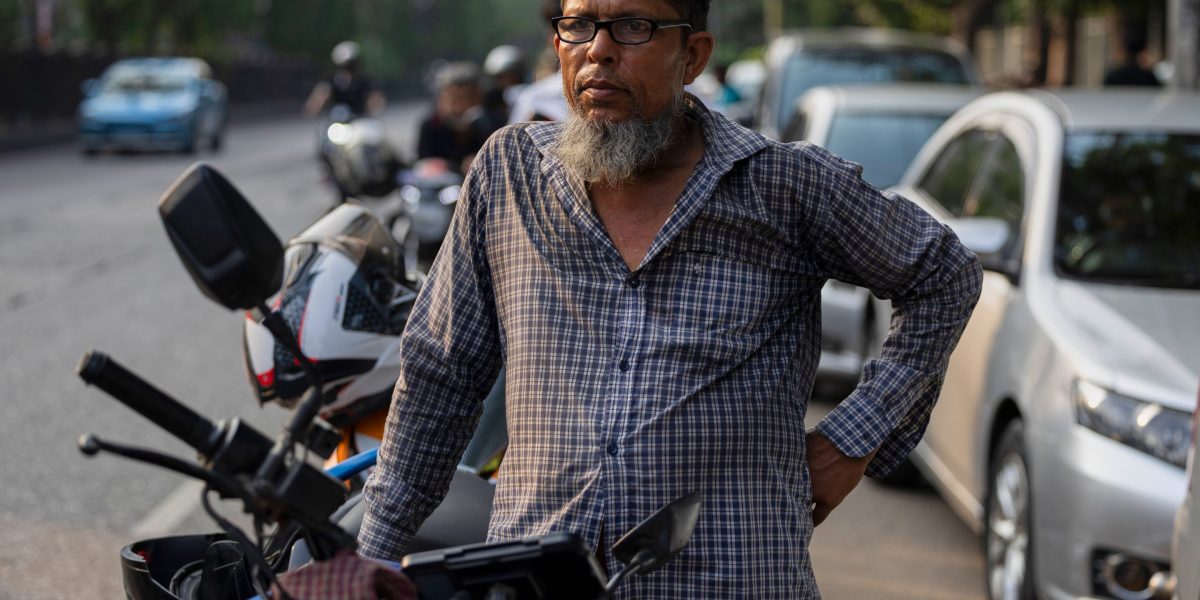
"Tariqul Islam lost his savings after setbacks in his clothing business about a year and a half ago and turned to ride-sharing on his motorbike to make ends meet. Until recently, he spent hours in fuel lines as supply disruptions linked to the war in Iran ripple into Bangladesh. The 53-year-old father of four fears the strain will worsen if the war drags on, saying long hours waiting for fuel have sharply cut his income and made it increasingly difficult to support his family in Dhaka, the nation's capital, including a daughter at university and a son in college."
""My family was managing fairly well through ride-sharing," he said. "But after the fuel shortage began, I would buy fuel one day and run the bike for two days. As a result, I had to sit idle for one day, which reduced my income." The strain in Islam's household reflects a broader squeeze in Bangladesh, heavily dependent on imported fuel, where energy shortages have disrupted daily life, slowed industrial output and raised concerns about economic growth as global tensions push up costs and strain supplies."
"Conditions have eased slightly in recent days, with shorter queues at fuel stations after the government increased supplies, but concerns persist across sectors. Across Asia, governments are facing similar strains as the war-driven surge in energy prices rattles economies dependent on imported oil and gas. The continent is exposed because it relies on imported fuel, much of it passing through the Strait of Hormuz - a chokepoint for about a fifth of global oil and natural gas trade."
"Higher fuel costs are leading to inflation and squeezing household budgets, while industries from manufacturing to transport are facing rising operating costs and supply disruptions. The Asian Development Bank in late April cut growth forecasts for developing Asia and the Pacific, warning that war-driven energy disruptions would slow economies and fuel inflation. It now expects growth of 4.7% in 2026,"
Tariqul Islam lost savings after setbacks in his clothing business and began ride-sharing on his motorbike to support his family. Supply disruptions linked to the war in Iran have caused long waits in fuel lines in Dhaka, cutting his income and making it harder to pay for his children’s education. He describes buying fuel for one day and being able to run the bike for only two days, leaving him idle for another day. Bangladesh relies heavily on imported fuel, so energy shortages have slowed industrial output and strained household budgets. Conditions have eased slightly after increased government supplies, but concerns remain. Across Asia, higher energy prices are driving inflation and raising operating costs, while the Asian Development Bank has cut growth forecasts for developing economies.
Read at Fortune
Unable to calculate read time
Collection
[
|
...
]