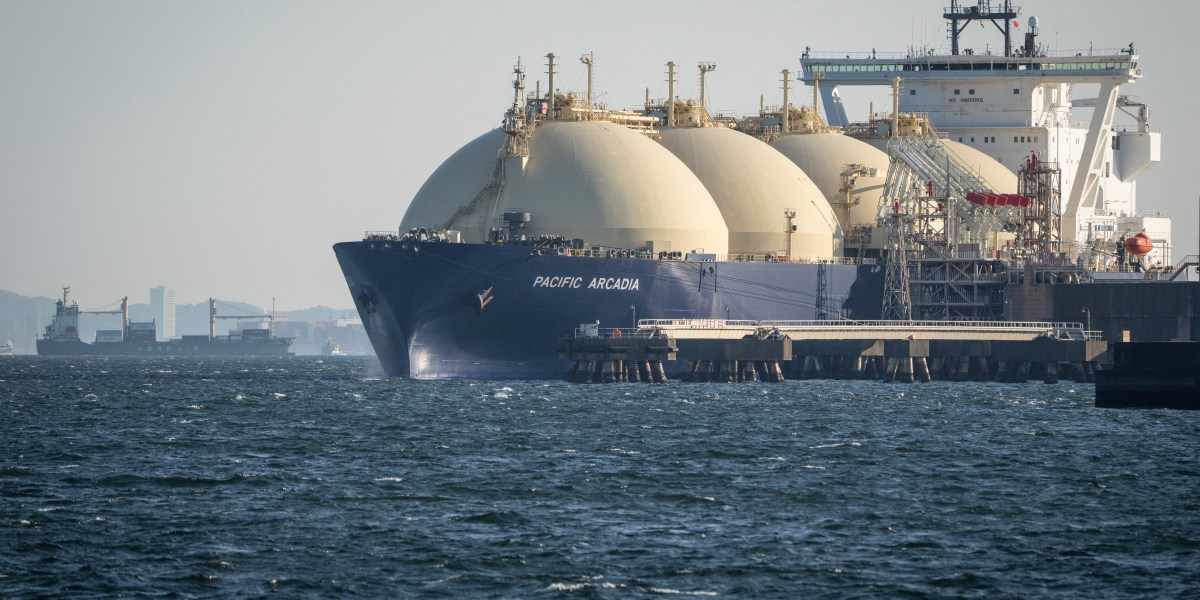
"Global oil inventories are approaching their lowest point in eight years, with Goldman Sachs analysts estimating that stocks could fall to 98 days of global demand by the end of May. Yet if you're looking at the markets, things look relatively rosy. Brent crude prices are hovering around $100 a barrel, down from a post-Iran war peak of $126 in April. West Texas Intermediate crude also stood around $100 a barrel in the past week, down from its April 7 high of $113. (Both benchmarks are still far above their pre-war levels)."
""The market has been complacent," Chen Chien-Ming, an associate professor of operations management at Singapore's Nanyang Technological University (NTU), says. "There's clearly an oil shortage, but the futures market is heavily suppressed by market-moving headlines and investors' wishful thinking that the war will soon end.""
"Experts and analysts estimate that oil prices could skyrocket past $150 a barrel if the Strait of Hormuz remains closed through the end of June. Chen estimates that 20 million barrels of oil passed through the pre-war Strait of Hormuz each day; with the Strait closed for close to 70 days, the deficit now runs to more than 1 billion barrels."
"Asia, with its deep reliance on fuel from the Middle East, is especially at risk. "Asia is the most exposed, because most countries, aside from Malaysia and Indonesia, are big oil importers," says Dutt Pushan, a professor of economics and political science at business school INSEAD. "They're also heavily industrialized, so they need a lot of natural gas and electricity.""
Global oil inventories are nearing their lowest level in eight years, and Goldman Sachs estimates stocks could drop to 98 days of global demand by the end of May. Despite this, Brent and West Texas Intermediate prices hover near $100 per barrel, down from April highs, though still above pre-war levels. Analysts warn that the futures market is being suppressed by headlines and optimism that the war will end soon. If the Strait of Hormuz remains closed through the end of June, prices could rise above $150 per barrel. With about 20 million barrels per day normally passing through the strait, a closure of roughly 70 days implies a deficit exceeding 1 billion barrels. Asia faces heightened risk because most countries are major oil importers and heavily industrialized, making them vulnerable to recession and higher food and fuel prices.
#oil-inventories #crude-oil-prices #strait-of-hormuz #middle-east-energy-disruption #asia-energy-imports
Read at Fortune
Unable to calculate read time
Collection
[
|
...
]