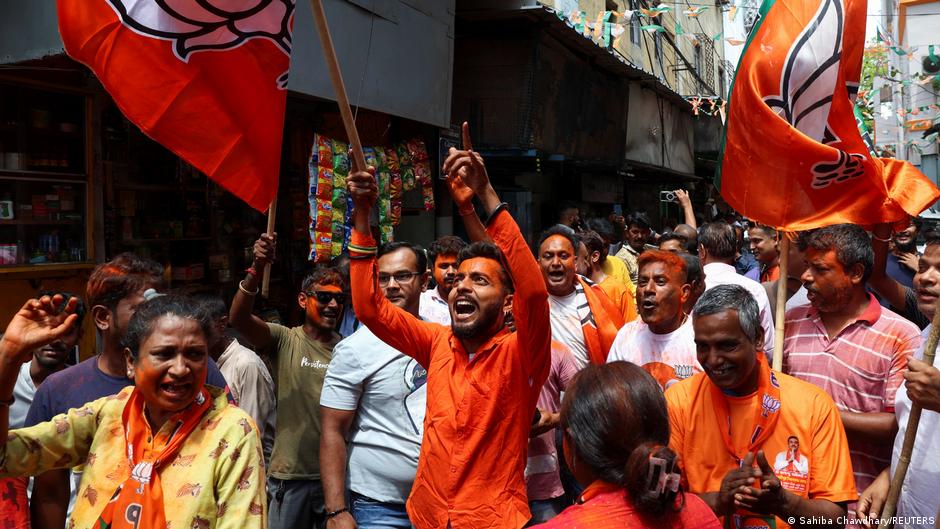
"Religious and ethnic divisions are growing deeper in Bengal, a region divided between India and Bangladesh, as politicians on both sides of the border seek to capitalize on religious sentiment."
"The region once boasted a "shared identity" which "allowed people to be both Bengali and Hindu, or Bengali and Muslim," she told DW. "But on both sides of the border, political narratives are increasingly framing identity in religious terms, sidelining language, culture and heritage.""
"In Bangladesh, the February parliamentary elections marked a major moment for Islamist politics, with Jamaat-e-Islami winning nearly one third of the votes nationwide its strongest showing yet. In India's West Bengal, Hindu nationalist BJP surged from about 10% vote share in 2016 to nearly 46% this year."
"At the time, Bengal was the center of anti-colonial resistance, and the partition aimed to break this unity by setting the Hindu-majority west against the Muslim-majority east. London hoped to undermine the growing nationalist movement before it could seriously challenge British rule."
Religious and ethnic divisions are deepening in Bengal, a region split between India and Bangladesh. Islamist politics gained major momentum in Bangladesh’s February parliamentary elections, with Jamaat-e-Islami winning nearly one third of votes nationwide. In India’s West Bengal, the Hindu nationalist BJP rose sharply from about 10% vote share in 2016 to nearly 46% and won 207 of 294 assembly seats under first-past-the-post. An anthropologist warns that political rhetoric is shifting in an ill-motivated way, replacing a shared Bengali identity with religious framing. Historical partitions, including the 1905 British division of Bengal along religious lines, aimed to weaken anti-colonial unity and set Hindu-majority areas against Muslim-majority areas.
#bengal #religious-identity-politics #bangladesh-elections #west-bengal-elections #partition-history
Read at www.dw.com
Unable to calculate read time
Collection
[
|
...
]