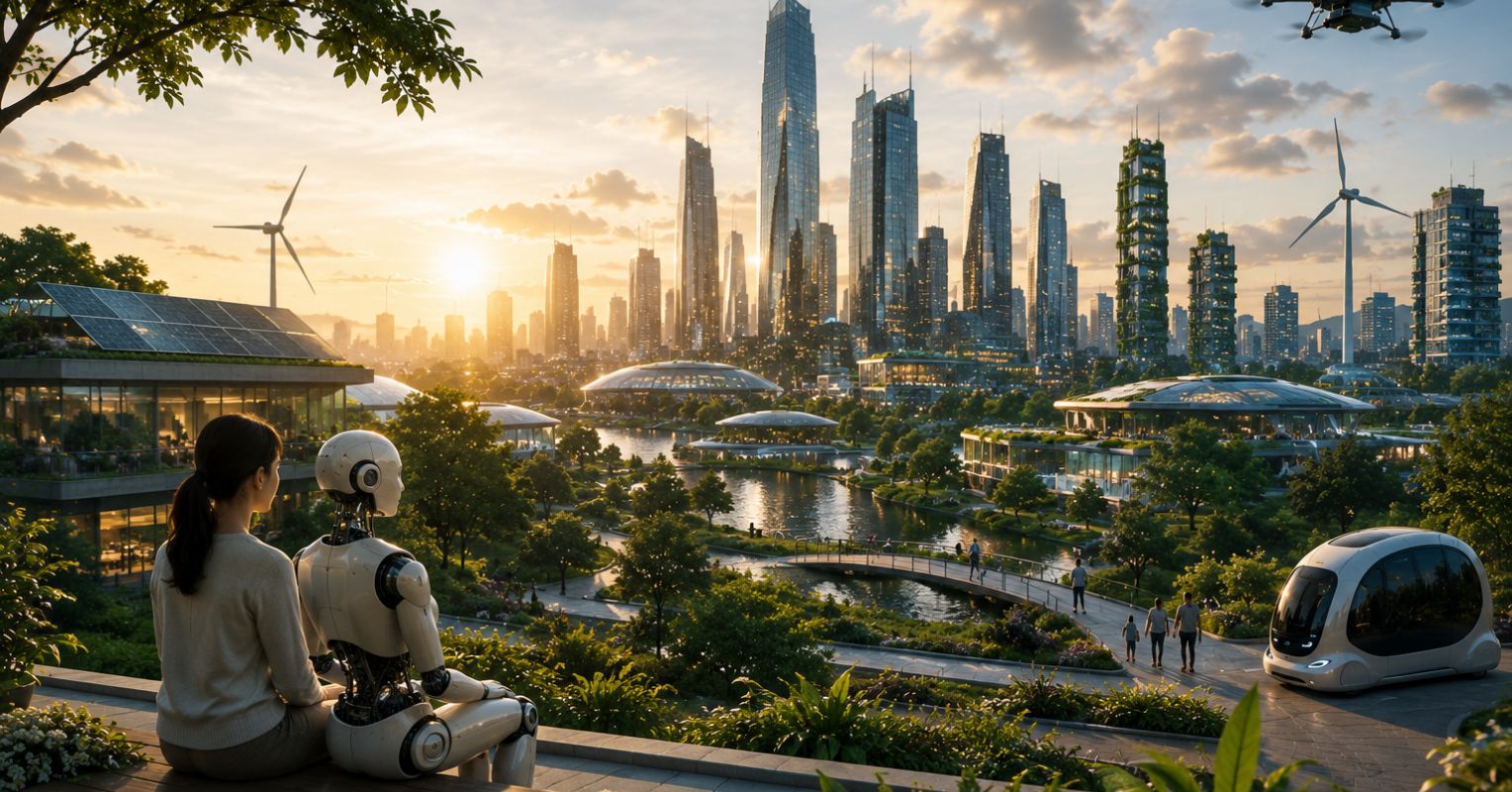
"Society 5.0, first promoted in Japan, envisions a "super-smart" society in which digital systems and physical life are deeply connected, with human well-being at the center. Industry 5.0, advanced especially by the European Commission, builds on Industry 4.0 but shifts the focus from efficiency alone to a more sustainable, resilient, and human-centered economy."
"Industry 5.0 can provide the technological foundation - AI, robotics, big data, digital twins, smart materials, and advanced networks - while Society 5.0 supplies the broader social goal: technology that supports inclusion, sustainability, health, and quality of life."
"The shift matters because the previous industrial vision, Industry 4.0, was largely built around automation, productivity, and smart manufacturing. That brought enormous gains, but also understandable anxieties: job displacement, data privacy, surveillance, skill gaps, and a work culture in which people may feel they are adapting to machines rather than the other way around."
"Industry 5.0 tries to correct that imbalance. The European Commission describes it as complementing Industry 4.0 by placing research and innovation in the service of a sustainable, human-centric, and resilient industry, one that moves beyond shareholder value toward wider stakeholder value."
Technology promises smarter systems, faster decisions, automation, personalized medicine, self-driving systems, and AI that processes vast information. A quieter question remains: whether these advances improve human life. Relationships 5.0, Society 5.0, and Industry 5.0 frame that question around human well-being. Society 5.0, promoted in Japan, envisions deeply connected digital and physical life with well-being at the center. Industry 5.0, advanced by the European Commission, builds on Industry 4.0 but shifts from efficiency alone toward sustainability, resilience, and human-centered outcomes. Industry 5.0 provides foundations such as AI, robotics, big data, digital twins, smart materials, and advanced networks, while Society 5.0 defines social goals like inclusion, sustainability, health, and quality of life. Industry 4.0’s automation focus created anxieties about jobs, privacy, surveillance, and skill gaps, and Industry 5.0 aims to rebalance toward wider stakeholder value.
Read at Psychology Today
Unable to calculate read time
Collection
[
|
...
]