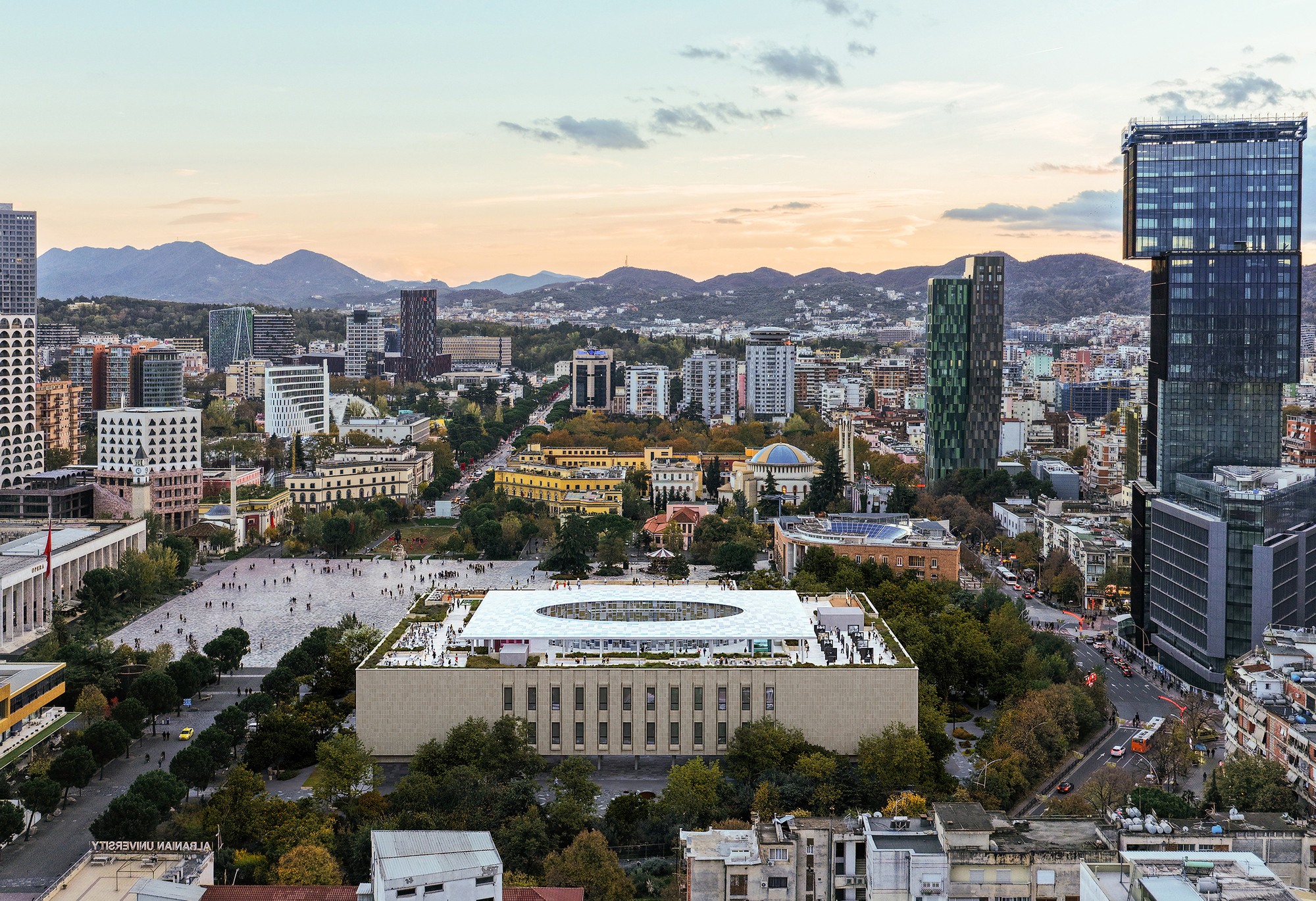
"The initial phase of the complete renovation project for the National Historical Museum in Tirana is approaching completion. The project was commissioned by the Ministry of Economy, Culture, and Innovation of Albania and UNOPS, and financed by the European Commission through the EU for Culture (EU4C) program in Albania. The full restoration of the museum's 21,400 square meters is planned in two phases, led by Rotterdam-based Casanova + Hernandez Architects in collaboration with local partner iRI."
"The first phase consists of the restoration of the existing building located in Skanderbeg Square and is expected to be completed this year, enabling the immediate start of the second phase focused on the redesign of the interior spaces. The project is part of Tirana's ongoing urban transformation. According to Casanova + Hernandez Architects, this transformation reflects Albania's transition from decades of communist isolation toward a contemporary Mediterranean capital."
"In recent years, this shift has materialized through towers designed by international architects, alongside public, institutional, and sports-related developments, resulting in a range of high-profile projects, from mixed-use vertical developments and pedestrian-oriented streets to eco-conscious campuses and civic facilities. Within this context, the renovation of the National Historical Museum represents a different type of intervention focused on the adaptation of an existing cultural institution."
"The National Historical Museum was originally built in the 1980s. According to the restoration architects, the institution initially presented "a linear, state-controlled narrative from prehistory to the Antifascist War." Spatially, this translated into an architectural sequence that guided visitors through a fixed narrative, which post-communist updates to the museum did not substantially alter."
The complete renovation of the National Historical Museum in Tirana is approaching completion for its first phase. The project is commissioned by Albania’s Ministry of Economy, Culture, and Innovation and UNOPS, and financed by the European Commission through the EU for Culture (EU4C) program. Restoration covers 21,400 square meters planned in two phases. The first phase restores the existing building in Skanderbeg Square and is expected to finish this year, allowing the second phase to begin immediately with interior redesign. The renovation aligns with Tirana’s urban transformation from communist isolation toward a contemporary Mediterranean capital. The museum, built in the 1980s, originally presented a linear, state-controlled narrative from prehistory to the Antifascist War, with a visitor sequence that post-communist updates did not substantially change.
#museum-renovation #tirana-urban-transformation #eu4c-funding #cultural-heritage-restoration #architectural-redesign
Read at ArchDaily
Unable to calculate read time
Collection
[
|
...
]