#currency-risk
#currency-risk
[ follow ]


from24/7 Wall St.
1 week agoMonthly dividend ETF posts 13% return while Wall Street questions long-term sustainability of currency risk
EMLC holds a broad mix of about 507 bonds issued by emerging market governments, all denominated in local currencies such as the Brazilian real, South African rand, Turkish lira, and Mexican peso. Almost the entire portfolio is sovereign debt at roughly 99 percent, so the fund is essentially a pure government credit exposure.
Business
Miscellaneous
from24/7 Wall St.
1 month agoiShares MSCI Japan ETF Captures a Once-in-a-Generation Shift in Japanese Stocks
Japan's economy has fundamentally shifted from a decades-long stagnation story, with Japanese corporations now improving capital efficiency and rewarding shareholders, making EWJ an attractive vehicle for US investors to access this structural change.
from24/7 Wall St.
1 month agoRetirees Are Chasing EDIV's Yield While Missing Its Biggest Risk
EDIV tracks a yield-weighted index of dividend-paying companies across emerging markets. Rather than weighting by market cap, the fund tilts toward companies paying the highest dividends relative to their size. Banks, telecom operators, and consumer staples dominate the portfolio. The top positions include Brazilian beverage giant Ambev, Brazilian bank Bradesco, China Railway Group, and a cluster of Taiwanese industrials and telecom names.
Retirement
from24/7 Wall St.
1 month agoRetirees Are Eyeing EMLC's 5.75% Yield While Wall St Bets Against It
EMLC holds government bonds issued by emerging market countries in their own currencies, such as Brazilian reals, Indonesian rupiah, and Mexican pesos. Each month, EMLC passes interest income to shareholders as a distribution. Recent monthly payments have ranged from $0.1149 to $0.1390 per share, and the fund has made 161 consecutive monthly payments since its July 2010 inception with no gaps or suspensions.
Business
Europe news
from24/7 Wall St.
1 month agoPoland's Wild Stock Market Is Europe's Best Kept Secret: Here's the ETF to Play The Run
Polish equities significantly outperform Western European stocks, with EPOL offering US investors diversified exposure to Poland's emerging market economy through a single-country ETF.
Business
from24/7 Wall St.
1 month agoiShares' Core ETF Has Been Beating the S&P 500 for 3 Years And Nobody's Talking About It
International developed markets outperformed the S&P 500 over the trailing 12 months, with IEFA returning 22.88% versus 17.69%, driven by strong earnings growth, dividend income, and sector diversification away from US technology dominance.
Business
from24/7 Wall St.
1 month agoMercadoLibre vs Sea: Which Emerging Market Giant Punished After Earnings Is the Better Buy?
MercadoLibre and Sea Limited both experienced stock declines despite strong revenue growth, driven by different risk factors: MELI faces currency volatility in Latin America while SE confronts competitive pressures and margin concerns in Southeast Asia.
Business
from24/7 Wall St.
2 months agoHalf of Global Market Cap Lives Outside the U.S. and BKIE Costs Almost Nothing to Own It
BKIE offers ultra-low-cost exposure to developed international markets at 4 basis points annually, with consistent outperformance versus EFA driven by fee savings over multiple time horizons.
Manchester United
from24/7 Wall St.
2 months agoManchester United Just Proved the Ratcliffe Cost-Cutting Plan Is Working - Sort Of
Manchester United achieved a profitability turnaround in Q2 FY2026 driven by cost discipline, with adjusted diluted EPS improving from -$0.05 to +$0.03, though revenue declined due to absence of UEFA competition and expired partnership deals.
Business intelligence
from24/7 Wall St.
2 months agoThere Is A Hidden Currency Risk Inside KXI That Most Investors Never See Coming
KXI, a global consumer staples ETF, has surged 14% year-to-date driven by defensive rotation and low costs, but currency headwinds from a strong dollar pose a significant hidden threat to future earnings.
Fashion & style
fromLondon Business News | Londonlovesbusiness.com
3 months agoH&M brushes off a 'challenging environment' - London Business News | Londonlovesbusiness.com
H&M's operating profit rose 6% to £1.5bn, driven by a 38% final-quarter increase from strong Black Friday sales, despite expected currency-related sales headwinds.

from24/7 Wall St.
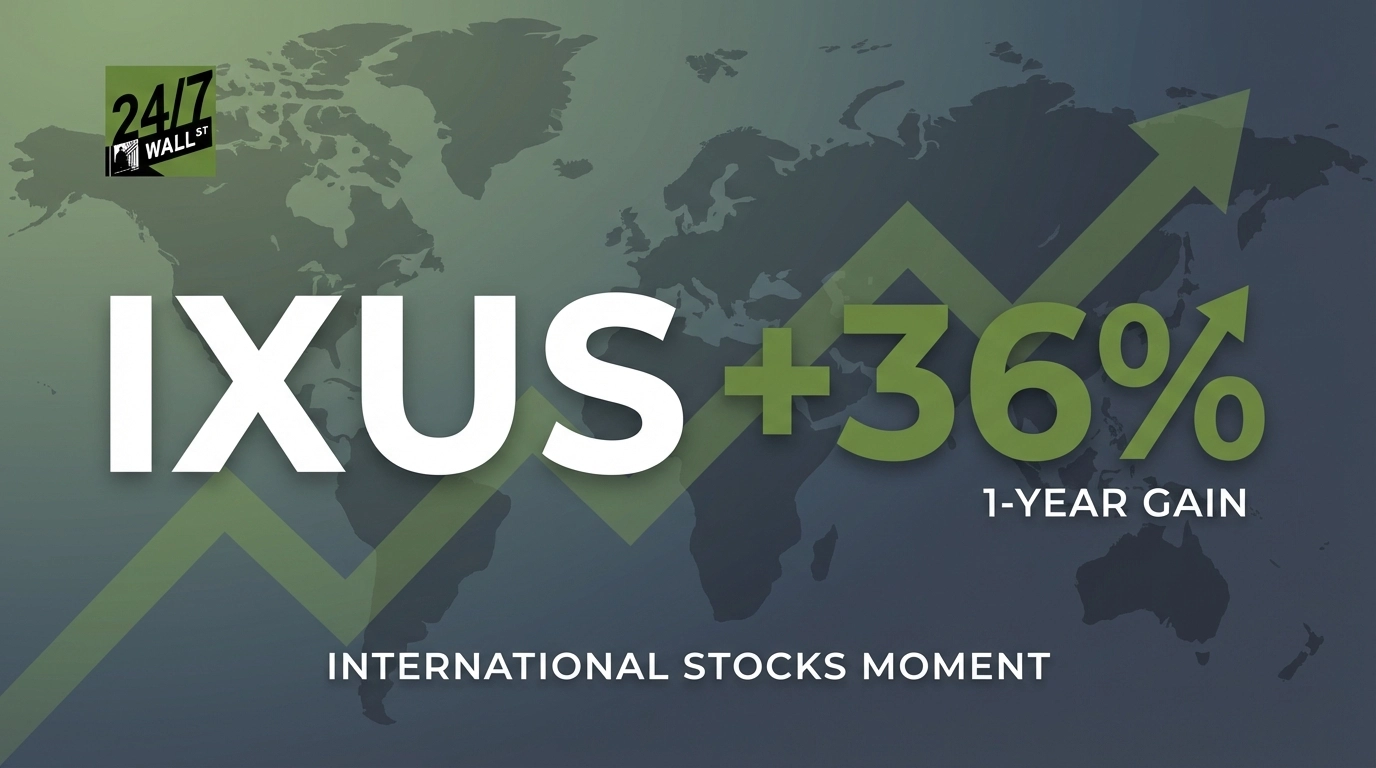
4 months agoInvestors Say Europe Is Cooked, But JP Morgan's Euro ETF Is Destroying The S&P and Hot AI Stocks
JPMorgan BetaBuilders Europe ETF (NYSEARCA:BBEU) provides low-cost exposure to developed European large caps. With a 0.09% expense ratio and $8.4 billion in assets, it tracks hundreds of European stocks weighted by market cap. The fund returned 36.9% year-to-date through late December 2025, more than doubling the S&P 500's 17.8% gain. The return engine is straightforward appreciation of underlying positions. No derivatives, no leverage, no options overlay.
Miscellaneous
Business
fromFortune
7 months agoTrump's overnight demand for 100% tariffs on pharmaceuticals will be 'a meaningful commercial hit for U.S. consumers,' top analyst says | Fortune
AI-driven optimism and expected Fed rate cuts sustain the rally but risks include growth shocks, Fed policy surprises, and a renewed dollar decline.
fromFast Company
7 months agoSouth Korea can't make the same U.S. trade deal as Japan. Here's why
South Korea's negotiations with the U.S. on a trade deal to lower tariffs have stalled amid concerns over the foreign exchange implications of a $350 billion investment fund, part of an agreement reached with President Donald Trump in July. What has Japan agreed to? South Korean officials, who had argued that the package would mostly comprise loans and guarantees with limited direct investment, said last week they could not accept terms similar to those of a $550 billion investment package finalised this month by Japan.
World news
[ Load more ]