#world-war-ii
#world-war-ii
[ follow ]

fromwww.theguardian.com
3 days agoNew Zealand officials reject comfort women' statue after objections from Japan
The local council declined an application to install the statue after public consultation, with concerns raised about potential diplomatic tensions with Japan. The Japanese ambassador warned that the statue could cause division within New Zealand's multi-ethnic society.
NYC LGBT
fromThe Art Newspaper - International art news and events
1 week agoCaravaggio and Rubens works destroyed by fire in Second World War are brought back to (digital) life
The glass negatives have tremendous documentary value—not only for the museum and the collection itself but also for the public. They provide a crucial visual record of significant artworks that were lost.
Arts

fromwww.businessinsider.com
1 week agoThe USS Torsk was the last US Navy submarine to sink an enemy warship until the war with Iran. Take a look inside.
For 81 years, the USS Torsk held its claim to fame as the last US Navy submarine to sink an enemy ship in combat. Then, a US Navy submarine torpedoed an Iranian warship on March 4 as part of Operation Epic Fury, sinking an enemy ship for the first time since Torsk's World War II battle in 1945.
History
fromwww.scientificamerican.com
2 weeks agoElizabeth Roboz Einsteinthe determined genius behind a multiple sclerosis breakthrough
Elizabeth Roboz Einstein's journey began on May 15, 1940, when she boarded the Conte di Savoia, an Italian steamliner, leaving behind her family in Hungary as World War II escalated. This voyage was not a luxury cruise but a desperate evacuation for many, including 600 Central European refugees fleeing the advancing German troops.
History
fromwww.theguardian.com
2 weeks agoTruth & Treason review persuasive, punchy treatment of teenager who takes on the Gestapo
Hubener's main motivation, apparently, was that he wanted people to know the truth, hence the movie's alliterative title. It would be oh-so-easy to dismiss this film as maladroit Christian saviour-touting melodrama, however historically accurate it might be.
Film
fromianVisits
2 weeks agoBritain's 'other Bletchley Park' opens to the public this summer
Trent Park House was transformed into a covert interrogation centre, where captured senior German officers were held in comfortable surroundings. Unknown to them, their conversations were secretly recorded using an extensive network of hidden microphones embedded throughout the house.
London
fromArchDaily
3 weeks agoVilla in Recco / Gosplan + Giordano Hadamik Architects + caarpa + studio.skey
On November 10, 1943, the city of Recco was destroyed forever. Twenty-two bombers of the British Royal Air Force dropped 33 tons of explosives, attempting to demolish the railway bridge, an iconic element of the town and a crucial point for the supply of Nazi-fascist troops.
Renovation
Parenting
fromSilicon Canals
1 month agoPeople born in the 1950s display a type of resilience modern generations mistake for coldness - but it's actually a survival adaptation built from being raised by traumatized parents who couldn't afford to process their own pain - Silicon Canals
Generational trauma from war leads to emotional suppression in families, affecting how feelings are expressed and understood across generations.
#peaky-blinders



Film
fromConsequence
1 month agoTim Roth, Steven Knight, and Tom Harper on Peaky Blinders: The Immortal Man: Podcast
Peaky Blinders: The Immortal Man concludes the Shelby saga during World War II with escalated stakes, featuring Tim Roth as a grounded antagonist and Tommy Shelby facing his final reckoning.
Books
fromSlate Magazine
1 month agoA Radiant New Novel Uses Time Travel in a Wonderfully Fresh Way
Francis Spufford's novel Nonesuch features a time-travel plot centered on a fascist sympathizer attempting to prevent Britain's declaration of war, with conflict between her and a working-class secretary driving the narrative.
History
fromThe Mercury News
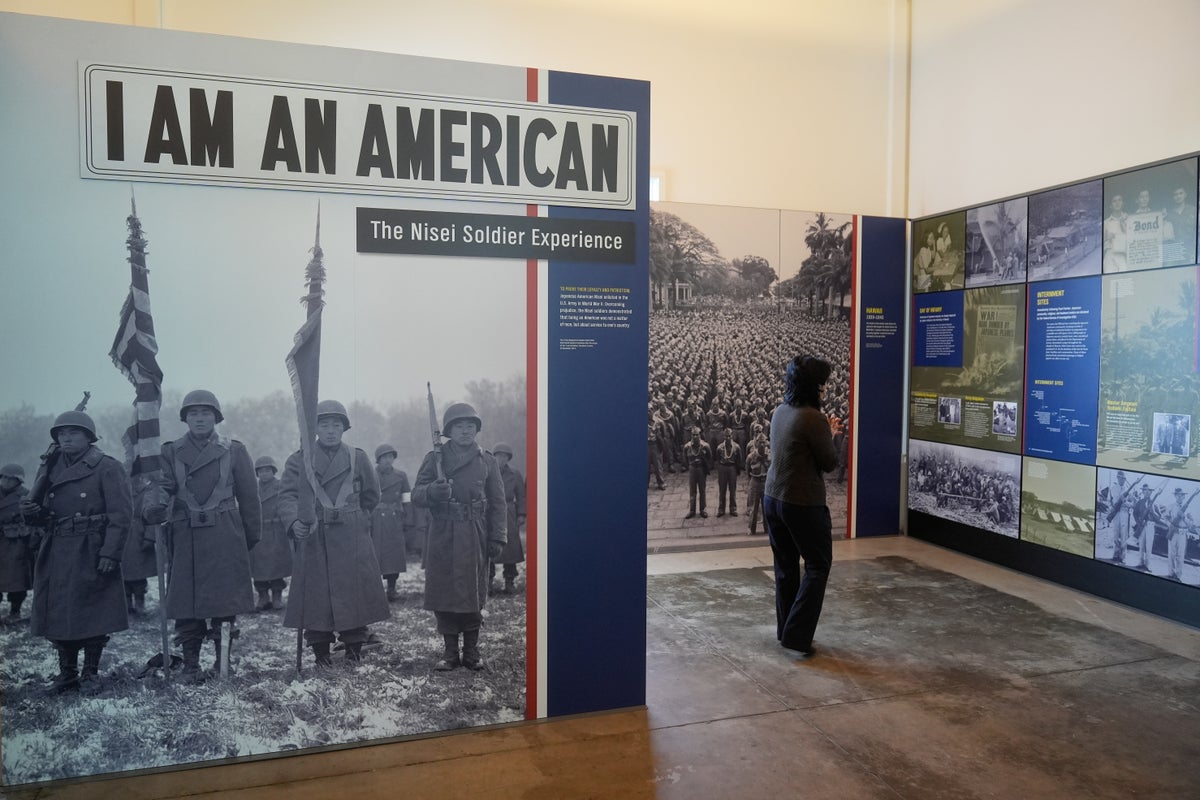
1 month agoSan Francisco exhibit honors Japanese American who fought for US in WWII while their families were locked up
Japanese American Nisei soldiers fought for the United States in World War II while their families were imprisoned in internment camps, and their stories are now being honored through a traveling exhibit in San Francisco.
NYC music
fromwww.berkeleyside.org
1 month agoCelebrating Betty Reid Soskin's life: Civil Rights storyteller, park ranger, songstress
Betty Reid Soskin, a National Park Service ranger who died at 104, transformed historical narratives by centering Black workers' experiences and discrimination during World War II at the Rosie the Riveter museum.
fromBusiness Insider
2 months agoI toured the USS Lionfish, a Balao-class submarine that rescued downed pilots in World War II. Take a look inside.
The World War II submarine USS Lionfish was part of America's "Silent Service." Despite comprising less than 2% of all US Navy vessels during World War II, submarines like the USS Lionfish sank 55% of Japanese vessels in battle. This once-fearsome vessel is now a 311-foot-long museum exhibit, allowing the public to learn about its top-secret wartime operations. Take a look inside the USS Lionfish.
History




fromFast Company
3 months agoYou can finally see the Met Opera outside NYC: These movie theaters are showing 'Kavalier and Clay' this weekend
Although this work is considered a modern opera, the action in The Amazing Adventures of Kavalier and Clay takes place during World War II. Two Jewish cousins work together to create an anti-fascist superhero, the "Escapist." They hope the comic book adventures they write inspire others to fight against Nazism. The three distinct settings where the plot unfolds allow the audience to experience New York City, Prague, and a comic book reality.
Music


History
fromwww.mercurynews.com
3 months agoToday in History: January 9, Americans arrive in Lingayen Gulf during World War II
Jan. 9 records significant historical events across centuries and notable celebrity birthdays, including wartime landings, political milestones, disasters, and public figures' birthdays.

fromBuzzFeed
3 months ago50 Extremely Fascinating Pictures Of People Throughout History I Can Pretty Much Guarantee You've Never Heard Of
1. The very first iteration of Ronald McDonald was created by Willard Scott in 1963: 2. The two people depicted in Grant Wood's "American Gothic" actually exist. This is what they looked like: 3. This is Margaret Gorman, the woman who won the very first Miss America competition in 1921: 6. This is Conrad Veidt, the man whose performance in the 1928 film The Man Who Laughs inspired the look of the iconic villain the Joker:
Film
National Hockey League
fromEyes On Isles
4 months agoNY Islanders fans should tune in early for special national anthem on Saturday night
Dominick Critelli, a 104-year-old World War II veteran from Floral Park, will perform the national anthem on saxophone before the Islanders-Rangers game at UBS Arena.
fromwww.mercurynews.com
4 months agoToday in History: December 23, Franco Harris makes the Immaculate Reception'
Today is Tuesday, Dec. 23, the 357th day of 2025. There are eight days left in the year. Today in history: On Dec. 23, 1972, in an NFL playoff game between the Pittsburgh Steelers and the Oakland Raiders, Steelers running back Franco Harris scored a game-winning touchdown on a deflected pass with less than 10 seconds left. The Immaculate Reception, as the catch came to be known, is often cited as the greatest NFL play of all time.
History



Film
fromwww.theguardian.com
4 months agoThe antithesis to Nazi ideology': how Pippi Longstocking was born to stand up to Hitler
Pippi Longstocking originated during World War II, shaped by wartime fears and continues to exert lasting international cultural influence through books, films, and adaptations.
fromThe Art Newspaper - International art news and events
4 months ago'Lust for Life': The Van Gogh book designed to fit in pockets of US soldiers during the Second World War
These 1944 wartime copies of Lust for Life are scarce and the few which do survive, like our example, tend to be bashed up, because they were often kept in the pockets of US uniforms. The thin pages have browned after more than 80 years, since paper was in short supply and the books were only intended to last for the duration of the war.
Arts
fromThe Art Newspaper - International art news and events
4 months agoConservationists discover seven bullet holes in Marseille basilica's Madonna and Child
During conservation work this year, specialists discovered seven bullet wounds, inflicted by German troops during the Second World War, in the copper of the Madonna and Child statue that stands atop Notre-Dame de la Garde in Marseille, the basilica crowning the city's highest peak. Known locally as la Bonne Mère (the good mother), she is said to watch over sailors, fishermen and all Marseillais.
Arts
fromwww.aljazeera.com
4 months agoJapan: A Teen's POV on a WWII Kamikaze Story
When 15-year-old Shurina is cast as a kamikaze pilot in her school play, she embarks on an unexpected journey through history and loss. As she travels across Japan, she visits World War II memorials and hangs paper cranes in memory of schoolgirls forced to end their lives during the war. In Okinawa, as her final performance approaches, Shurina seeks the courage to honor the voices of the past.
Film
US politics
fromLGBTQ Nation
4 months agoRachel Maddow gives dark warning about Trump's "authoritarian" takeover: "We're there" - LGBTQ Nation
Forced wartime internment of Japanese Americans parallels present U.S. immigration enforcement abuses, driven by specific individuals implementing harmful policies.
fromThe New Yorker
5 months ago"Safety," by Joan Silber
Dictators like to move people around. Stalin, for instance. From the summer of 1941 through the fall of 1942, with the Russian front facing massive bombardment and Nazi troops on the ground, he decided to relocate civilians, and entire industries, to safer regions in the eastern Soviet Union. The Urals, Siberia, the middle Volga, Kazakhstan, Uzbekistan, and Tajikistan eventually received sixteen million evacuees, perhaps the most ever moved across land by a single directive.
Photography
fromLos Angeles Times
5 months agoThis L.A. woman was jailed as a WWII traitor. How a pair of perjuries ensnared 'Tokyo Rose'
Her name was Iva Toguri D'Aquino, and she was born in Watts to Japanese parents in 1916 and had a degree in zoology from UCLA. She wanted to be a doctor. But she traveled to Tokyo in 1941 to care for a sick aunt, with disastrous timing. She made the trip without a passport, which doomed her desperate efforts to board a ship home as the war erupted.
History
fromwww.cbc.ca
5 months agoHere's how Toronto is marking Remembrance Day this year | CBC News
This year's Remembrance Day, which is held every Nov. 11 to honour those who have served and are currently serving in the military, marks the 80th anniversary of the end of the Second World War. Tuesday will also mark the 100th anniversary of the Toronto Cenotaph at Old City Hall. The memorial for those who died at war has been a site of remembrance since 1925.
Canada news
fromwww.theguardian.com
5 months agoBritish Asian families urged to share stories of greatest generation' who fought for Britain
British Asian families are being urged to record the experiences of relatives who fought for Britain for future generations as data reveals half the British public don't know that Indian members of the armed forces served in the second world war. The My Family Legacy project, backed by the Royal British Legion, is building an online archive of Asian veterans' experiences to raise awareness of the shared histories and sacrifices of Britain's diverse communities.
History
fromWorld History Encyclopedia
5 months agoLend-Lease turned the US into the 'Arsenal of Democracy'-here's what that meant.
Lend-Lease (sometimes called Lease-Lend) was a programme of financial and material aid given by the United States to its allies during the Second World War (1939-45). Food, weapons, ammunition, and agricultural equipment were amongst the goods which crossed the Atlantic and Pacific Oceans. The value of Lend-Lease goods has been estimated at around $50 billion. Payment was expected from the recipient states, although there was flexibility on how much, in what form, and when this was to be given.
History
[ Load more ]