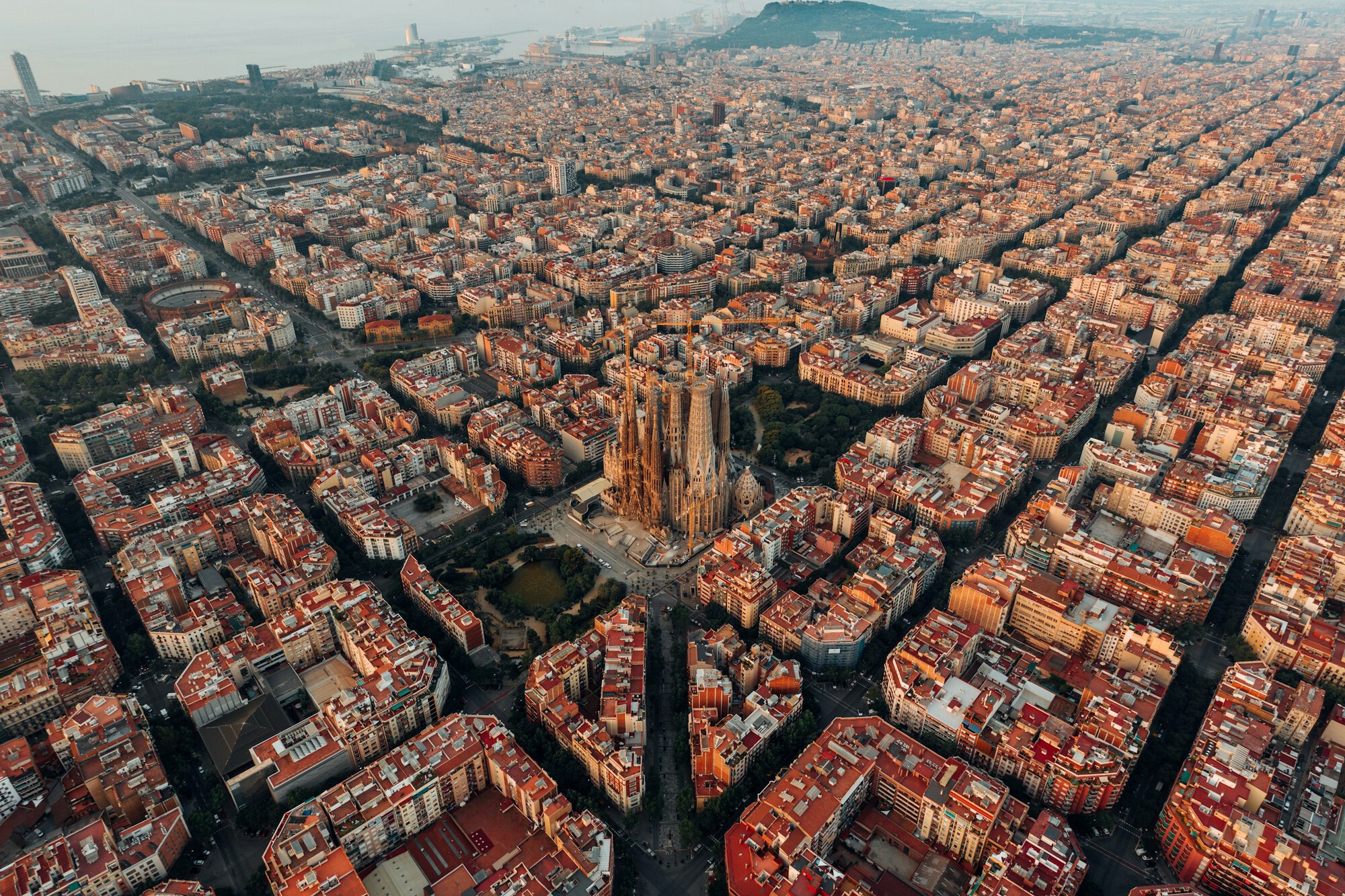
"From the dense streets of the Gothic Quarter to the ornate interiors of the Palau de la Música Catalana, the city expanded outward through Ildefons Cerdà's Eixample, a stage where Gaudí and his contemporaries challenged the rules of form, scale, and ornamentation."
"The city's twentieth-century transformation forged an architectural language with global influence. The principles of International Modernism are embodied in Mies van der Rohe's Barcelona Pavilion, while later developments-from Bofill's explorations in collective housing to the urban interventions of the 1992 Olympics-reshaped the skyline and the city's relationship to its waterfront."
Barcelona functions as an architectural laboratory where successive periods have continuously transformed the city's physical and cultural identity. The Gothic Quarter's dense medieval streets gave way to Ildefons Cerdà's Eixample grid, which became a canvas for Modernist pioneers like Gaudí to experiment with form and ornamentation, culminating in the ongoing Sagrada Família project. The twentieth century introduced International Modernism through structures like Mies van der Rohe's Barcelona Pavilion, while later interventions including collective housing experiments and the 1992 Olympics' urban redesign reshaped the city's relationship to landscape and waterfront. Contemporary projects continue this tradition of negotiating form and urban scale, creating a layered city shaped by continuous architectural innovation.
#barcelona-architecture #urban-modernism #architectural-evolution #gaudi-and-modernisme #urban-design
Read at ArchDaily
Unable to calculate read time
Collection
[
|
...
]