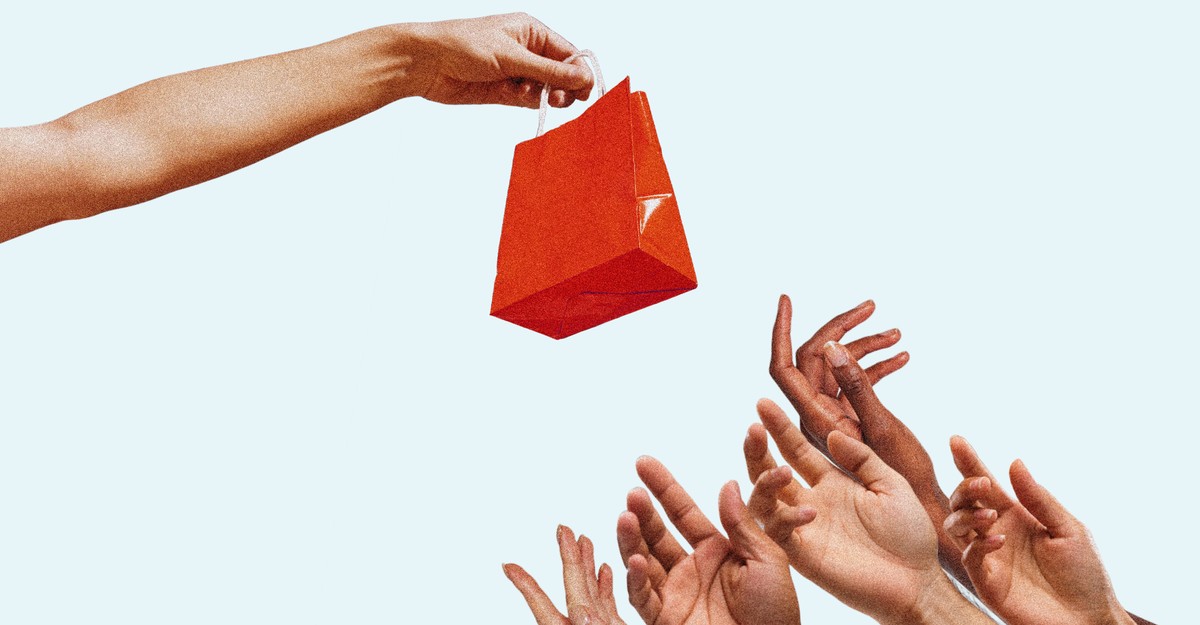
"Scarcity is humanity's great motivator. This has been true forever, since back when we were basically apes: The most important resources-food, shelter, mates-were the ones that were most in demand. Shortage meant value, and being attuned to value meant staying alive. We learned to focus on the rare thing at the expense of what was around it-psychologists call this "tunneling"-and to prioritize avoiding loss over gaining rewards."
"Generally speaking, a drop is just a slightly different way of releasing products. Instead of making goods at the rate of expected demand and releasing them without fanfare, companies are producing in intentionally low quantities and releasing in discrete, highly hyped events. When Starbucks's cup-the "Bearista"-dropped in the United States in November, many customers reported that their store had only a handful, which people lined up overnight to buy."
"At this point, the drop is so popular that it has nurtured its own cottage industries and developed its own technology. Skims, Kim Kardashian's lingerie brand, got huge operating primarily on a drop model-a never-ending carousel of novel products, available first come, first served."
Scarcity has historically driven human behavior as a survival mechanism, conditioning people to prioritize rare resources and avoid loss. This evolutionary psychology persists in modern consumer culture through "drops"—intentionally limited product releases by companies like Starbucks, Warby Parker, and Skims. Rather than producing goods at expected demand levels, companies create discrete, highly hyped events with minimal quantities, generating overnight lines and frenzied purchasing. This strategy exploits psychological tunneling, where consumers focus intensely on scarce items while ignoring abundant alternatives. The drop model has become so prevalent that it spawned dedicated industries, technologies, and YouTube genres, demonstrating how ancient survival instincts remain powerful motivators in contemporary consumer behavior despite material abundance.
Read at The Atlantic
Unable to calculate read time
Collection
[
|
...
]