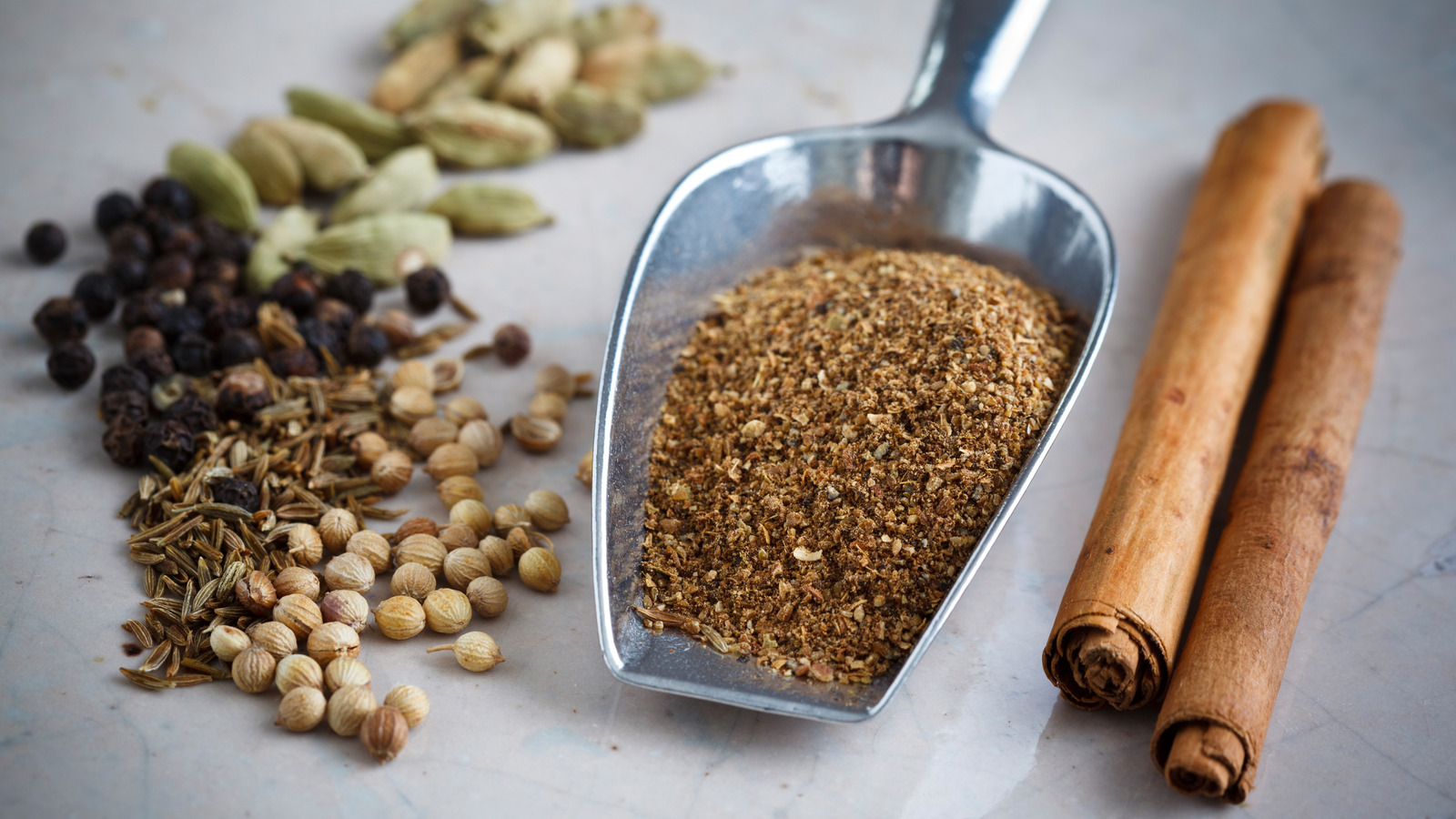
"Your spice cabinet is like a passport of sorts, allowing you to sample the flavors and ingredients of different cuisines and cook dishes from around the globe. As such, building a robust collection of both staple spices, and more underrated and unique ones is important. If you're shopping for new additions to step up your seasoning game, look no further than garam masala and ras el hanout. Although these spice mixes may have similar colors and ingredients, there are some major differences between the two that warrant adding both to your spice cabinet."
"Ras el hanout, on the other hand, contains a more extensive lineup of spices - as much as 20 or more different varieties, of which you'll usually find at least these common additions to the spices listed in garam masala: Ginger, coriander, nutmeg, aniseed, and turmeric. It is popular in North African countries like Morocco. The addition of ginger and sometimes chili give it more bite than garam masala, though it's not as tongue-torchingly hot as other spice blends, like a cayenne-heavy Cajun seasoning."
Garam masala is an Indian spice blend typically composed of five to ten spices, commonly including cinnamon, cardamom, black pepper, cloves, and cumin. The blend is complex and fragrant without producing overwhelming heat, making it well suited for curries and other gently warming dishes. Ras el hanout is a North African mix that can contain twenty or more spices, often adding ginger, coriander, nutmeg, aniseed, and turmeric. The inclusion of ginger and sometimes chili gives ras el hanout more bite. Ras el hanout performs especially well on tagines, proteins, vegetables, and Moroccan-style salads paired with harissa.
Read at Tasting Table
Unable to calculate read time
Collection
[
|
...
]