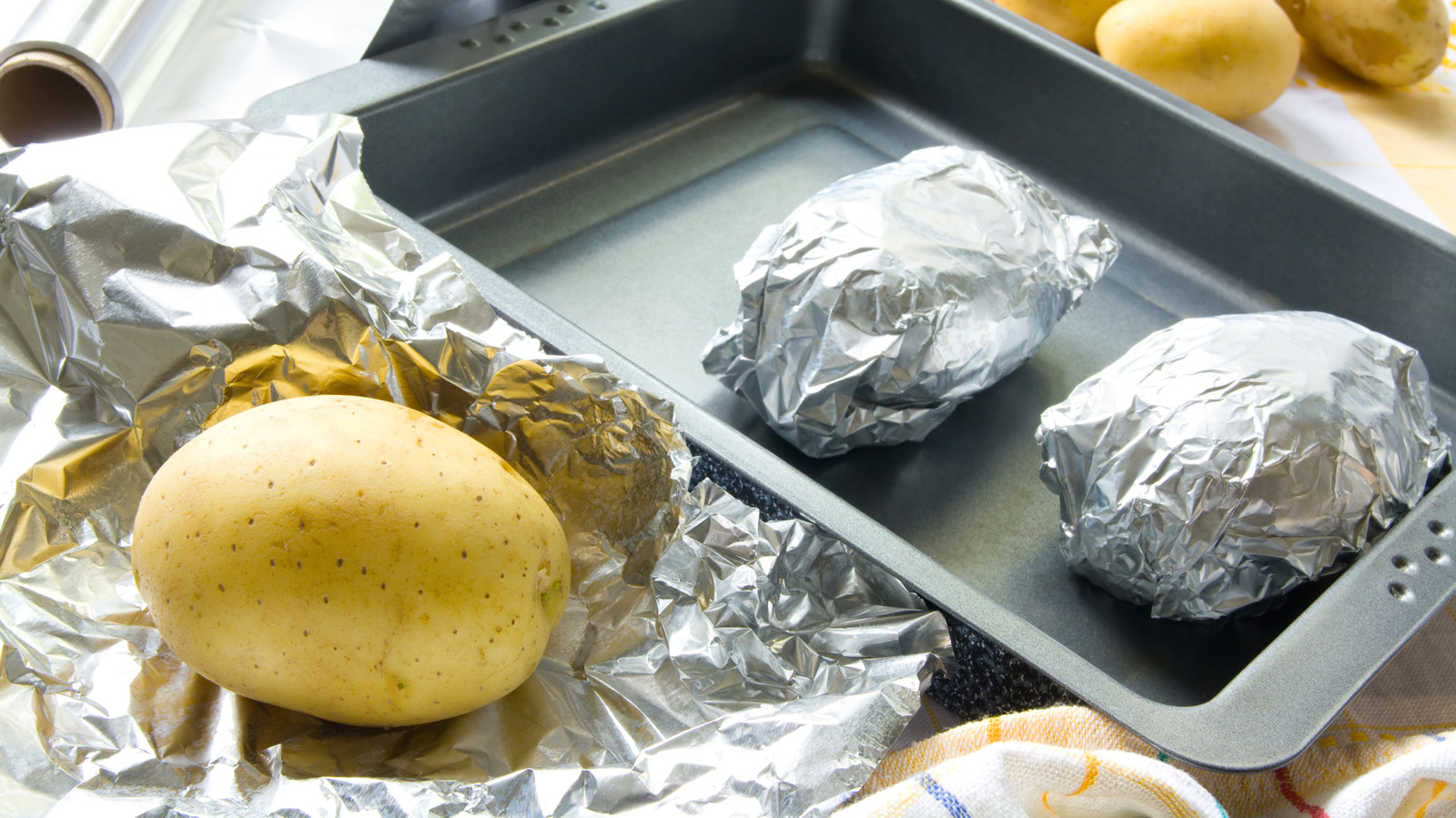
"A potato is about 80% water, most of which turns to steam in a hot oven. Wrap it in foil and all that steam gets trapped, leaving your potato to steam-cook in its own juices. Instead of a fluffy, crispy spud after around 60 minutes, you end up with something more rubbery and soggy - basically mashed potato, but considerably less appetizing."
"Even worse, if you don't unwrap it immediately and let it sit on the counter, moisture condenses between foil and skin, turning your potato into a breeding ground for bacteria and a genuine food safety risk."
"When you cook your potato on the direct flame of a grill, for example, a 'naked' potato will run the risk of being scorched on the outside but still raw on the inside. After coating its skin in olive oil and a few generous sprinkles of kosher salt, give it a foil wrapper before throwing it onto the grate."
Baked potatoes wrapped in aluminum foil during oven cooking trap steam, resulting in soggy, rubbery texture rather than the desired fluffy, crispy exterior. Since potatoes are approximately 80% water that converts to steam in the oven, foil prevents moisture escape and causes the potato to steam-cook in its own juices. Additionally, if wrapped potatoes sit unwrapped after cooking, moisture condenses between foil and skin, creating conditions for bacterial growth and food safety concerns. However, foil serves useful purposes after baking—keeping cooked potatoes warm for gatherings or when grilling, where it prevents charring while allowing thorough cooking. The key distinction is timing: avoid foil during oven baking but use it strategically for grilling, campfires, and steamers.
Read at Tasting Table
Unable to calculate read time
Collection
[
|
...
]