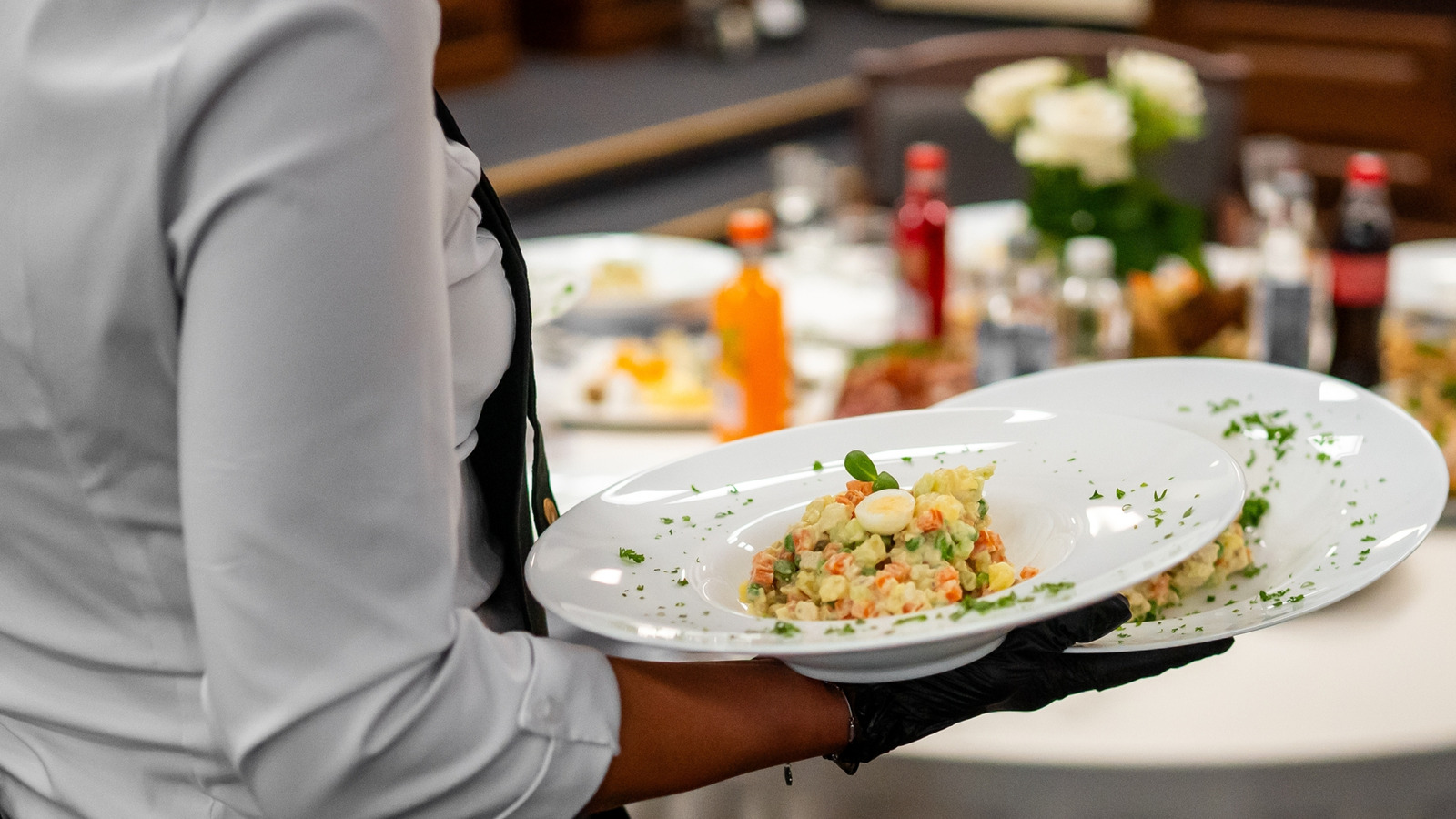
"Tables aren't decorative surfaces. They're communal, high-contact zones that every guest touches, often repeatedly, before touching food, glassware, or their face. Who knows what they were up to before coming in, or in the bathroom - if and how well they washed their hands afterward. It's safe to assume that whatever's on your table, ends up in your mouth. Tables need to be cleaned and sanitized between parties, with the same seriousness as a plate or utensil,"
"When that task is rushed or skipped, it's gross, from a sensory perspective, but more importantly, it's potentially dangerous because it opens up a superhighway for communicable diseases between dining parties. It's also an indication of how devoted the staff is to mandatory, and common-sense cleaning tasks. It's something you can see and feel, so you just have to imagine hygiene conditions behind the scenes, where food is prepared, and you can't see or feel what's going on."
Sticky tables signal skipped cleaning and present a direct risk of pathogen transmission between dining parties. Tables function as communal, high-contact surfaces touched repeatedly before contact with food, glassware, or faces, and whatever contaminants remain on a table can end up ingested. Cleaning and sanitizing tables between parties requires the same seriousness as washing plates and utensils. When staff rush or skip this task, the surface becomes both sensory gross and an epidemiological conduit for communicable diseases. A sticky table also reveals staff neglect of mandatory cleaning routines and suggests possible lapses in unseen food-preparation hygiene.
Read at Tasting Table
Unable to calculate read time
Collection
[
|
...
]