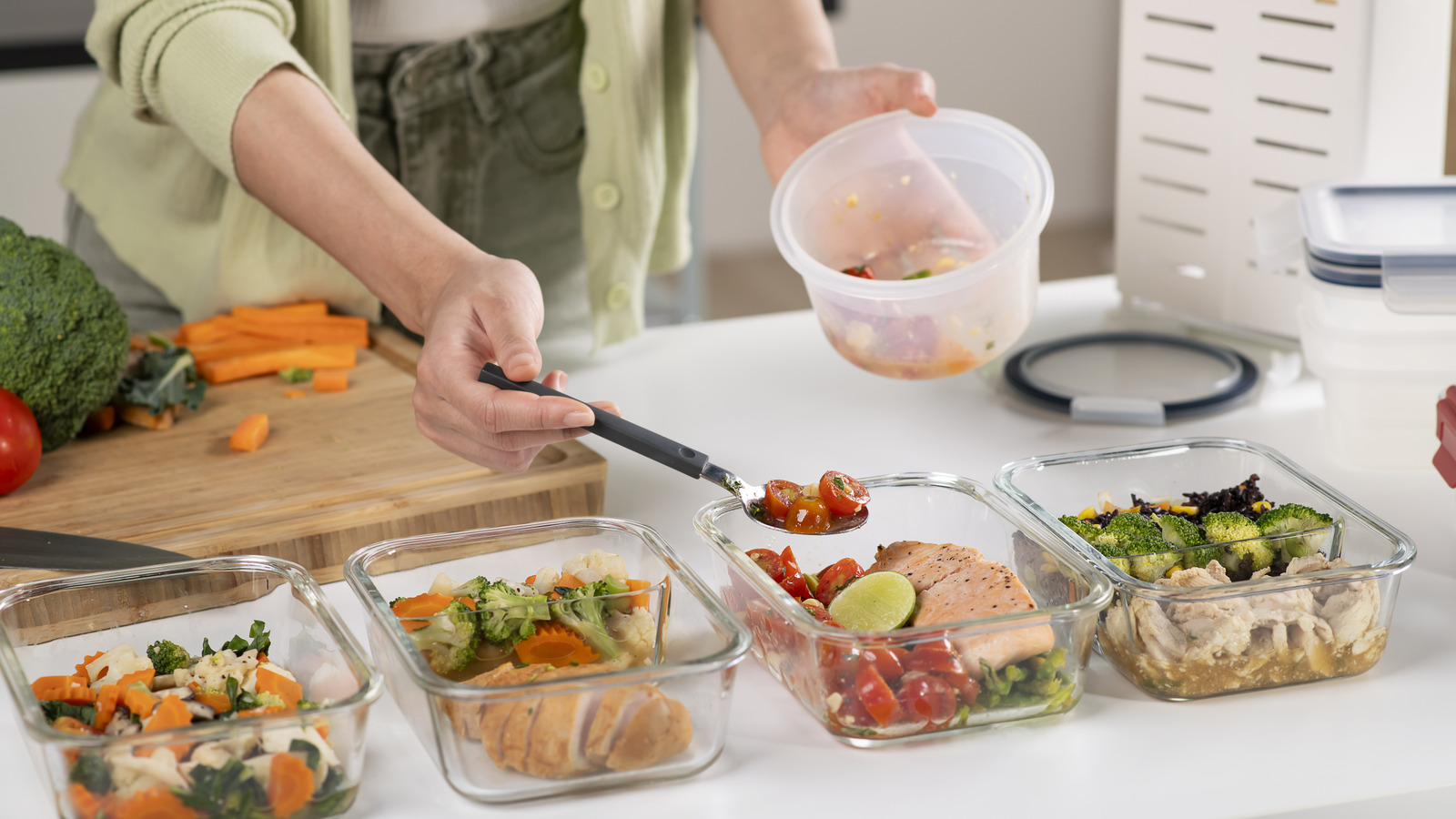
"Shallow containers cool faster than taller or thicker ones. If you put your food into the fridge warm (or just warm in the center), you may cause condensation to form, which can ruin its texture. However, you can't just leave your food out on the counter to cool, as you don't want it to hang out in the food safety danger zone - between 40 degrees Fahrenheit and 140 degrees Fahrenheit - where pathogens thrive."
"Use glass containers instead of plastic ones. While you can find shallow food storage containers in both materials, glass is preferable because it is non-porous. Plastic can scratch easily and warp in the heat of your dishwasher. Once plastic is scratched, it's more difficult to sanitize and completely kill all of the microbes taking up residence."
Shallow food storage containers are the optimal choice for kitchen storage due to multiple advantages over taller or thicker alternatives. They fit more efficiently in fridges, cabinets, and tight spaces, similar to solving a Tetris puzzle. More importantly, shallow containers cool food faster, which prevents condensation formation that can damage food texture. This rapid cooling is crucial for food safety, as it helps food avoid the danger zone between 40°F and 140°F where pathogens multiply. Glass containers are preferable to plastic because they are non-porous and resist scratching and warping. Plastic containers become difficult to sanitize once scratched, potentially harboring microbes that can contaminate ready-to-eat foods.
Read at Tasting Table
Unable to calculate read time
Collection
[
|
...
]