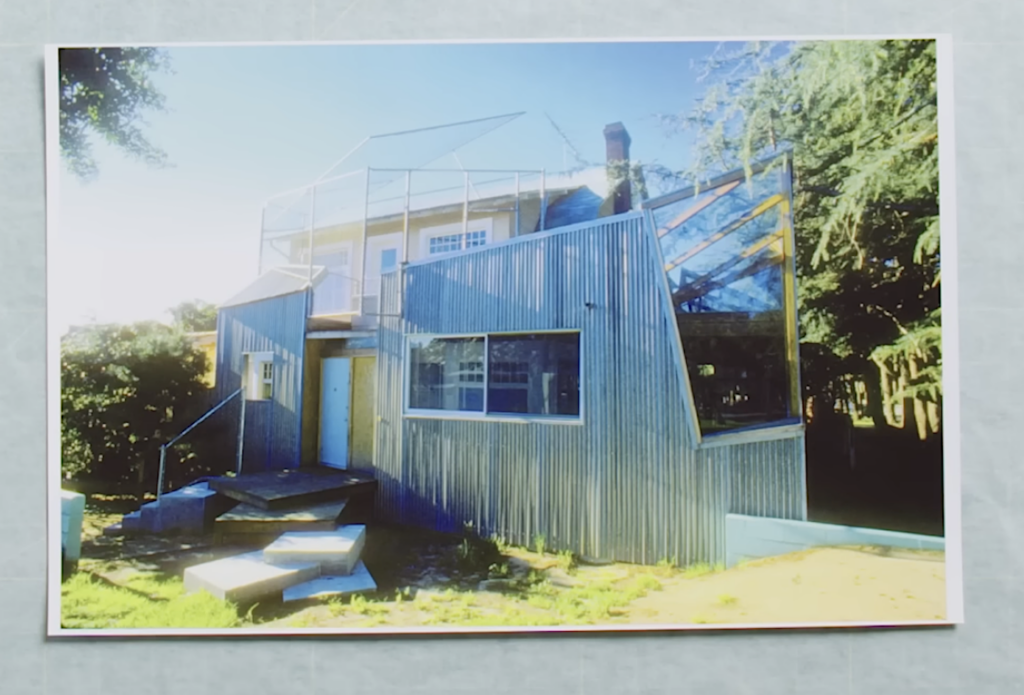
"He fortified parts of the pastel-painted, shingled exterior with corrugated steel, wrapped layers of chain-link fencing over other portions in angular planes not seen since Russian Constructivism, and slammed a tilted cubic skylight, which looked as if it had fallen from outer space, into the kitchen,"
"In the interior he exposed walls down to the wooden studs and treated vestigial white plaster patches as though they were Robert Ryman paintings. Paradoxically, this messy mash-up also exuded a cozy domesticity,"
Frank Gehry lived to 96 and achieved his distinctive architectural identity largely in the last half-century. He changed his surname from Goldberg in his twenties and later regretted the choice. His first recognisable project was his own 1920 Dutch Colonial house in Santa Monica, which he transformed into an intentionally rough, industrial composition. Gehry added corrugated steel, wrapped chain-link fencing in angular planes, and inserted a tilted cubic skylight into the kitchen. Interior walls were exposed to wooden studs and vestigial plaster patches were treated like paintings, producing a messy yet cozy domesticity.
Read at Open Culture
Unable to calculate read time
Collection
[
|
...
]