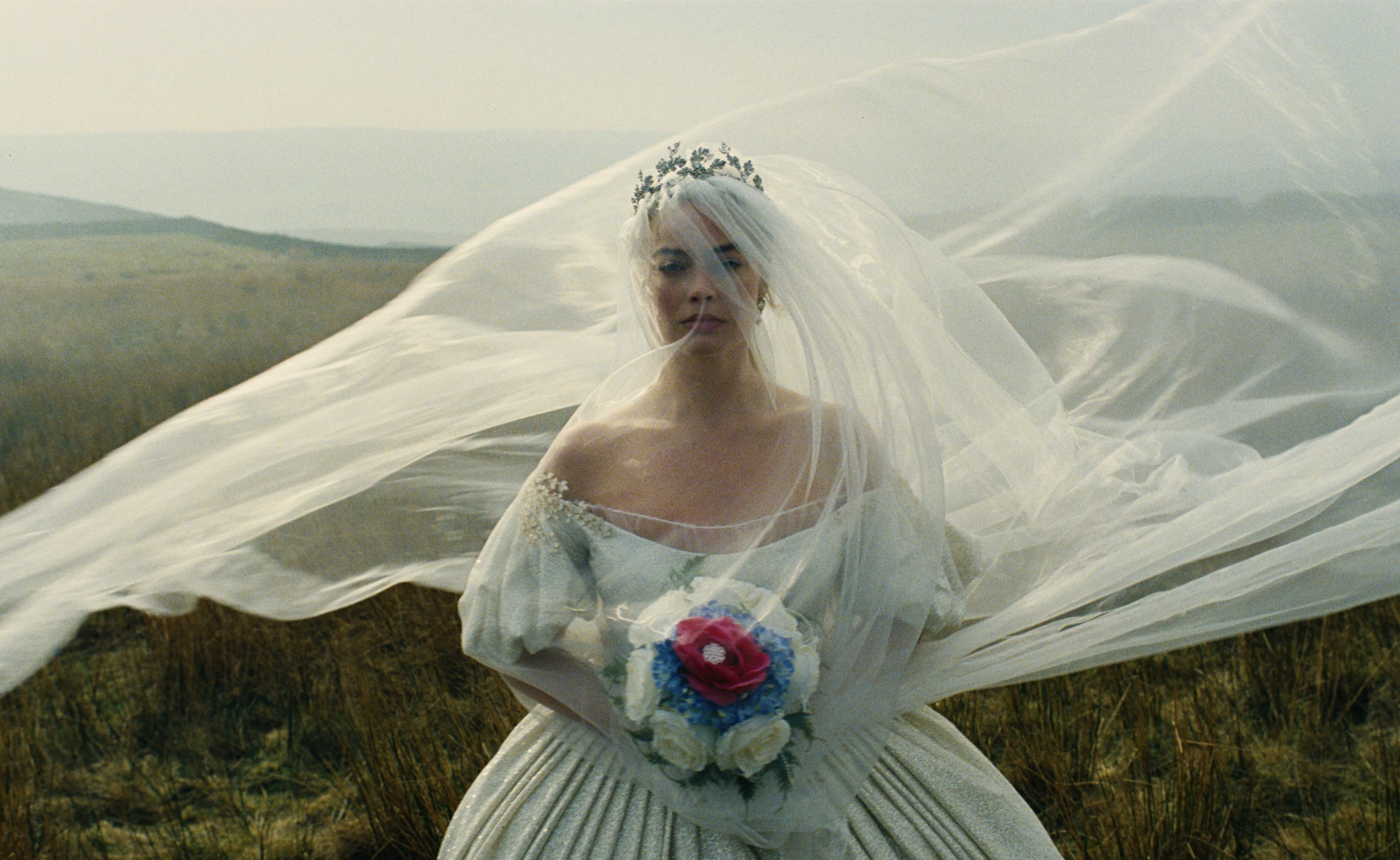
"It's hardly a surprise that filmmaker Emerald Fennell, who possesses a particular interest in shocking and riling her audience, was drawn to Emily Brontë's Wuthering Heights. This is a novel that has vexed critics since the beginning, with one in 1848 decrying its "vulgar depravity and unnatural horrors." Nearly 179 years after its publication, Wuthering Heights may have been reappraised a classic, but it continues to haunt with that "wild, wicked slip" Catherine Earnshaw and her tumultuous relationship with Heathcliff, he of the "half-civilized ferocity.""
"Adaptations have taken various liberties with Brontë's story, cutting characters and plot points in vain attempts to condense and tame its wildness and stubborn amorality. A poster for the 1920 film carried with it the tagline "Emily Brontë's tremendous Story of Hate." More than a century later, it's being sold as a great love story, but, you know, with a wink. This is love (if you want to call it that) of the tortured, toxic, obsessive variety."
"The miserable Earnshaw way of life stands in stark contrast with their happier, gentler neighbors, the Lintons, who inhabit the primly manicured Thrushcross Grange. Their home is within walking distance of Wuthering Heights and yet, in a sheltered valley, it seems worlds away. As in the book, Cathy decides to deny her heart for the promise of a comfortable life with Edgar Linton."
Wuthering Heights remains a haunting novel centered on Catherine Earnshaw and Heathcliff's tumultuous, toxic relationship. Critics originally decried its 'vulgar depravity and unnatural horrors.' Adaptations have often cut characters and plot points to condense and tame the novel's wildness and stubborn amorality. Modern presentations sometimes repackage the material as a great love story while preserving its tortured, toxic obsession. The Earnshaws' miserable life contrasts with the Lintons at Thrushcross Grange. Cathy denies her heart for Edgar Linton. Heathcliff overhears, disappears, then returns wealthy and vengeful, with eroticized cruelty on his mind. One adaptation removes the racial component of Heathcliff's otherness.
Read at Kqed
Unable to calculate read time
Collection
[
|
...
]