#film-adaptation
#film-adaptation
[ follow ]
#science-fiction #video-games #elden-ring #lord-of-the-rings #tolkien #stephen-colbert #character-development
#literary-criticism
Books
fromSlate Magazine
6 days agoHer First Book Was a Bestseller That Became a Controversial Hit Movie. After 17 Years, She's Back With a New Novel.
The Help became a major bestseller and film success while also facing criticism as a problematic portrayal of Black life through a white-centered narrative.
Film
fromThe Nation
2 months agoThe Bad Vibes of "Wuthering Heights"
Emerald Fennell's Wuthering Heights prioritizes contemporary aesthetic over literary faithfulness, reducing Brontë's complex novel to a shallow love story that reflects modern short attention spans rather than engaging with the source material's depth.
fromVulture
1 week agoThe Hollywood Feud of the Century
Baldoni planned to direct the film and to play Ryle himself. They talked for three hours in Lively's home and got along well enough that the next day Baldoni was able to send an excited text to colleagues at his production company: 'Blake is in!!!!'
Writing
fromInverse
2 weeks ago42 Years Later, An Iconic Crime Thriller Reboot Is Going Back To Its Roots
The movie explores the glamour and corruption of mid-'80s Miami in an all-new version of Miami Vice, inspired by the pilot episode and first season of the landmark Universal Television series.
Independent films
fromKotaku
3 weeks agoLegend Of Zelda Set Photos Leak Has Fans Abuzz With Theories
The design looks pretty similar to Link's Twilight Princess appearance with chainmail underneath the green top. Notably, he also seems to be wearing a cape of some kind on his back, which is reminiscent of one of his Tears of the Kingdom looks.
Film

fromInverse
1 month ago70 Years Ago, Steve Martin Brought Godzilla To The US
Godzilla: King of the Monsters! was an American edit that went beyond dubbing the film into English, adding scenes and a new protagonist, an American reporter who served as a point-of-view character for '50s audiences watching this foreign flick.
Independent films
#existentialism


Writing
fromOregon ArtsWatch * Arts & Culture News
1 month agoFilmWatch Weekly: Camus' 'The Stranger' on screen, Christian Petzold's 'Miroirs No. 3,' and more * Oregon ArtsWatch
Modern life paradoxically fosters isolation despite increased connectivity, as explored in new European films based on existential themes.
fromFast Company
1 month agoBrief oral history: How 'A Minecraft Movie' rode the chicken jockey to the top of the box office
Kayleen Walters, head of Mojang Studios and VP of franchise development for gaming at Microsoft: We wanted to push the story beyond what players experience in-game and do something special for the film, making sure Minecraft not only stayed true to its roots but also created an experience that welcomed new fans into the franchise.
Independent films
fromConsequence
1 month agoHe-Man Battles Skeletor in New Masters of the Universe Trailer: Watch
The new trailer for Masters of the Universe goes deeper into the ascension of Adam Glenn as he transforms from mild-mannered Earthling to He-Man, super-powered defender of his father's home planet Eternia.
Film
fromwww.theguardian.com
1 month agoWilliam Shakespeare's Romeo+Juliet review Baz Luhrmann's joyful tragedy is still extravagantly full of life
Baz Luhrmann reinvented Shakespeare's Romeo and Juliet as a gangbanger love tragedy of the present day, with Mexico City standing in for an imaginary urban place called Verona Beach. The result was a terrific success, more of a success, I suspect, than Luhrmann ever had again; it was irreverent and questioning in just the right way, a sunburst of energy, but instinctively respectful to the story.
Film
fromwww.theguardian.com
1 month agoThe Magic Faraway Tree review spruced up Blyton with Foy and Garfield proves fruitful
The film distils the Blytonesque spirit of adventure and outdoorsy fun... and transfers it to a new world in which all generations are longing to escape electronic devices and AI.
Film
#science-fiction

fromInverse
2 months agoFilm
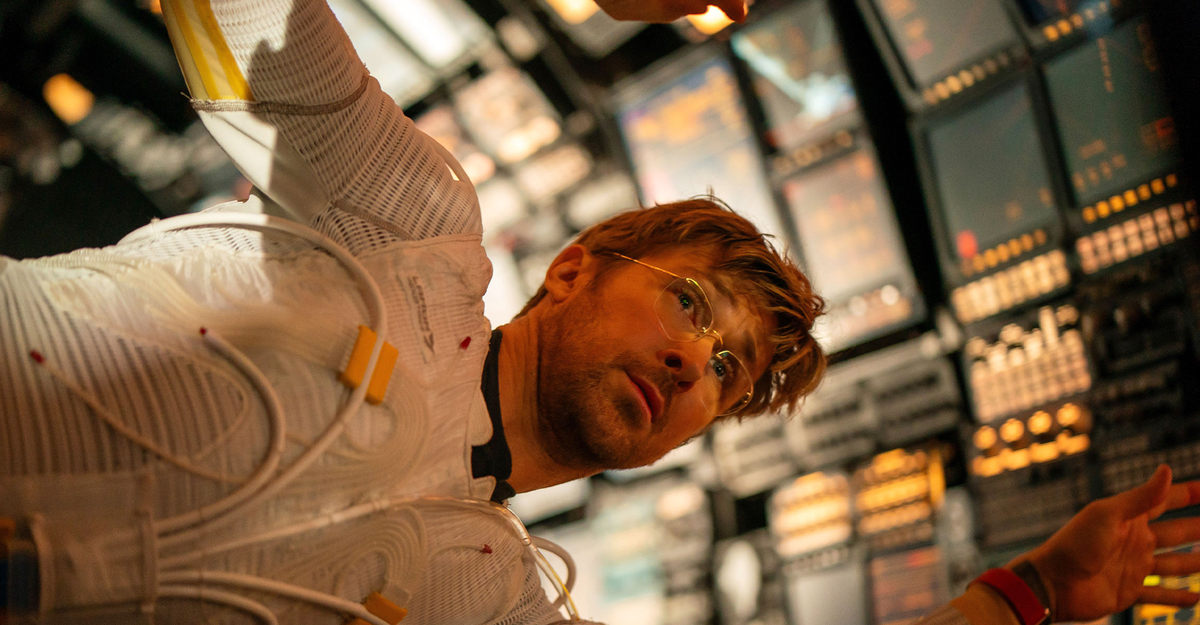
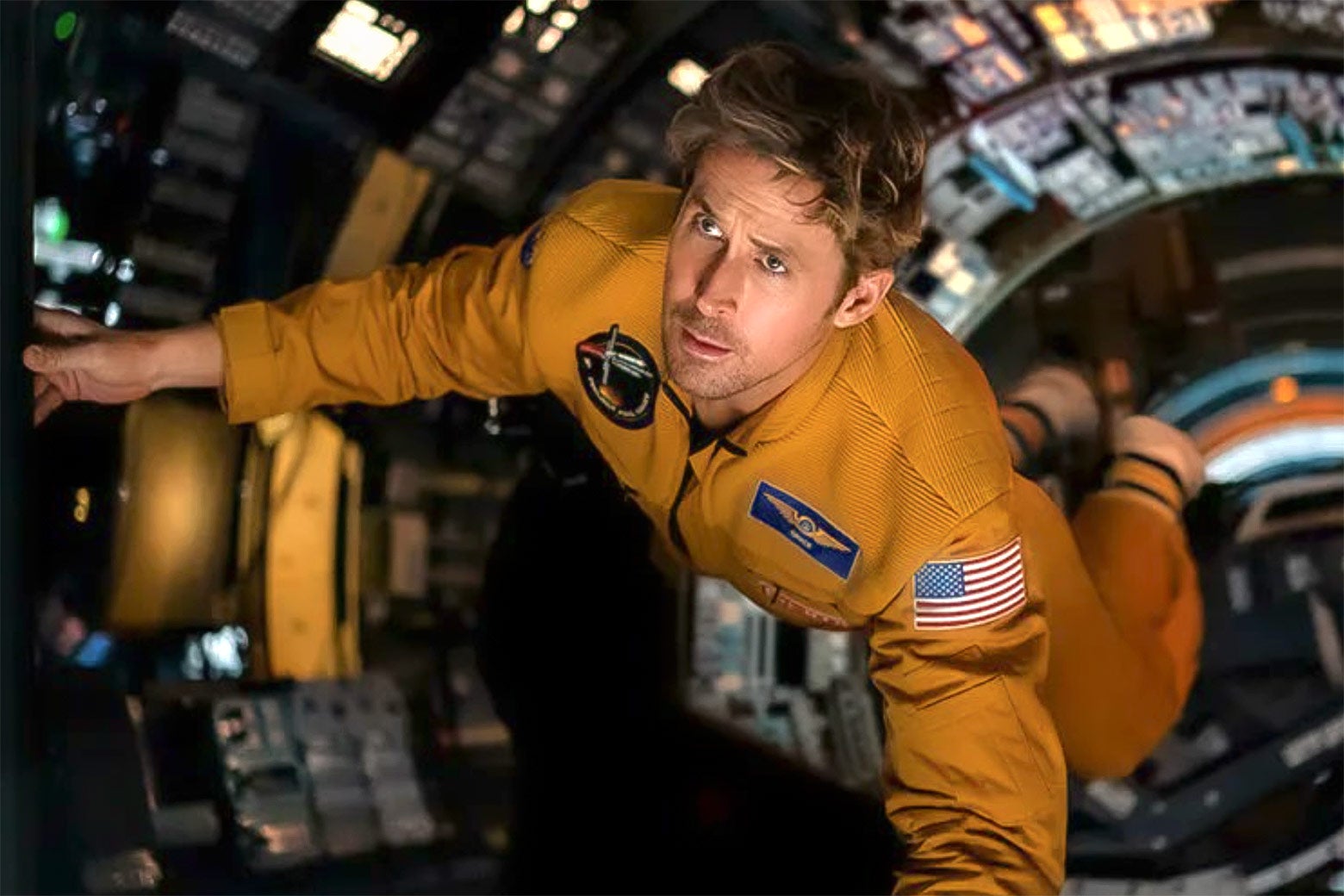
'Project Hail Mary' Is Popcorn Sci-Fi At Its Most Crowdpleasing
Project Hail Mary adapts Andy Weir's hard science fiction novel into a visually spectacular blockbuster that balances complex scientific concepts with humor and emotional depth through Ryan Gosling's charismatic performance.
fromScary Mommy
2 months agoBooks
Ryan Gosling Says 'Project Hail Mary' Is The Kind Of Movie He Wants His Kids To Grow Up With
Project Hail Mary is a sci-fi film about space survival that combines grand scale with intimate human storytelling, emphasizing hope and the capacity for extraordinary achievement through collaboration.
Film
fromSlate Magazine
1 month agoRyan Gosling's New Movie Is a Thrilling, Funny, Adorable Adaptation of a Megahit Sci-Fi Novel
Phil Lord and Chris Miller adapt Andy Weir's sci-fi novel into a film blending multiple genre influences, following a stranded astronaut who befriends an alien while drawing thematic elements from Interstellar, Close Encounters, and Galaxy Quest.
Independent films
fromThe Verge
1 month agoWhy Project Hail Mary's creators were 'scared' about making the sci-fi adaptation
Screenwriter Drew Goddard faced significant challenges adapting Andy Weir's Project Hail Mary into a film due to its ambitious scope, mature themes, and intimate emotional core set against a celestial backdrop.

Books
fromScary Mommy
2 months agoRyan Gosling Says 'Project Hail Mary' Is The Kind Of Movie He Wants His Kids To Grow Up With
Project Hail Mary is a sci-fi film about space survival that combines grand scale with intimate human storytelling, emphasizing hope and the capacity for extraordinary achievement through collaboration.
Independent films
fromInverse
1 month ago'Project Hail Mary' Author Reveals Why That Twist Ending Is So Essential
Project Hail Mary succeeds through its relatable protagonist Ryland Grace, whose character arc includes a late-film revelation that recontextualizes his heroism and ends with him teaching science to young Eridians on an alien planet.
#dune-part-three
Film
fromwww.theguardian.com
1 month agoWar, inheritance anda baby? First Dune: Part Three trailer is here
The first trailer for Dune: Part Three reveals Paul Atreides and Chani reconciled with a possible child, expanded war across the galaxy, and Robert Pattinson as new villain Scytale, with significant departures from Frank Herbert's source material.

from48 hills
2 months agoA Holocaust survivor in San Rafael finds his voice in 'The Optimist' - 48 hills
There have been so many impactful films made about the Holocaust, but two things drew me in as a writer. One was that this man kept his secret for 60 years, which I later found out was quite common among survivors. So, the idea of holding on to a secret until you're in your early 70s, even from your children and your family, was compelling.
Film
fromwww.theguardian.com
2 months agoWhat's under my saucepans? Rage!' Claire Foy, Andrew Garfield and cast on the set of The Magic Faraway Tree
Director Ben Gregor wanted his cast to interact with the fantastical surroundings as much as possible. And so, on their sound stage in Reading, Gadsdon found herself filming in a grove of marshmallow trees, surrounded by giant flying-saucer plants and Haribo strawberry beds. I did eat a few, she confides. The Land of Birthdays was just as fun she was filmed in those scenes in the middle of a giant cake, as rollerskating elves disco-danced by.
Film
fromwww.npr.org
2 months ago'Hamnet' star Jessie Buckley looks for the 'shadowy bits' of her characters
What Maggie O'Farrell so brilliantly did, not just with Agnes and Shakespeare's wife, but also with Hamnet, their son, was to bring these people ... and give them status beside this great man. ... [And] give the full landscape of what it is to be a woman.
Arts
fromwww.theguardian.com
2 months agoOne Flew Over the Cuckoo's Nest reviewed archive, 1976
Taken from a widely read novel by Ken Kesey, it is a prime example of how a subject which must have looked destined for the cultural ghetto of the art circuit can be hoist by its bootstraps into the commercial field and festooned with Oscar nominations. You can do this of course only by making compromises by engaging a star with redoubtable box office muscle by jollying your audience along a little before the real crunch comes.
Film
fromwww.theguardian.com
2 months agoAll You Need is Kill review time loop anime offers giant alien flower for Groundhog Day with mechs
The second film adaptation of Hiroshi Sakurazaka's 2004 eponymous novel, this new one is considerably inferior to Edge of Tomorrow from 2014, Tom Cruise's own Groundhog D1ay with mechs. It's not a question of budget or aesthetics simply a gaping hole of engaging characterisation and inner spark that makes this time loop a grinding chore, rather than a thrilling jailbreak from eternal recurrence.
Film
[ Load more ]