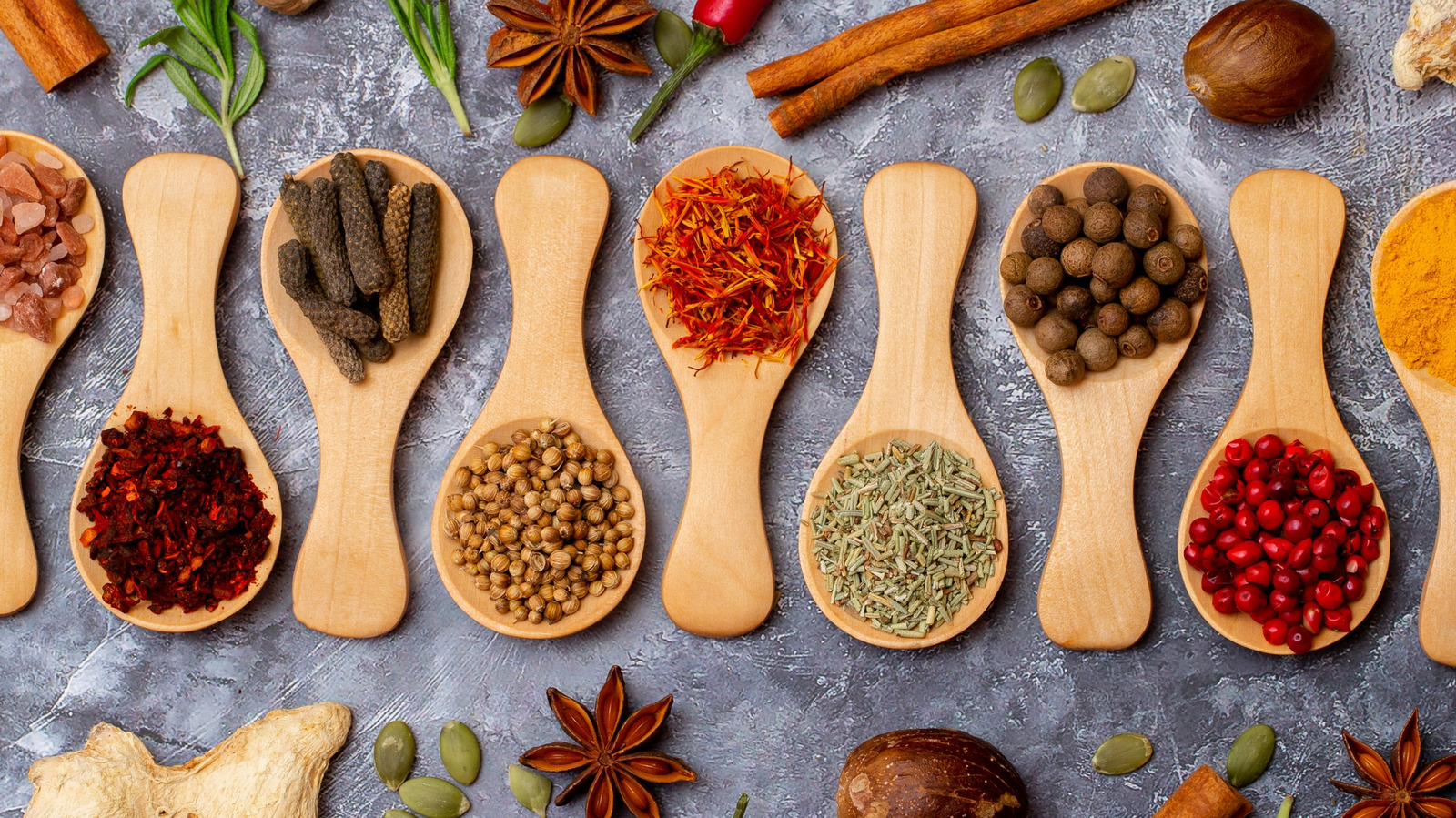
"To see if your herbs and spices are still fresh and full of flavor, take a pinch and rub the seasoning between your fingers. When you go to smell that pinch, you should immediately get that seasoning's fragrant aromas. If you're not getting aromas or flavors, that spice is dead. You may even notice faded hues or clumping textures - other signs that the seasoning is past its prime."
"Keep in mind that "expired" seasonings won't necessarily taste awful or make you sick the way other expired foods can. The expiration date on seasonings indicates they're past their freshness. Old seasonings past their prime just won't taste like much of anything anymore. Their aromas and flavors come from their essential oils, and those eventually evaporate. Without those, you're just adding bland powder or crushed leaves to your food - that's definitely not going to achieve the results you were hoping for."
"In addition to the smell test, it's also helpful to know the maximum shelf life of different seasonings. Dried herbs can last in good condition for one to three years. For spices, ground ones last about the same, and whole spices can go as long as two to five years. Of course, this all depends on how you store them."
Rubbing a pinch of an herb or spice between fingers and smelling it will reveal whether the seasoning still has its fragrant aromas. Lack of aroma or flavor, faded color, or clumping indicate loss of freshness. Expired seasonings usually remain safe to eat but lose essential oils that create flavor and aroma. Dried herbs last about one to three years; ground spices last similar lengths; whole spices can retain quality for two to five years. Moisture, light, heat, and air degrade seasonings by evaporating essential oils or altering texture, so proper storage is important.
Read at Tasting Table
Unable to calculate read time
Collection
[
|
...
]