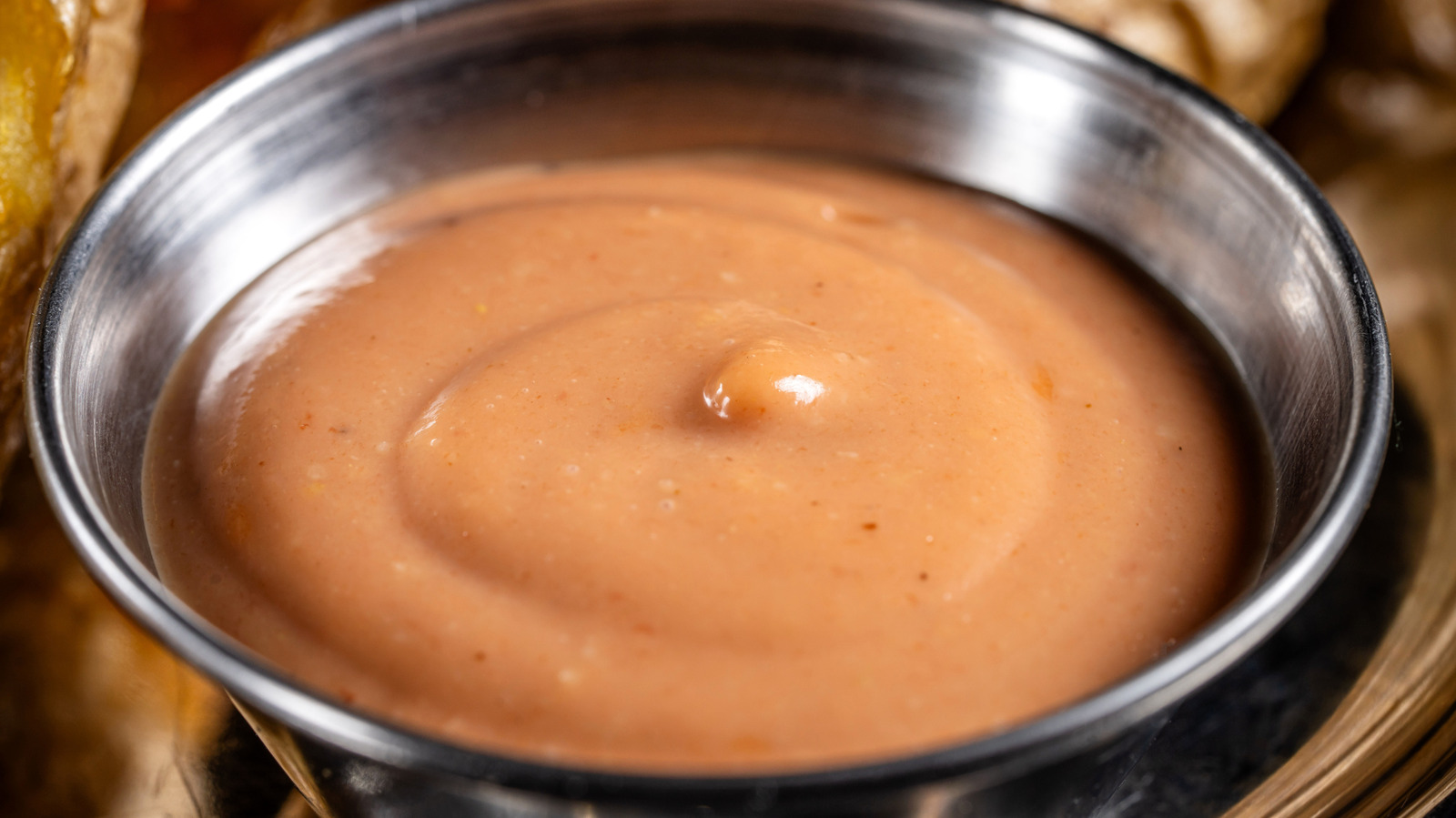
"If you walk into any Belgian friterie, you will probably see someone drizzling their fries with what looks like Thousand Island. It may sound like a good idea, but if you ask the staff for this distinctly American dressing, you will likely be met with some puzzled looks. Because despite appearances, that is not Thousand Island. Rather, it is a distinctly Belgian creation known as Samurai sauce."
"Samurai sauce - or Samouraï sauce - is a popular condiment found in friteries, kebab shops, and grocery stores throughout the country. Recipes can vary, but the most common preparations mostly involve mayonnaise and an Indonesian chili paste called sambal oelek. It combines a rich, creamy base that balances out the heat of the chilis, providing a moderately spicy twist on Belgians' already beloved pairing of frites with mayonnaise. With such a complex and well-rounded flavor profile, it's no surprise people cannot get enough."
"That said, the origins of Samurai sauce are a bit of a mystery. While it is unclear who invented it, the condiment became widely popular from the early 2000s onward. The backstory behind its name is also murky, but it is clear that there is nothing really Japanese about it. However, there are theories ranging from the spiciness stinging like a samurai's sword to its bold flavors being associated with a samurai warrior's strength. But it's really anyone's guess."
Samurai sauce is a popular Belgian condiment composed primarily of mayonnaise and an Indonesian chili paste called sambal oelek. It delivers a rich, creamy base that balances chile heat, producing a moderately spicy flavor that complements double-fried Belgian frites and other crispy appetizers like onion rings, mozzarella sticks, and fried pickles. The sauce gained widespread popularity from the early 2000s onward. Recipes vary across friteries, kebab shops, and grocery stores. The name's origin is unclear and has no real connection to Japan; theories link the name to the sauce's sting or boldness resembling a samurai's sword or strength.
Read at Tasting Table
Unable to calculate read time
Collection
[
|
...
]