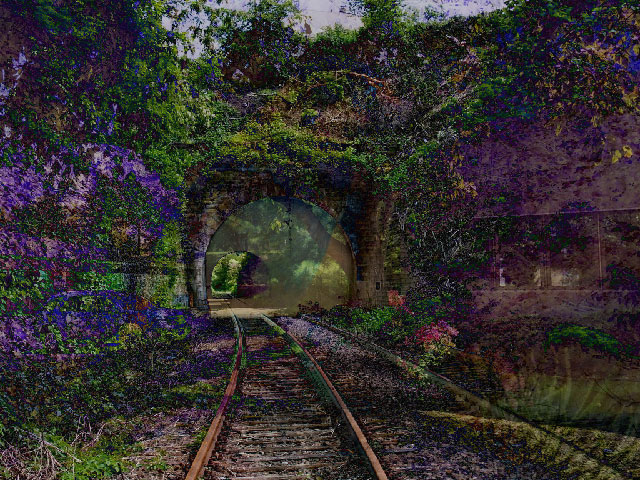
"The brief explained that the work-made-for-hire doctrine allows employers or commissioning parties to be considered the author, but this requires an employment relationship or a written agreement, neither of which a nonhuman entity like the Creativity Machine can enter into. On January 23, the United States Department of Justice (DOJ) urged the U.S. Supreme Court to reject a petition from Stephen Thaler, who seeks copyright protection for a work created by his artificial intelligence (AI) system."
"In its brief, submitted by Solicitor General D. John Sauer, the DOJ argued that the court of appeals' decision is correct and does not conflict with any precedent from the Supreme Court or other appellate courts. The government's central argument is that the Copyright Act, while not explicitly defining "author," consistently presupposes a human creator. The brief pointed to multiple statutory provisions that it said "make clear that the term refers to a human rather than a machine.""
The U.S. Department of Justice urged the Supreme Court to deny Stephen Thaler's petition seeking copyright for an image generated autonomously by his AI system, the Creativity Machine. Thaler named the AI as the author for the work titled "A Recent Entrance to Paradise", and the Copyright Office refused registration because no human created the work. The agency's Review Board found the image was autonomously created without any human creative contribution, and the D.C. Circuit upheld that refusal. The DOJ argued that the Copyright Act presupposes human creators, noting statutory provisions and property principles, and that work-made-for-hire requires human employment or written agreement.
Read at IPWatchdog.com | Patents & Intellectual Property Law
Unable to calculate read time
Collection
[
|
...
]