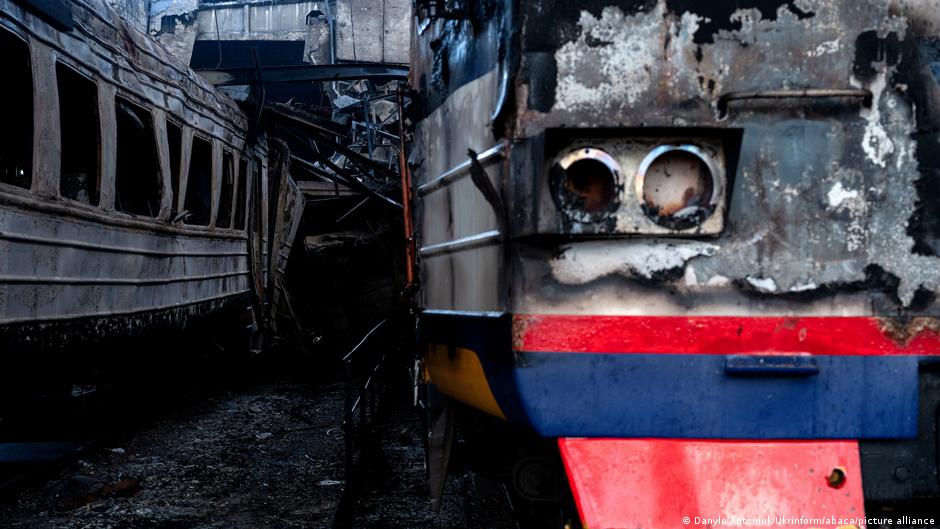
"War requires incredible amounts of fuel, munition and equipment. All of that needs to be transported. You can use roads, but that's quite expensive and doesn't make financial sense. That's why most military equipment is transported along railways. Russian drone pilots would observe certain rail lines, wait until a train appears and then aim to hit the engine—not only the most expensive part of the train, but also an essential piece of equipment in short supply."
"The attacks are not isolated incidents, but part of a wider strategy to strike logistical, export and military supply lines. The strikes sought to take out locomotives to slow Ukraine's economy and make it difficult for the government to send forces to the front lines. They'll attack any train. If they find one, they'll shoot."
Russia has escalated attacks on Ukraine's railway system since early March, targeting locomotives, freight cars, bridges, and railyards. A Russian drone struck a civilian train carrying 200 passengers from Kyiv to Sumy, damaging the locomotive. Military expert Pavlo Narozhnyi explains these attacks represent a coordinated strategy to cripple Ukraine's logistics and military supply lines. Russian drone pilots deliberately target locomotives—the most expensive and essential components—to slow economic activity and hinder troop movement. Railways remain critical for transporting military equipment, fuel, and ammunition more efficiently than roads. Passenger and freight trains alike face attack, with border regions and routes toward Crimea and Odesa experiencing the heaviest bombardment.
#russian-military-strategy #ukrainian-rail-infrastructure #drone-warfare #military-logistics #supply-chain-disruption
Read at www.dw.com
Unable to calculate read time
Collection
[
|
...
]