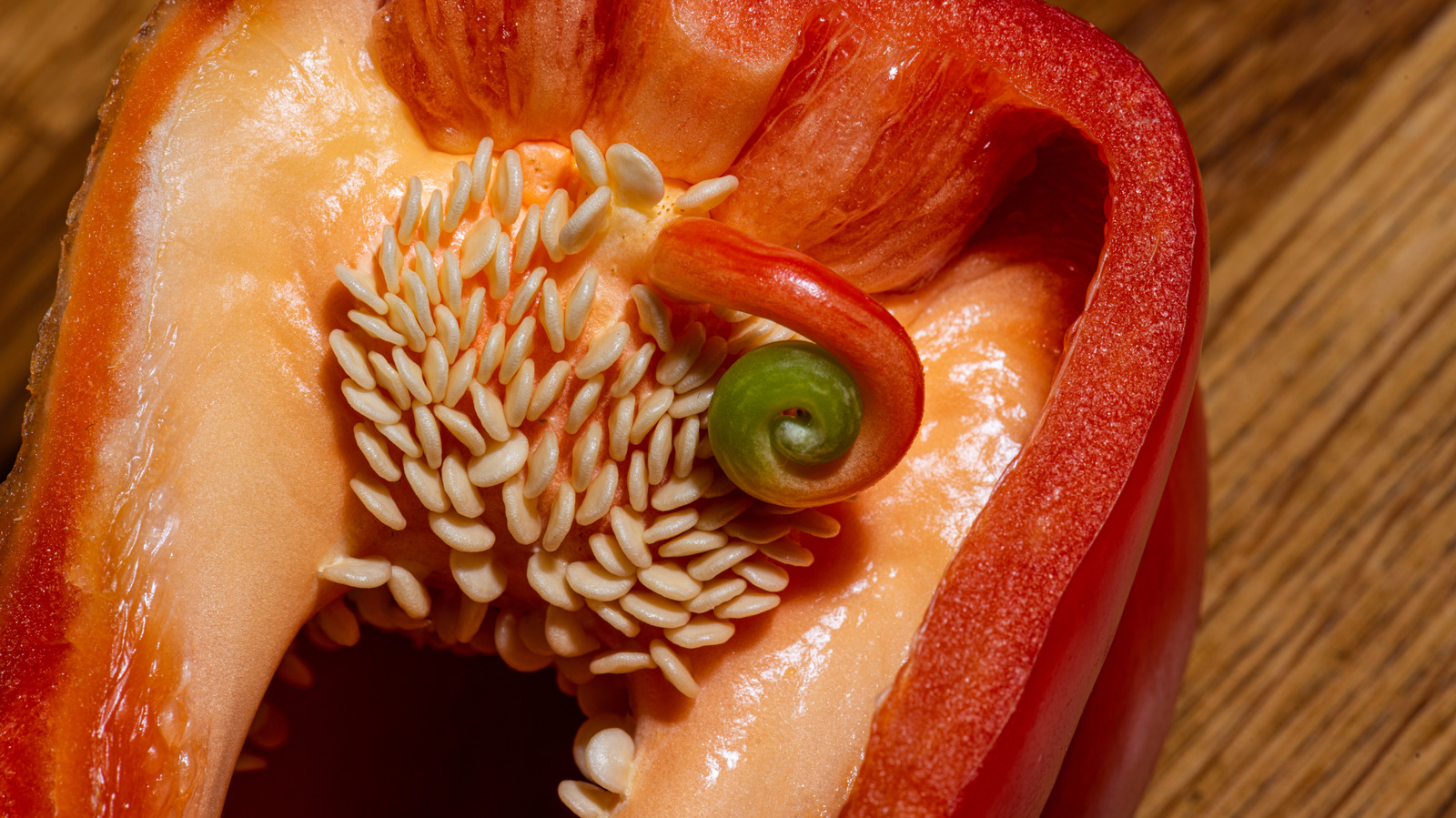
"This mini pepper is technically known as an internal proliferation, and is due to a natural process called parthenocarpy. Parthenocarpy is when any fruit develops without fertilization, and in the case of bell peppers, it results in these small internal tissue growths. Although it can have the same shape and look like a regular pepper, if you cut open this mini pepper, you'll find it's completely seedless."
"Why parthenocarpy occurs is not always clear, but there can be several contributing factors. The genetics of the plant is one explanation, with some types of bell peppers more likely than others to develop these internal proliferations. Temperature fluctuations during the growing process can be another, particularly if the plants are exposed to cooler periods. Parthenocarpy can also be triggered through exposure to ethylene, which is used commercially to speed up the ripening process."
"These baby peppers are made up of the same stuff as the rest of the pepper, so they are completely safe to eat. You may notice, however, that depending on their size and maturity, they may be a little bitter. It's not a phenomenon limited to peppers, as it also occurs naturally in tomatoes, oranges, and melons. But more interestingly, it can be deliberately induced."
Internal mini peppers discovered inside bell peppers are caused by parthenocarpy, a natural developmental process where fruit grows without fertilization. These internal proliferations are completely seedless and safe to consume, though they may taste slightly bitter depending on their maturity. Plant genetics, temperature fluctuations during growth, and ethylene exposure can trigger parthenocarpy. This phenomenon is not unique to peppers; it also occurs naturally in tomatoes, oranges, and melons. Parthenocarpy can be deliberately induced commercially, enabling the development of seedless fruits that consumers commonly purchase.
Read at Tasting Table
Unable to calculate read time
Collection
[
|
...
]