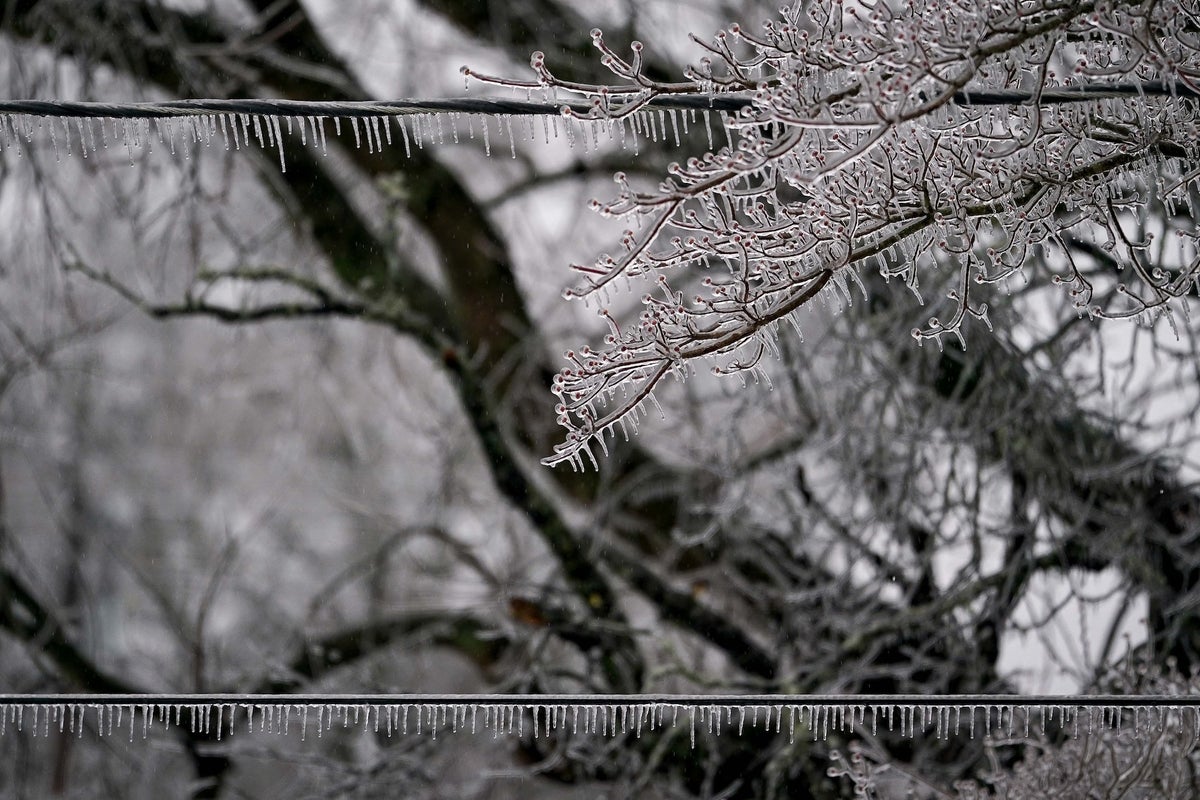
"In a winter storm, the temperature at different layers of the atmosphere determines what kind of precipitation falls. When the atmosphere is below freezing from the surface upward, snow falls. But if there is a layer of warm air between higher levels of the atmosphere and the surface (what is called a temperature inversion), that snow melts into rain. And if there is a deep enough layer of freezing air below the inversion, the falling rain refreezes into hard pellets of ice called sleet."
"If it's not deep enough, however, the rain stays liquid but freezes on contact with cold surfaces, especially exposed ones, such as bridges, tree branchesand power lines. For a large part of the southern U.S., the latter scenario is exactly what came to pass with this storm, as warm, moist air from the Gulf of Mexico was pulled into the weather system, melting the snow and turning it into freezing rain that hardened into ice on the ground."
A winter storm produced heavy snow in some areas and widespread power outages across large regions. Up to two feet of snow fell in places, but 0.5 to one inch of ice from freezing rain caused the most infrastructure damage. Freezing rain forms when a warm layer aloft melts snow into rain that then encounters shallow subfreezing air and freezes on contact with cold surfaces. Sleet forms when raindrops refreeze before reaching the ground. Adhesive ice accumulates on exposed surfaces, adding weight to power lines and tree branches and increasing the likelihood of outages and failures.
Read at www.scientificamerican.com
Unable to calculate read time
Collection
[
|
...
]