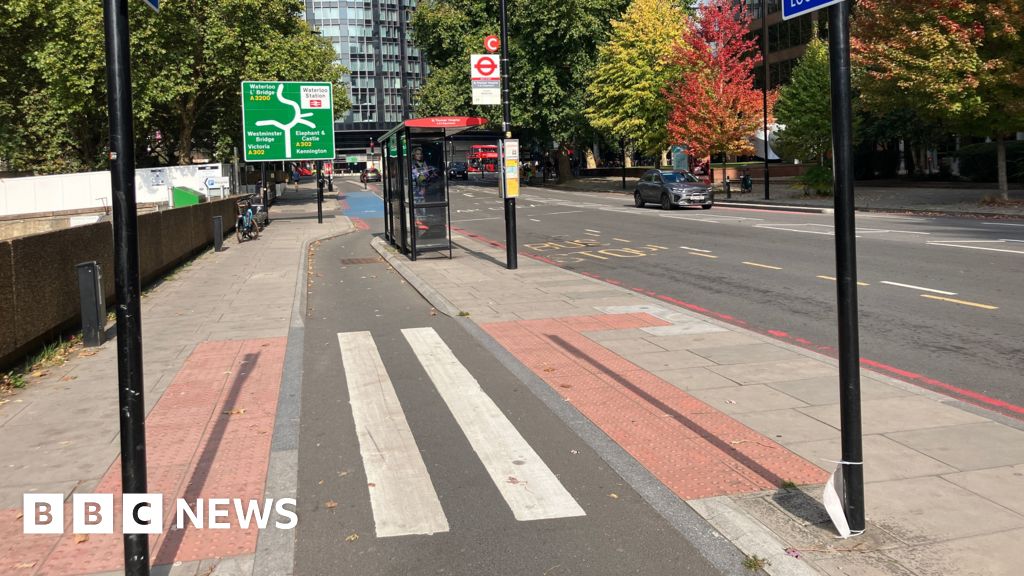
"The design, which has a cycle lane between the stop and the kerb, is intended to allow bus passengers to get on and off safely while cyclists continue moving. Sarah Gayton, street access campaign co-ordinator at the National Federation of the Blind of the UK, said: "It does not address the concerns that blind and visually impaired people have and it's totally insulting to think that we'll accept this.""
"Another type of floating bus stop is a bus stop bypass, where the bike track runs behind the bus stop/shelter, which are the ones installed by TfL. There are no SUBBs on TfL's road network but many exist on roads managed by London boroughs. NFB TfL says there were five pedestrian casualties involving cyclists and one with an e-scooter in a three-year period at floating bus stops compared with 11,400 pedestrians injured by motor vehicles."
"The fresh DfT guidance, published on Monday, follows November's announcement of a pause in the installation of Shared Use Bus Border (SUBB) where passengers alight from or into a cycle track. Transport for London (TfL) has admitted that data used for "implementation dates of some of the bus stop bypasses had been recorded incorrectly"."
Updated government guidance addresses the rollout of floating bus stops that place a cycle lane between the kerb and the bus boarding area. Campaigners describe the guidance as shambolic and call for its withdrawal, arguing the design fails to address safety and access concerns for blind and visually impaired people. The Department for Transport issued the guidance following a pause on Shared Use Bus Borders (SUBBs). Transport for London admitted errors in recorded implementation dates for some bus stop bypasses. TfL reported five pedestrian casualties involving cyclists and one involving an e-scooter over three years, while 11,400 pedestrians were injured by motor vehicles. There were 164 floating bus stops in London in 2024.
Read at www.bbc.com
Unable to calculate read time
Collection
[
|
...
]