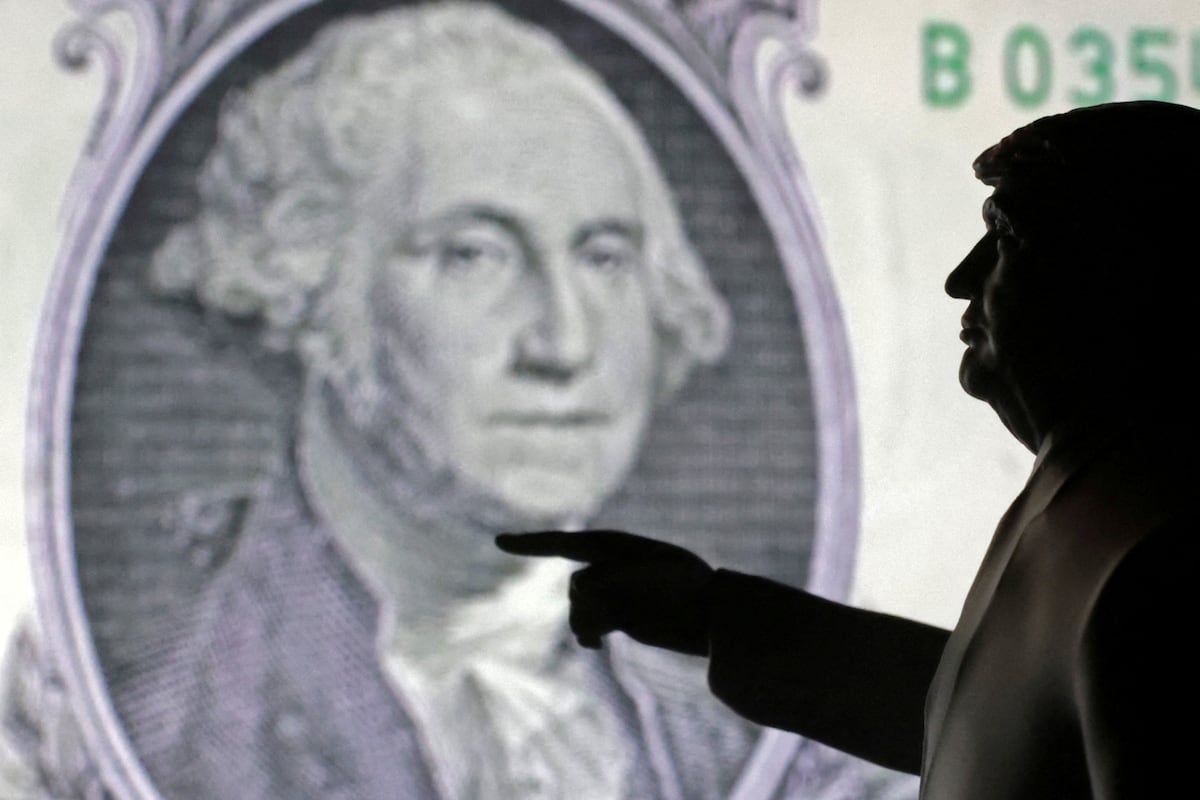
"The picture of U.S. strength promoted by Trump, with flashy images and lofty statements, contrasts with weakness in the financial markets. While the tech frenzy is still driving the stock market, investors are focusing on keeping their portfolios safe from the White House's capricious actions. The whirlwind of events in January brought on by Donald Trump, along with the financial storm in Japan, have increased instability and fueled expectations of a weak dollar."
"Trump's attack on the U.S. Federal Reserve through the investigation of its chairman Jerome Powell, the rift with Europe over Greenland, and the rapid rise in long-term interest rates in Japan have pushed the currency to trade at $1.195 per euro the lowest level since 2021 after falling 2.7% in one week. And the market expects it to fall even more."
"The recent weakness of the U.S. dollar seems to be largely due to inconsistencies in U.S. domestic and international policy, which have undermined investor confidence, explains David Meier, economist at Julius Baer. As a result, rumors of currency devaluation have resurfaced, pushing the dollar down even in the absence of macroeconomic factors. Although it has weakened, it remains highly overvalued and we continue to expect a further decline, adds the analyst from the Swiss bank, expressing a view that is practically the consensus"
U.S. political unpredictability and mixed domestic and international policies have weakened the dollar and eroded investor confidence. Flashy presidential imagery contrasts with weakness in financial markets while a tech-driven stock rally continues. January events and a financial storm in Japan increased instability and fueled expectations of further dollar weakness. Attacks on the Federal Reserve, a rift with Europe over Greenland, and rising long-term Japanese interest rates pushed the euro to $1.195, its weakest since 2021. Rumors of devaluation resurfaced despite limited macroeconomic justification. Political fragmentation and policy unpredictability are driving portfolio diversification toward European assets perceived as more stable.
Read at english.elpais.com
Unable to calculate read time
Collection
[
|
...
]