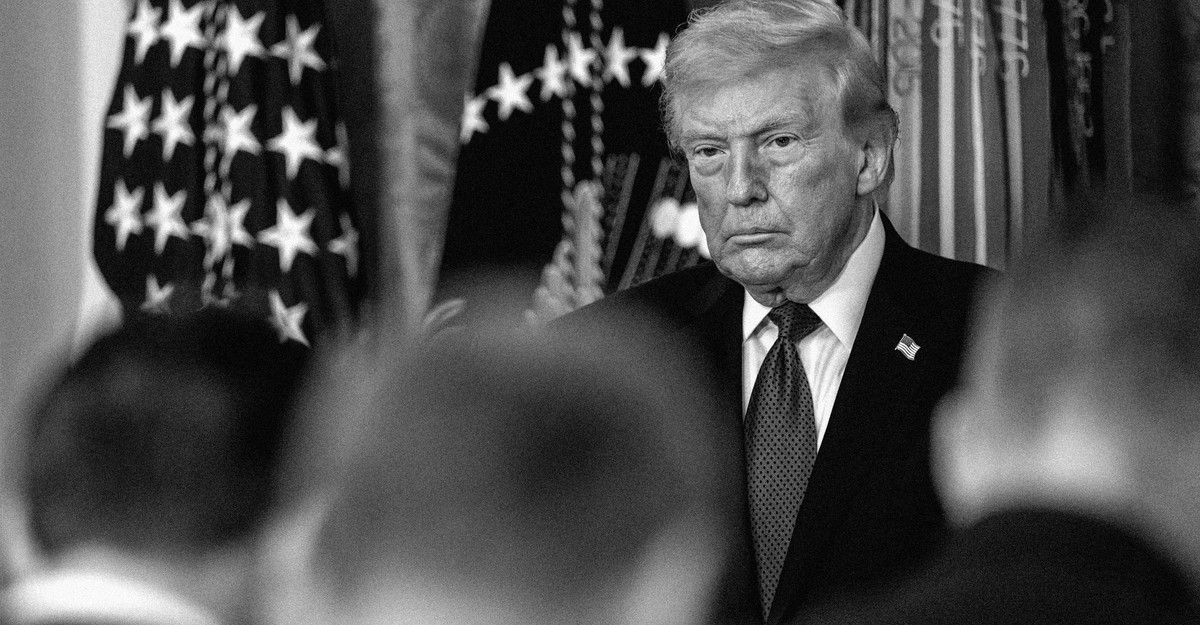
"Donald Trump has taken America into war with a country whose population is approximately the size of Iraq's and Afghanistan's combined. He has done this without making a case to the American people, and without approval of any kind from their elected representatives. His launching of hostilities (with the embarrassingly bro-themed name "Operation Epic Fury") is the culmination of decades of expanding presidential powers over national-security issues."
"Congress could decide to cut off funding for the war, which at this point could be as reckless an act as starting one. It could pass a resolution demanding an immediate end to hostilities-also a risky move. Men and women overseas did not choose to go, and they should at least be allowed to conduct their operations without worrying that Congress will simply turn off all funding."
"Congress does have a less dramatic option: It could invoke the 1973 War Powers Resolution, a law often discussed but rarely understood by the public."
Trump initiated military hostilities against a nation with a population comparable to Iraq and Afghanistan combined without seeking approval from Congress or making a case to the American people. This action represents the culmination of decades of expanding presidential authority over national-security matters. While critics argue the war violates U.S. and international law, Congress faces difficult choices to reassert control. Options include cutting war funding, passing resolutions demanding hostilities cease, or invoking the 1973 War Powers Resolution. Each option carries significant risks, including potentially endangering deployed military personnel. The majority of Americans oppose the conflict, yet the president has proceeded unilaterally.
#presidential-war-powers #congressional-authority #war-powers-resolution #military-operations #constitutional-law
Read at The Atlantic
Unable to calculate read time
Collection
[
|
...
]