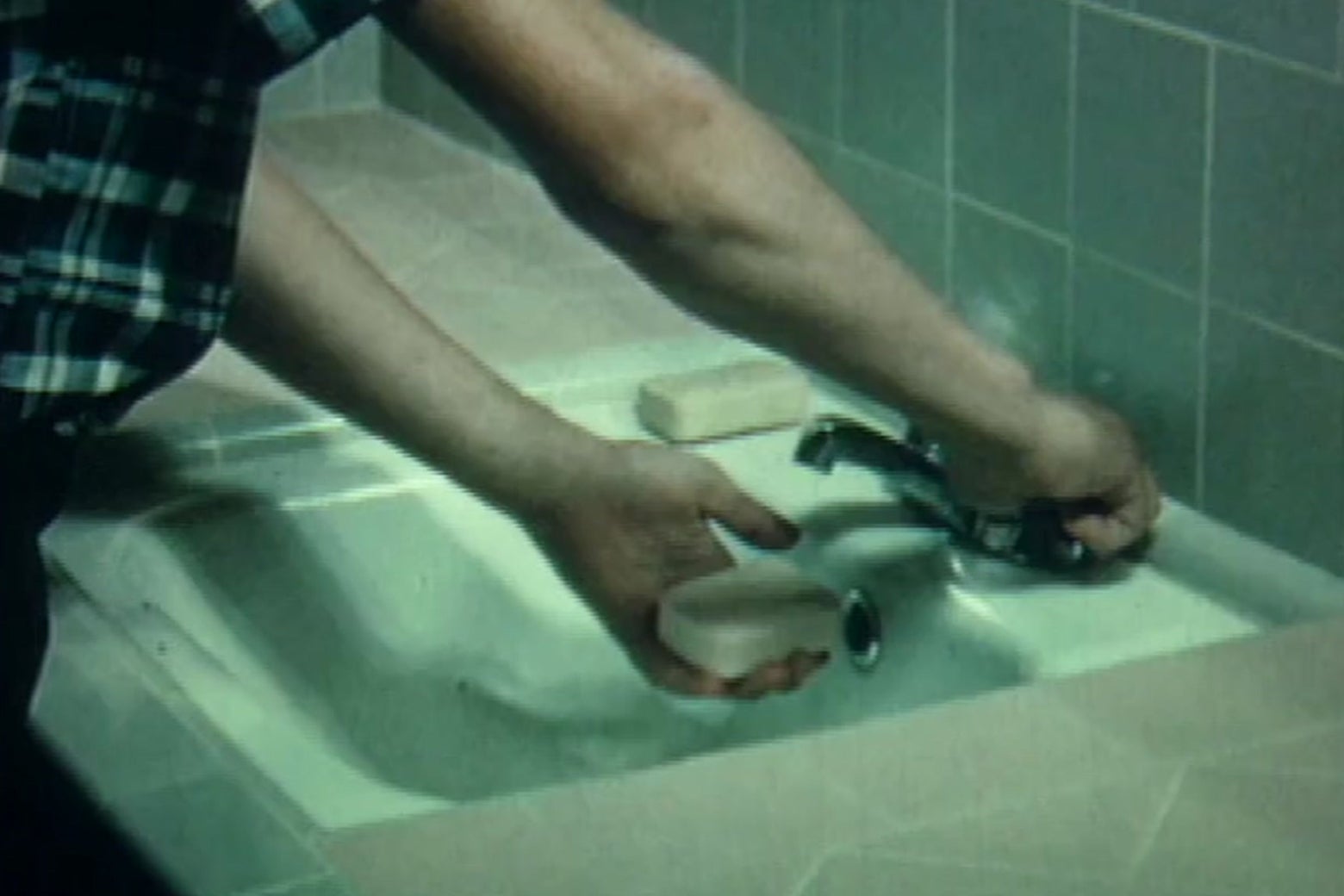
"On a recent stay at a friend's house, I encountered a familiar problem. The friend, a thoughtful host, had left us washcloths, shampoo, body wash, toothpaste, and towels. She'd set out a bottle of filtered water and plastic cups. But when I stepped into the shower, I discovered that she had not given us what once would have seemed like a basic personal-care necessity: a bar of soap."
""Body wash is outpacing bar soap in growth and consumer preference," Brian Sansoni, of the industry group the American Cleaning Institute, told me. Over the coming decade, bar soap sales are projected to grow at a rate 21 percent lower than those of body wash, according to Sansoni. And bar soap skews old: About 54 percent of older Americans use solid soap, but only 22 percent of consumers ages 18 to 34 do."
"In this era of peak skin care, the humble bar of soap seems like a utilitarian cleaning tool, not a bespoke cleansing solution. Rubbing some communal chunk of who-knows-what on your own personal skin? Madness. So undesirable is bar soap that at my local CVS, the store doesn't even bother to lock it behind glass, unlike every other personal-care product. After all, only grandpas would steal it."
A guest encounter revealed common bathroom provisions—washcloths, shampoo, body wash, toothpaste, towels, filtered water, and cups—yet lacked a bar of soap. Bar soap has largely been replaced in American bathrooms by shower gels, facial cleansers, silicone loofahs, and pump-dispensed liquids. Hotels are adopting wall-mounted, refillable liquid dispensers instead of individually wrapped bars. Industry figures show body wash growing faster than bar soap, with bar soap usage concentrated among older Americans. Bar soap is viewed as utilitarian and unfashionable, but some people prefer its cleaning efficiency, lather, visible remaining supply, and lower cost.
Read at Slate Magazine
Unable to calculate read time
Collection
[
|
...
]