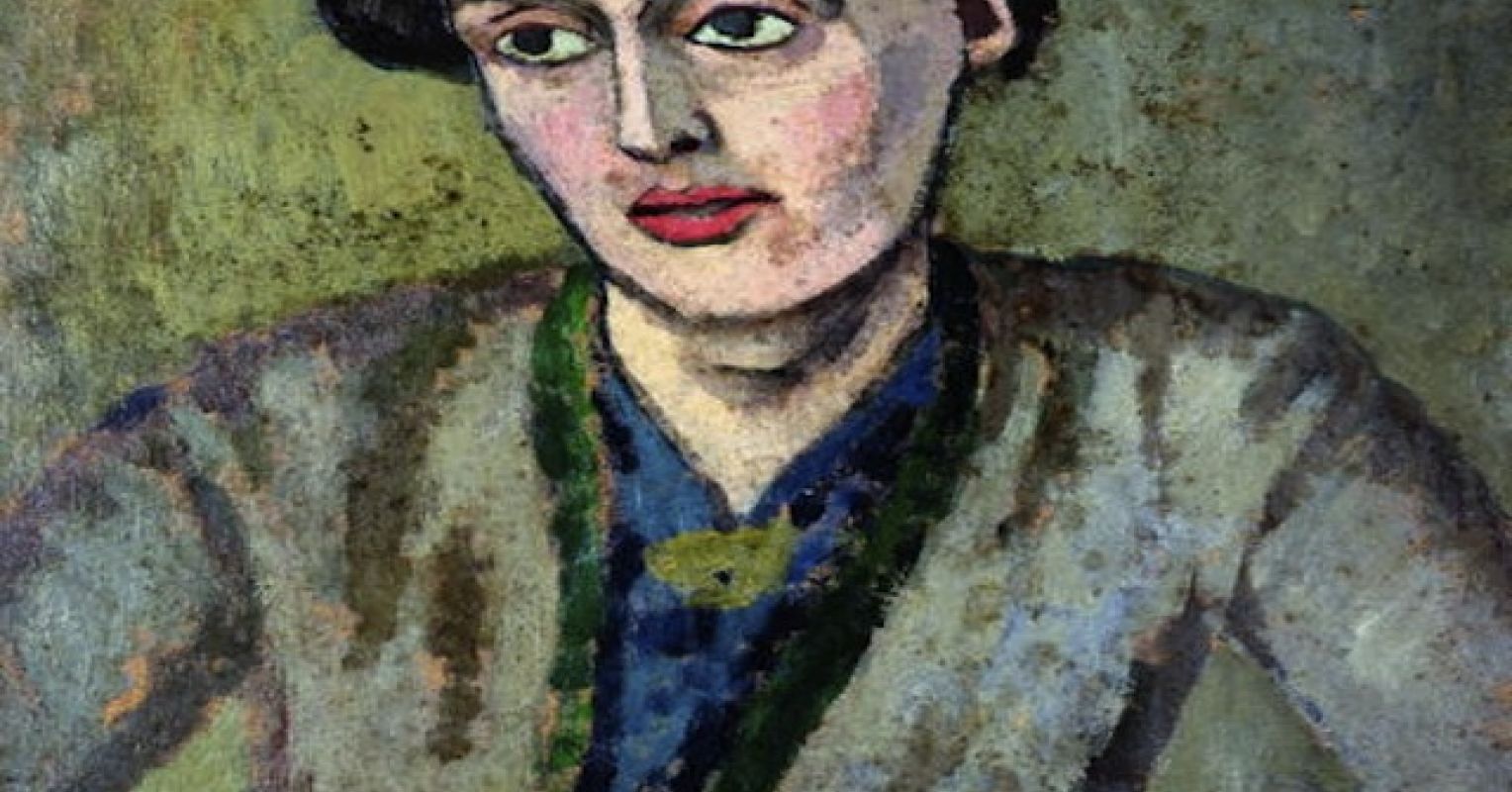
"Woolf sought to "record the atoms as they fall upon the mind" and "trace the pattern, however disconnected and incoherent in appearance, which each site or incident scores upon the consciousness." Woolf's atoms and "scores" are fundamental to her narrative techniques—revolutionary during her time and newly relevant today. How we pay attention, she is arguing, changes us."
"Odell advocates for what she calls bioregionalism, "an awareness not only of the many life-forms of each place, but how they are interrelated." Later, discussing David Hockney's paintings, John Cage's experiments with the musicality of ambient sound, and William Blake's poetry, she makes the point that "Practices of attention and curiosity are inherently open-ended, oriented toward something outside ourselves.""
"Reading Virginia Woolf in 2026 feels like an answer to a widespread cultural yearning to reclaim our fleeting attention spans. A stream of consciousness is inherently open-ended. That much seems obvious. Woolf is attuned to the attention's unpredictable non-linearity."
Virginia Woolf's revolutionary stream-of-consciousness style, which captures the unpredictable flow of thoughts and sensations as they occur in the mind, offers a powerful model for understanding attention in the modern world. Woolf sought to record the raw atoms of experience as they impact consciousness, tracing patterns however disconnected they appear. This technique reveals how attention fundamentally changes us. Contemporary works like Jenny Odell's How to Do Nothing address the attention economy's invasive logic, advocating for bioregionalism and practices of curiosity oriented toward interconnected life-forms and external relationships. Woolf's open-ended narrative approach anticipates these modern concerns, demonstrating that stream of consciousness inherently resists linear thinking and commercial distraction, offering an alternative way of engaging with the world.
#virginia-woolf #stream-of-consciousness #attention-and-distraction #digital-culture #bioregionalism
Read at Psychology Today
Unable to calculate read time
Collection
[
|
...
]