#3d-printing
#3d-printing
[ follow ]
#product-design #legislation #censorship #ghost-guns #diy #lighting-design #home-decor #home-office #innovation
fromBikerumor
1 week agoThe Reactor Aero V2 Super Bike by No22 is Finally Ready for Production. Really.
The first production-representative Reactor Aero is currently being printed. Our production path is fully solidified. First, 3D-printed sub-assemblies are done by RAM3D in New Zealand. Then, it's shipped to our production facility in Johnstown, NY, where they are welded, aligned, and finished in-house.
Bicycling
fromYanko Design - Modern Industrial Design News
1 week agoThe Xbox Prototype That Cost $18K Now Takes Just a Spool of Filament - Yanko Design
The original Xbox prototype, revealed at GDC 2000, was a massive X carved from a single block of aluminum, reportedly costing around $18,000 per unit.
UX design

Pets
fromYanko Design - Modern Industrial Design News
2 weeks agoThis 3D-Printed Pet House Looks Like a Retro TV That Lets You Watch Your Cat Sleep Instead Of Netflix - Yanko Design
A 3D-printed pet house shaped like a vintage CRT television offers a unique and entertaining design for pets and their owners.
fromYanko Design - Modern Industrial Design News
2 weeks agoThis Resin 3D Printer Packs 14K Resolution and Auto-Tool Release, Giving You Sharper Prints Without The Mess - Yanko Design
YIDIMU's MagPro printer is built around a one-click auto-release mechanism that eliminates scrapers entirely, allowing finished models to pop off cleanly without any tools.
Graphic design



fromFast Company
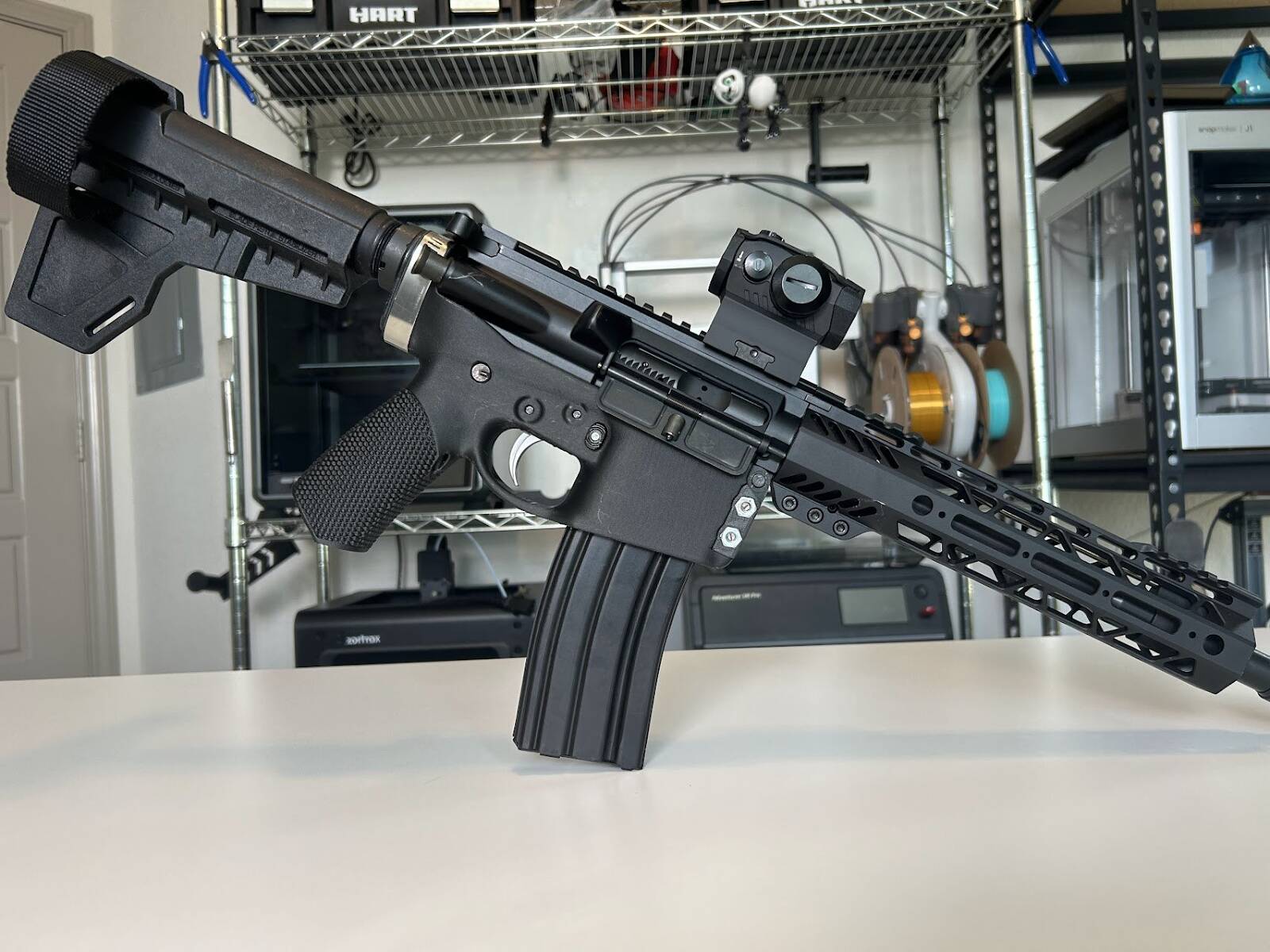
3 weeks agoLawmakers want to restrict 3D printing to stop ghost guns. Critics say it won't work
"What they're talking about doing is banning certain kinds of shapes," says Kyle Wiens of iFixit, an outspoken opponent of the proposals. "We are starting to really dangerously undermine a lot of assumptions that go into how we make and use technology."
Intellectual property law
fromYanko Design - Modern Industrial Design News
4 weeks agoSomeone Turned the "Cat Knocking Things Off Tables" Meme Into a 3D Printed Lamp and It's Perfect - Yanko Design
Cats knocking things off tables is perhaps the most documented animal behavior in human history, captured billions of times, studied by actual ethologists, and still inexplicably funny every single time.
Typography

Gadgets
fromYanko Design - Modern Industrial Design News
1 month agoFlipper One vs Flipper Zero: The Size Difference Tells You Everything You Need to Know - Yanko Design
Flipper Devices published full mechanical CAD files for the Flipper One on Github, enabling community 3D printing of the 152.6mm-wide Linux handheld device that is significantly larger than the Flipper Zero.
fromYanko Design - Modern Industrial Design News
1 month agoThis Foldable DIY Cyberdeck Has Breadboards Built In and Runs Doom - Yanko Design
What separates this from a standard Raspberry Pi build is the pair of breadboards soldered directly to the GPIO pins, seated inside the case, and accessible through a removable back panel. Connecting a sensor no longer means hunting for a separate breadboard and a tangle of jumper wires. PickentCode plugged in a temperature and humidity sensor and had it reading live data within minutes.
Gadgets
fromdesignboom | architecture & design magazine
1 month agomechanical marble clock moves steel balls into pixel-like digits to tell the time
The inspiration for the mechanical marble clock comes from Ivan Miranda, an engineer known for building enormous marble clocks at an almost architectural scale. The response project is quite the opposite, though, because the creator tries to see what the smallest, simplest, cheapest version of this idea could work.
Gadgets
fromwww.theverge.com
1 month agoWhat if your real computer was a super-sized Lego computer brick?
The M2x2 is largely a 3D-printed case for a Mac Mini, one you can freely print at home yourself, but it's not just a shell. He's outfitted it with a 7-inch IPS touchscreen display, and a full array of additional ports and SD card reader thanks to an integrated USB-C hub.
Gadgets
fromdesignboom | architecture & design magazine
2 months agofuturistic masks by iga weglinska intensify different senses through restricted access
Perfect Sense is a series of six objects by designer Iga Węglińska that examines the concept of sensory substitution. The project investigates how the brain compensates when access to one sense is reduced, intensifying other sensory modalities and altering perceptual hierarchies.
Design

Gadgets
fromYanko Design - Modern Industrial Design News
2 months ago3D-Printed Faces for Robot Vacuums Get Messy Every Time They Bump - Yanko Design
A 3D-printed Petokka kit adds movable cat/dog facial parts to robot vacuums, giving them personality through gravity-driven, non-electronic eyes and ears.


fromYanko Design - Modern Industrial Design News
2 months ago3D-Printed Whale-Shaped Mouse Began as a Bored Classroom Sketch - Yanko Design
Sitting in class, bored, doodling in the corner of a notebook with no plan beyond passing time is how a lot of throwaway sketches happen. Most stay throwaway. Sometimes, though, one curved line that looks a bit like a wave or a tail slowly becomes something that sticks in your head, and you keep drawing it until it isn't just a line anymore, it's a character with a face.
Gadgets
fromYanko Design - Modern Industrial Design News
2 months ago3D-Printed Guitar Amp Desk Organizer Brings Concert Energy to Your Boring Monday Morning - Yanko Design
The contrast between Sunday night at a concert and Monday morning at your desk is brutal. One moment you're lost in the music, feeling every guitar riff vibrate through your chest. The next, you're answering emails and pretending last night's euphoria wasn't real. The transition back to routine work feels especially cruel when the weekend gave you a taste of something electric.
Gadgets
fromYanko Design - Modern Industrial Design News
2 months agoFour Robot Arms Just Built a Farm House That Prints Its Future - Yanko Design
Picture this: four robotic arms working in perfect harmony, tracing circular patterns like some kind of futuristic dance performance. But instead of creating art, they're printing the walls of an actual farm. Welcome to Itaca, a project that just wrapped up its construction in the hills of Northern Italy, and it's changing how we think about building homes. WASP, the Italian company behind this audacious venture, just finished printing the walls of what they're calling the first certified 3D-printed construction in Italy.
Agriculture
Gadgets
fromYanko Design - Modern Industrial Design News
2 months agoDIYer creates a retro-modern typewriter computer with moving screen on the slide - Yanko Design
A functional gaming PC and working mechanical typewriter keyboard were integrated by rebuilding the typewriter's keyboard with 3D-printed parts and fitting PC components inside.
Agriculture
fromdesignboom | architecture & design magazine
2 months agoself-sufficient 3D printed farm inspired by mandala geometry finishes building wall in italy
Itaca is a self-sufficient 3D-printed farm using lime-based walls, rice-husk infills, green roof, solar power, rainwater harvesting, and agroforestry for sustainability.
Russo-Ukrainian War
fromBusiness Insider
2 months agoUkraine showed a British unit that it needs to 3D-print drone parts and be able to do it close to the fight
A British Army battalion is using 3D printing to produce drones, parts, and munitions quickly and cheaply near the battlefield, inspired by Ukrainian practice.
fromYanko Design - Modern Industrial Design News
3 months agoMorphable Shows How a Game Controller Could Adjust to Your Hands - Yanko Design
Settling in for "just one more run" usually means your thumbs, wrists, or forearms start complaining long before the game is done. Most controllers are fixed objects that expect your body to adapt, which can lead to repetitive strain or numbness. You either push through the discomfort or take breaks that feel like interruptions, but rarely can you adjust the hardware itself to match how your hands actually feel in that moment.
Gadgets
fromBusiness Insider
3 months agoShipbuilders put 3D printed parts on a US aircraft carrier and submarine. The Navy liked the results.
The US Navy is betting on 3D printing parts to speed up work on the fleet while also cutting costs after two wins last year, the service said recently. A Naval Sea Systems Command release said that additive manufacturing moved "from a promising capability to a warfighting capability in 2025." Two examples the Navy said were among the service's most significant achievements last year involved putting 3D-printed parts on its most in-demand and complex vessels.
World news
fromYanko Design - Modern Industrial Design News
3 months agoThis 3D-Printed Roof Is Saving 2,000-Year-Old Roman Tombs - Yanko Design
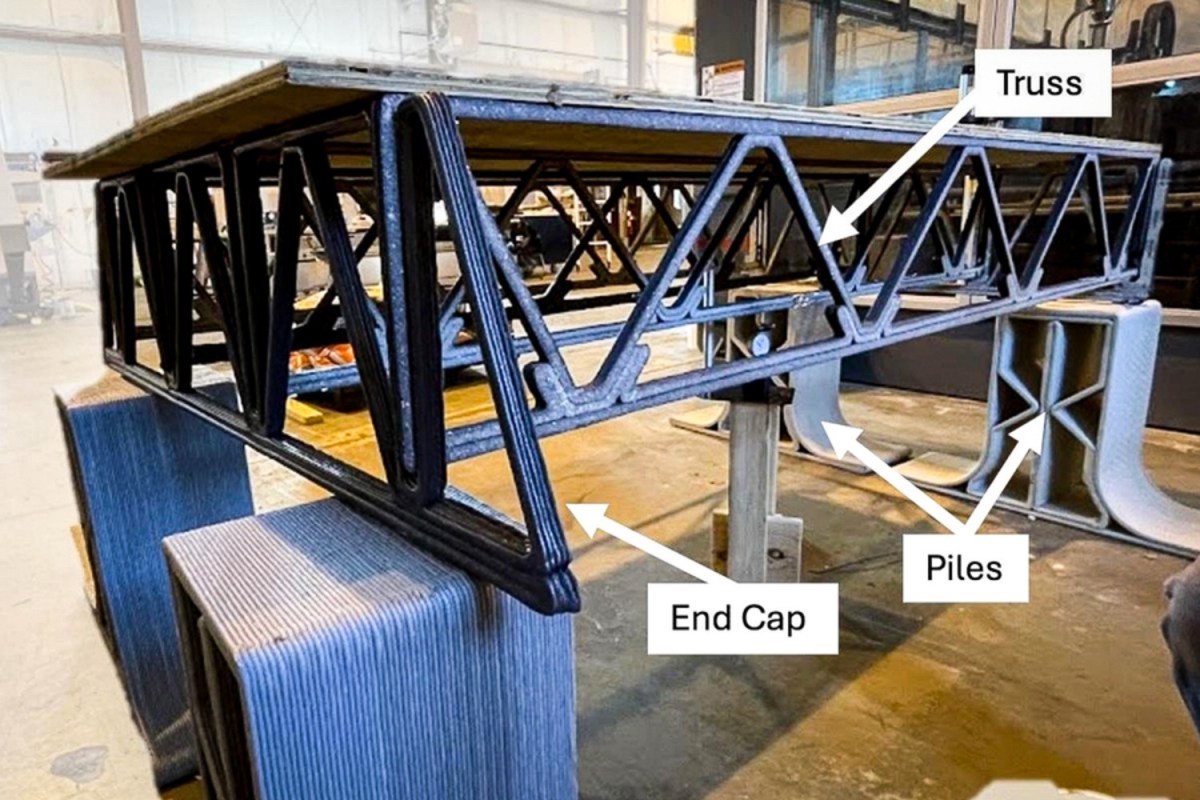
What makes this canopy special isn't just that it uses 3D printing technology, though that's certainly impressive. It's the way the designers thought about the entire system. Rather than simply throwing a roof over the tombs and calling it a day, they created what's essentially a climate-control system disguised as architecture. The canopy features a double-layer envelope that does way more than keep rain off ancient stone. Built into this roof are ventilation and air extraction components that actively regulate temperature and humidity.
Design
fromTime Out New York
3 months agoBrooklyn Museum's hottest new haute-couture exhibit will spotlight Iris van Herpen
Fashion fans, mark this one on your calendar: May 2026 won't just bring the return of the December 6 at the arts institution, " Met Gala, one of style's biggest nights, but also the debut of a high-profile new fashion exhibition at the Brooklyn Museum. Opening its doors (or, rather, spreading its kinetic, three-dimensional wings) on Saturday, May 16 and running through Sunday, Iris van Herpen: Sculpting the Senses" will celebrate one of the most forward-thinking designers in the industry, with 140 extraordinary haute-couture creations from the iconic Dutch designer on view alongside contemporary artworks, objets d'art and scientific artifacts.
Fashion & style
fromYanko Design - Modern Industrial Design News
3 months agoThis Kevlar Medical Brace Folds Flat Like Origami and Might Finally Kill the Plaster Cast - Yanko Design
Bracesys sidesteps all these limitations with an adjustable framework of segmented units, articulating connectors, and tension dials. The entire system weighs just 150 grams and folds flat into an envelope, yet provides rigid support comparable to traditional casts. More remarkably, clinicians can customize it to each patient's anatomy in real time, adjusting the fit as swelling decreases and healing progresses.
Medicine
fromZDNET
3 months agoI didn't need this, but I used AI to 3D print a tiny figurine of myself - here's how
That's today's project. In this article, I'll show you how I started with a picture of me, used some intermediate AI, and turned it into a physical 3D plastic me figurine. Do I need a me figurine? No. Is it cool? Yeah. Does it show off another AI capability? Yep. I'll be honest. I didn't expect my editor to sign off on this pitch.
Artificial intelligence
Gadgets
fromYanko Design - Modern Industrial Design News
3 months agoThis Reciprocating Detail Sander Works on Detailed Projects like Gundam Kits, Wood, and Jewelry - Yanko Design
NeoSander is a palm-sized, cordless linear-motor detail sander delivering up to 13,000 SPM and adjustable stroke for precise, low-vibration finishing in tight spaces.
Gadgets
fromYanko Design - Modern Industrial Design News
3 months agoSpotify Record Player brings tactile experience of enjoying vinyls to the streaming world - Yanko Design
A Raspberry Pi-powered desk player uses RFID/NFC, a stepper motor, hall-effect sensing, and 3D-printed parts to play Spotify via miniature vinyl coasters.
fromdesignboom | architecture & design magazine
3 months agomodular 3D printed facade wraps workspace in japan like knit textile
CIRCULUS Atelier is the working studio of Oka Architecture Design & Co., Ltd. (OAD) and a built application of the practice's CIRCULUS architectural framework, which examines circularity, continuity, and long-term adaptability in design. Conceived as both a in Yokohama, , and a prototype, the project investigates how digital fabrication can inform architecture as a system that integrates exterior enclosure and interior spatial treatment within a unified logic.
Design
Wearables
fromBusiness Insider
4 months agoSilicon Valley is raising billions to develop AI products. These 15-year-olds built theirs for under $100.
Three 15-year-olds built wearable AI glasses for under $100 that translate text-to-speech in real time with over 90% accuracy for visually impaired users.
Environment
fromThe Mercury News
4 months agoThe "surfer's paradox" is that their boards can harm the oceans they cherish. A new process is helping to change that.
3D-printed surfboards made from renewable materials can reduce surfboard-related plastic waste and carbon emissions compared with traditional oil-based foams.
fromYanko Design - Modern Industrial Design News
4 months agoSuper Game Boy is a huge handheld that plays classic arcade games - Yanko Design
The DIY starts off by creating a 3D printed shell (using a light curing printer, printing for a week) that houses the 10-inches electroluminescent LCD TV that emulates the warm glow of the original Game Boy. The choice of the display makes sense as the soft glow illuminates the pixels that otherwise would look too harsh on the big display compared to small screen of the Game Boy.
Video games
Gadgets
fromYanko Design - Modern Industrial Design News
4 months agoLEGO And Creality Come Together in This Incredibly Detailed Ender-Inspired 3D Printer Model - Yanko Design
A LEGO model replicates the Ender-style Creality 3D printer, capturing its utilitarian aesthetic and Cartesian kinematics as a desk-sized, non-functional collectible.
fromMission Local
4 months agoS.F.'s latest art show covers the city's drains
The small artworks are the calling cards of San Francisco artist DraINvader, who's on a mission to cover sewer drain holes with something worth noticing. "The idea is, every piece solves a real problem while adding something beautiful," he said. For the past several months, DraINvader has been steadily installing his pieces on city sidewalks. Each customized square plate features a 3-D printed image, such as a butterfly, a Day of the Dead skull or Star Wars' R2-D2.
Arts
fromBusiness Insider
4 months agoUkraine's trench war runs on an easily overlooked weapon: grenades
Grenades - a standard but often unglamorous part of modern infantry combat - have become indispensable in Ukraine's close-quarters and grueling fight against Russia's invasion. The war blends advanced technologies like drones and electronic warfare with grinding, World War I-style fighting, where soldiers sometimes battle at arm's length in muddy trenches and bunkers. In those confined spaces, Ukrainian and Russian troops alike rely heavily on grenades.
Careers
fromYanko Design - Modern Industrial Design News
4 months agoHuman-Sized Pokeball Stands At 6 Feet Tall (And Has A Gaming Room Inside) - Yanko Design
Someone finally built a life-sized Pokéball you can actually climb inside, and honestly, it's about damn time. For nearly three decades, we've been throwing these things at Pidgeys and Rattatas without ever really knowing what happens when that button clicks and the whole thing seals shut. The anime gave us vague red-light-energy-conversion-something explanations, the games treated it like a loading screen, and the trading cards just showed them closed. The mystery has persisted through 1,000+ Pokémon species, countless regional variants,
Gadgets
Board games
fromYanko Design - Modern Industrial Design News
4 months agoHexagon Board Game Trays Make Perfect Magnetic Desk Organizers - Yanko Design
Magnetic hexagon trays provide modular, snap-together, color-coded compartments with dividers for organizing small desk items, keeping clusters coherent and items accessible.

Gadgets
fromYanko Design - Modern Industrial Design News
4 months agoLife-size 3D-Printed LEGO Technic dune buggy turns a classic toy Into a drivable machine - Yanko Design
A full-scale, drivable replica of the 1981 LEGO Technic 8845 Dune Buggy was built by scaling and 3D-printing every component into a working vehicle.
fromBusiness Insider
4 months agoHow do you get cheap military drones fast? 3D-print them on the battlefield.
Firestorm Labs has designed a small, mobile factory that the company says can fabricate virtually any model of drone or drone part. Each factory consists of two 20-foot shipping containers, outfitted with industrial-grade HP printers. Set-up requires just two to four people, and the company estimates that each factory can currently churn out about 17small-to-mid-sized drones drones per week. The company also has two of its own drone designs.
Venture
Artificial intelligence
fromYanko Design - Modern Industrial Design News
4 months agoThese Ceramic Cups Were Designed And Manufactured Entirely By An Algorithm - Yanko Design
AI-generated Texture Ware creates novel, 3D-printed cups via end-to-end generative tools, establishing a distinct ceramic aesthetic rather than replacing traditional craft.
Arts
fromdesignboom | architecture & design magazine
5 months agotour leandro erlich's underwater 'traffic jam' of concrete coral cars at miami beach's reefline
Twenty life-sized concrete cars were submerged twenty feet off Miami Beach as ReefLine's first deployed artwork, forming an engineered hybrid reef and public habitat.
[ Load more ]