#artillery-support
#artillery-support
[ follow ]
#military-technology #drones #drone-warfare #iran #ukraine #modern-warfare #us-military #artificial-intelligence
#drone-warfare
Russo-Ukrainian War
fromBusiness Insider
1 month agoA Ukrainian bomber drone went out for a strike mission. It returned impaled by a crude trident, photos show.
A Ukrainian drone was impaled by a crude trident made of nails and steel rods, apparently launched from another drone, representing an improvised air defense method in the Russia-Ukraine conflict.
#drones


Miscellaneous
fromBusiness Insider
2 months agoUkraine's top general says that drones are now taking out Russia's soldiers as fast as it gets new ones into battle
Ukrainian drones neutralized roughly as many Russian soldiers in December as Russia mobilized, reflecting a significant rise in drone-caused casualties.
#military-technology

Science
fromLondon Business News | Londonlovesbusiness.com
1 month agoUS Navy Use Laser Weapons During Operation Epic Fury - London Business News | Londonlovesbusiness.com
The US military deployed advanced weapons including HELIOS laser systems, heat-tracking satellites, and cyber tools during Operation Epic Fury to intercept Iranian missiles and drones.
Science
fromLondon Business News | Londonlovesbusiness.com
1 month agoUS Navy Use Laser Weapons During Operation Epic Fury - London Business News | Londonlovesbusiness.com
The US military deployed advanced weapons including HELIOS laser systems, heat-tracking satellites, and cyber tools during Operation Epic Fury to intercept Iranian missiles and drones.
fromwww.theguardian.com
1 week agoThe delusion of easy victory from the air may have seduced the US into another war
Giulio Douhet proposed a revolution in warfare, stating that victory would come from large-scale aerial bombardments targeting civilians and infrastructure rather than just combatants.
Right-wing politics
European startups
fromwww.businessinsider.com
1 week agoThe US military is pushing up production for the weapons that could matter most in a major war
The Department of Defense is increasing production of critical weapons, including THAAD interceptors, to meet rising demand and address stockpile concerns.
History
from24/7 Wall St.
3 weeks ago25 Weapons That Changed Warfare Over the Last Century
Technological breakthroughs over the last century transformed warfare by introducing tanks, missiles, stealth aircraft, and precision-guided weapons that forced armies to continuously adapt tactics and reshape military doctrine globally.
Skiing
fromBusiness Insider
3 weeks agoThe Arctic is stress-testing US Marines and their HIMARS in the most brutal conditions
US Marines train to operate HIMARS rocket artillery systems in Arctic Norway to develop combat capabilities for frozen battlefield conditions that cannot be replicated in North Carolina.
Information security
fromThe Cipher Brief
3 weeks agoThe Drone War's Real Problem Isn't Technology - It's Speed
Defense acquisition reforms implement recommended changes but fail to address the fundamental cycle-time gap between rapidly evolving adversary capabilities and the military's ability to deploy countermeasures.
fromTheregister
1 month agoIranian news claims AWS drone strikes were deliberate
The attacks are part of the IRGC's recent operations against Amazon data centres in Dubai and other strategic centres in the region. Amazon and Microsoft in these operations has dealt a serious blow to the enemy's technological and information infrastructure.
Information security
#us-military-operations
World news
fromBusiness Insider
2 weeks agoTop admiral says US forces are hitting more than Iranian warships. They're destroying mines, drone boats, and torpedoes too.
The US military is systematically destroying Iran's naval capabilities including mines, drone boats, and torpedoes to prevent attacks on the Strait of Hormuz.
World news
fromBusiness Insider
1 month agoUS military: Stealth bombers, fighters, and 'special capabilities' used in first 24 hours of Iran mission
US Central Command deployed over 1,000 strikes against Iranian targets using B-2 bombers, fighter jets, drones, and Tomahawk missiles in Operation Epic Fury.
World news
fromBusiness Insider
3 weeks agoUkraine showed NATO artillery crews how to use drones. Now they're figuring out how to make them work in the Arctic.
NATO forces in the Arctic are adopting drone-assisted targeting tactics learned from Russia's Ukraine invasion, but Arctic conditions create significant operational challenges for equipment designed for temperate climates.
#military-drones
World politics
fromFortune
1 month agoU.S. military gives Iran a taste of its own medicine with cheap copycat Shahed drones, while concern shifts to munitions supply in extended conflict | Fortune
The U.S. military deployed low-cost LUCAS drones modeled after Iranian Shahed drones in combat operations against Iran, costing $35,000 each compared to millions for advanced missiles.

World politics
fromFortune
1 month agoU.S. military gives Iran a taste of its own medicine with cheap copycat Shahed drones, while concern shifts to munitions supply in extended conflict | Fortune
The U.S. military deployed low-cost LUCAS drones modeled after Iranian Shahed drones in combat operations against Iran, costing $35,000 each compared to millions for advanced missiles.
Russo-Ukrainian War
fromBusiness Insider
3 weeks agoThe US Army wants to see if it can get robots to rescue wounded troops like they're doing in Ukraine
The US Army is testing ground robots to evacuate wounded soldiers in high-intensity combat, reducing risk to medical personnel and troops during dangerous battlefield movements.
Russo-Ukrainian War
fromwww.theguardian.com
4 weeks agoRevealed: the Ukrainian facility where UK engineers help fix vital weapons
Britain operates secret military repair facilities inside Ukraine with contracted engineers, fixing donated weapons systems like AS-90 howitzers to keep them operational at the front.
US news
fromJezebel
1 month agoNow the Military Is Apparently Shooting Down Border Patrol's Own Drones
The Department of Defense repeatedly used laser anti-drone technology without FAA coordination, destroying a Border Patrol drone and causing unnecessary airspace shutdowns based on misidentified threats.
fromBusiness Insider
1 month agoThere's a new US Army office 'getting in the dirt' with soldiers and trying to quickly turn their ideas into real battlefield tech
Number one is speed takes priority over perfection. We can iterate to get to operational capability. And the second is that early soldier feedback is critical in order to make sure we're getting the right technology for the future fight, and then we want to be able to prove the demand signal before we spend big dollars on programs.
US news
Gadgets
fromBusiness Insider
1 month agoThe Army's new drone competition is really a talent hunt. It's scouting out what makes a top drone pilot.
The Army uses competitions to identify and select specialized drone operators with specific aptitudes instead of broadly training all soldiers to pilot unmanned aircraft.
fromArs Technica
1 month agoWhoops: US military laser strike takes down CBP drone near Mexican border
The Defense Department didn't realize the drone was being flown by CBP when it shot it down, and had not first coordinated the use of the laser system with the US Federal Aviation Administration. The military hasn't been coordinating counter-drone measures with the FAA, and CBP drone operators didn't inform the military's laser unit that it was launching.
US news
fromBusiness Insider
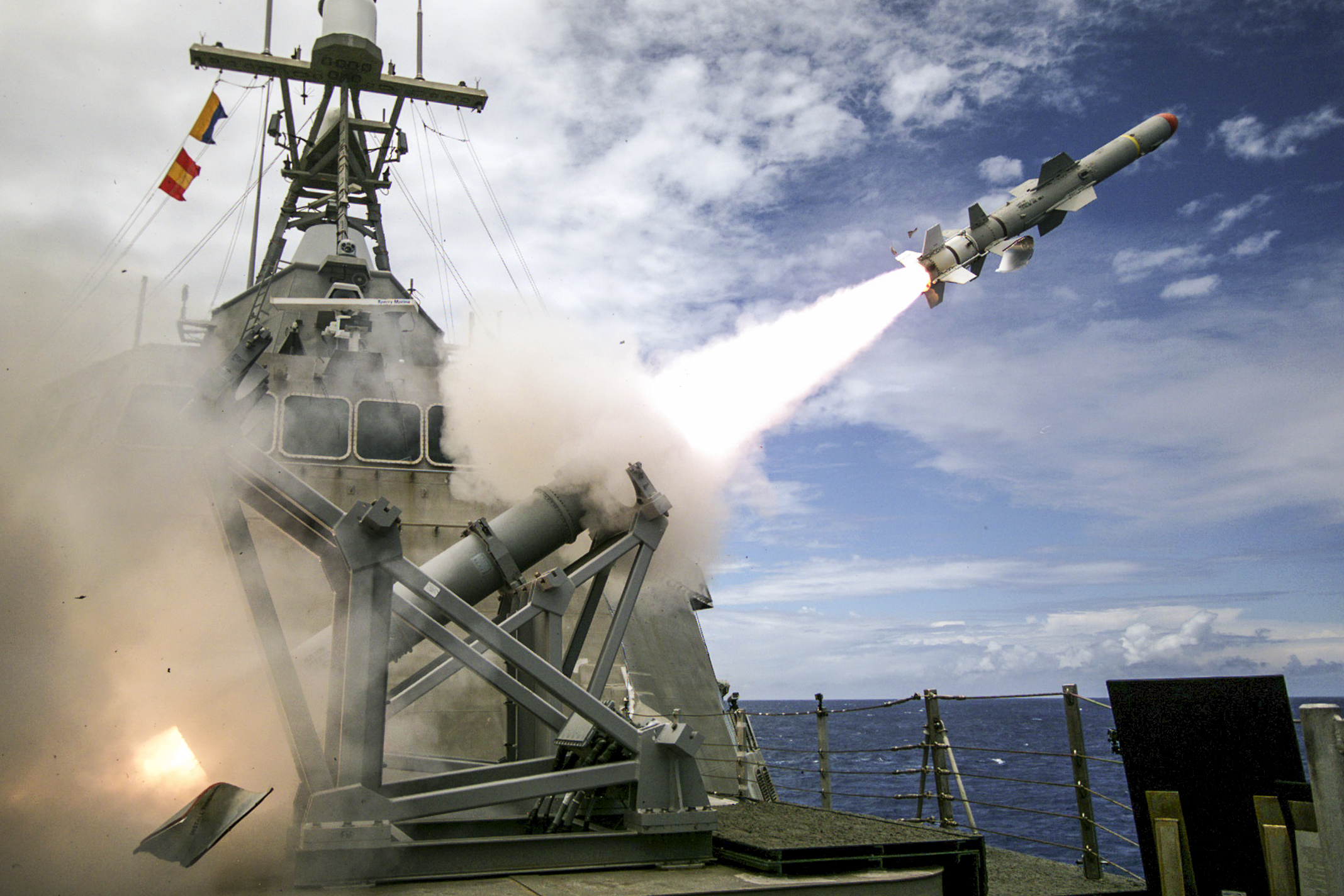
1 month agoA new US military task force just used its cheap Shahed lookalike drones for the first time to strike Iran
The Low-Cost Unmanned Combat Attack System, or LUCAS, is a one-way attack drone that looks nearly identical to the Iranian-designed Shahed. Russia has used Shaheds extensively against Ukraine and now fields its own domestically produced variant.
Russo-Ukrainian War
from24/7 Wall St.
2 months agoMilitary Aircraft That Only Succeeded Because of Their Skilled Crews
Some aircraft succeeded even though they made life harder for the people flying them. They demanded constant attention, punished mistakes, and left little margin for error. Instead of relying on forgiving design, these platforms forced crews to compensate through skill, planning, and coordination. Over time, combat proved that the human element was the decisive factor behind their success. Here, 24/7 Wall St. is taking a closer look at these aircraft that embodied the human factor.
History
Russo-Ukrainian War
fromBusiness Insider
1 month agoVideos show how Ukrainian helicopter crews use machine guns to hunt Russia's exploding Shahed drones
Ukraine deploys helicopter-mounted M134 miniguns with thermal imaging to intercept and destroy Russian Shahed drones, with one crew destroying eight drones in a single day.
fromBusiness Insider
1 month agoUkrainian soldiers are forced to heavily rely on drones, even when other weapons might work better
There was a certain amount of awareness, there was kind of a frustration with the missions that we were being called on to carry out, the people flying the missions, they knew that we were kind of wasting drones. For militaries that have the luxury of time and maybe the luxury of money, I think moving into sort of something a little bit more sophisticated makes more sense.
Russo-Ukrainian War
from24/7 Wall St.
2 months agoThe Sniper Systems That Performed Better in Combat Than Anyone Predicted
Snipers often discover a weapon's true potential only after it leaves the range and enters combat. Dust, cold, heat, and chaos expose weaknesses, but sometimes they reveal strengths no one planned for. Across multiple wars, certain sniper systems proved tougher, more accurate, and more versatile than expected, allowing operators to push ranges and missions far beyond the original design brief. Here, 24/7 Wall St. is taking a closer look at sniper systems that exceeded expectations in combat.
History
from24/7 Wall St.
2 months agoHow Precision Sniper Technology Reduced the Need for Massed Infantry
Infantry once relied on numbers to solve uncertainty. When soldiers could not see or hit targets precisely, the answer was more troops and more fire. Sniper technologies quietly overturned that logic. By extending range, improving accuracy, and increasing awareness, they allowed small teams to dominate space once controlled only by massed formations. Precision replaced presence, and patience became a battlefield advantage. Here, 24/7 Wall St. is taking a look at the sniper technologies that totally changed the game.
Science
fromBusiness Insider
1 month agoThe US Army once saw small drones primarily as scouts. Ukraine showed they could be weapons.
Facing an existential crisis, the Ukrainians had to develop a way to counter hostile forces cheaply yet with mass. That meant figuring out how to turn inexpensive drones into weaponry, a step that quickly and fundamentally changed how the war was being fought. Now, drones carry out 80% of all battlefield hits and are responsible for most combat casualties.
Gadgets
fromBusiness Insider
2 months agoNATO soldiers say they can't let their guns get too warm if they want them to work on frozen battlefields
It's anything but easy to keep guns, drones, and other equipment in the right conditions far above the Arctic Circle, where temperatures routinely drop below 0 degrees Fahrenheit, and the heavy snow brings unwanted moisture that can cause jamming and other problems. NATO military personnel training in northern Finland told Business Insider during a visit to the region in late January that they can't afford to let their guns get too warm if they want them to work in this climate.
Miscellaneous
Artificial intelligence
fromBusiness Insider
1 month agoUS Army leaders say soldiers are drowning in so much battlefield data that AI is needed to make sense of it all
Army AI prototype processes vast battlefield sensor data, retaining context and patterns humans miss, to reduce information overload and improve decision-making.
Artificial intelligence
fromBusiness Insider
1 month agoUS Army leaders say soldiers are drowning in so much battlefield data that AI is needed to make sense of it all
The US Army is developing AI to process and contextualize overwhelming battlefield sensor data faster and more reliably than humans; it is in beta testing.
fromBusiness Insider
1 month agoFor Ukrainian troops, the North Korea problem isn't soldiers launching assaults. It's artillery, lawmaker says.
North Korean soldiers fighting for Russia are still causing problems for Ukrainian forces more than a year after they were first deployed in support of Moscow's war. The North Korean soldiers who were deployed to Russia's Kursk region to thwart a Ukrainian incursion were initially tasked with brutal infantry assaults that resulted in high casualties. Their role has since shifted to drone reconnaissance and artillery operations.
Miscellaneous
US news
fromwww.scientificamerican.com
1 month agoWhy an Army antidrone laser grounded flights at El Paso International Airport
El Paso International Airport closed after a reported cartel drone incursion; authorities used counter‑drone measures, including a DOD-loaned LOCUST laser, to neutralize the threat.
US news
fromBusiness Insider
1 month agoWest Coast Marines want to train 500 new drone pilots a year in a crash course on everything from flying to explosions
Marines run a 15-day drone pilot course training aerial navigation, attack drone operation, and safe explosive payload preparation, aiming to certify 500 operators annually.
[ Load more ]