#commercial-genealogy
#commercial-genealogy
[ follow ]
#ancient-dna #human-evolution #genomics #genetic-genealogy #dna-testing #genetics #ancient-dna-analysis #genealogy
Europe politics
fromTravel + Leisure
1 month agoYour Ancestry Could Unlock an EU Passport in These 13 European Countries
European Union citizenship through ancestry is an affordable alternative to residency-by-investment programs, available through 13 countries including Italy, Ireland, Greece, and Spain, requiring documented European family roots.
Science
fromThe Washington Post
1 month agoNeanderthal males and human females had babies together, ancient DNA reveals
Neanderthal-human interbreeding consistently followed a pattern of Neanderthal males with human females across 200,000 years, suggesting possible mate preferences or social behaviors in ancient populations.
Medicine
fromNature
1 month agoIdentical twins on trial: can DNA testing tell them apart?
Identical twins share identical DNA, making standard forensic DNA testing unable to distinguish which twin committed a crime, though whole-genome sequencing can identify rare post-birth mutations to differentiate them.
fromwww.theguardian.com
1 month agoI clicked on a button and everything changed': how a DNA test turned my life upside-down
It was another detail that the rest of the family apparently knew but had never told me; they thought I already knew. The biology mattered less to me than the secret. Dad had been adopted, it turned out. A classic affliction of the 1950s, in which young, unmarried couples were forced to give away their newborn babies.
Books
fromBoston.com
2 months agoGenealogists release image in attempt to identify child's skull found in N.H. store in the 1990s
Investigative genetic genealogists are asking for the public's help to identify a child whose skull was seized from a Seabrook, N.H., business more than 30 years ago. The DNA Doe Project, a California-based nonprofit that builds DNA profiles from unidentified human remains, released a new facial reconstruction on Monday. The group also announced that the skull - believed to belong to a girl between the ages of 7 and 9 - has ancestral roots on the Greek island of Chios.
US news
Science
fromNature
1 month agoDaily briefing: How DNA testing can tell identical twins apart
Advanced forensic techniques including whole-genome sequencing and epigenetic analysis can differentiate between identical twins in criminal investigations, while GLP-1 drugs show potential in reducing addiction across multiple substances, and researchers have successfully synthesized hexagonal diamond.
fromemptywheel
2 months agoHow Do You Want Your Family to Remember You? - emptywheel
The Stasi, the secret police, were legendary for their data files. Their work was based on instilling fear, and they induced stunningly amazing numbers of East Germans into informing on their neighbors. Something along the lines of 1 in 6 East Germans were informants, whether out of fear or out of approval of what the East German government was doing.
US politics
fromEmptywheel
2 months agoHow Do You Want Your Family to Remember You?
The Stasi, the secret police, were legendary for their data files. Their work was based on instilling fear, and they induced stunningly amazing numbers of East Germans into informing on their neighbors. Something along the lines of 1 in 6 East Germans were informants, whether out of fear or out of approval of what the East German government was doing.
E-Commerce
fromBuzzFeed
2 months ago12 Grandparent Memory Books And Journals To Chronicle Family Histories
BuzzFeed Shopping provides service-focused product recommendations prioritizing readers, vetting products, fact-checking claims, exposing fake deals, and offering authentic, inclusive choices across price points.
fromIrish Independent
2 months agoRisk of carrying the 'Celtic curse' gene varies across Ireland, new study finds
Targeting genetic screening for the condition to priority areas could help identify at-risk individuals earlier and avoid future health complications, experts say. Haemochromatosis symptoms can evolve over decades as high iron levels in the body cause damage to organs. Early diagnosis and treatment - such as regular blood donation to reduce iron levels - is key to prevent liver damage, liver cancer and arthritis.
Public health
fromBusiness Insider
2 months agoBoth of my parents died before my son was born. My grandmother ended up being my son's grandma too.
My mom died when I was young, so I grew up spending summers with her mom in South Dakota. I loved that time with her, but I often only saw her that one time of year. I lived back in Florida with my dad for the rest of the year. When my grandma was older, she embraced the snowbird lifestyle and spent half the year in Florida to escape the Midwest winters.
Parenting

US news
fromwww.mercurynews.com
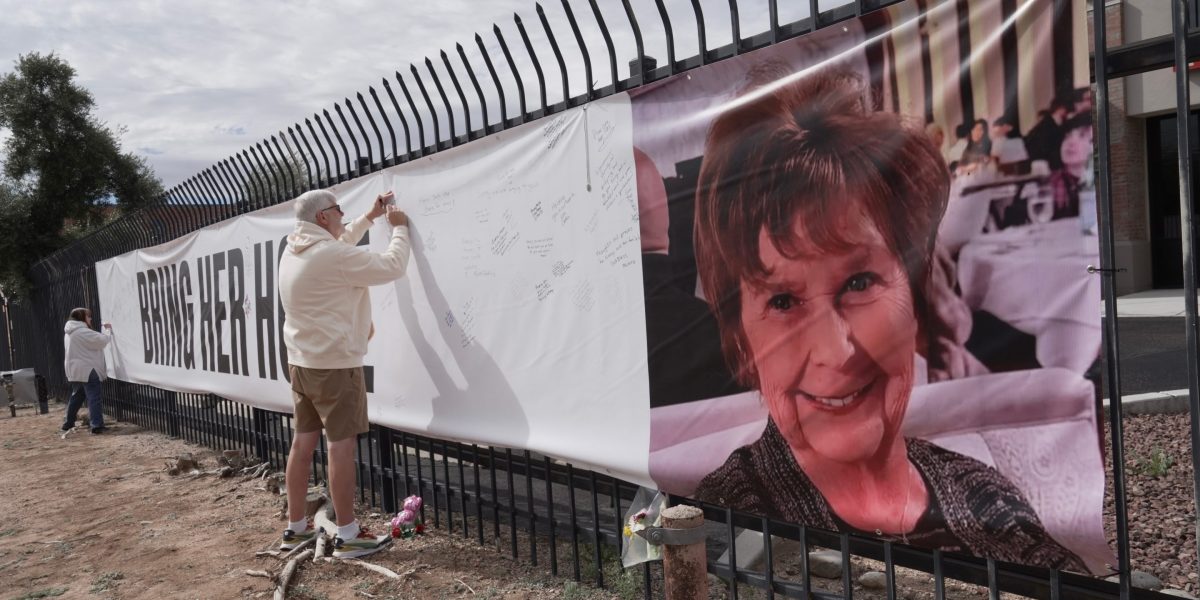
1 month agoGenealogical sites have helped solve major crimes. Police in Nancy Guthrie's case might turn to them
Investigators may use DNA genealogy databases to match DNA from Nancy Guthrie's case and potentially identify suspects or relatives when CODIS yields no matches.
fromThe Atlantic
2 months agoHow I Traced My Ancestor's Journey From Slavery to Freedom
The librarian sat me in front of a microfilm reader and brought out roll after roll of film. I stayed there for hours, squinting to decipher the archaic handwriting in the Free Negro Book, which was published annually in South Carolina before the Civil War. The names in each year's edition were alphabetized, but only roughly-all of the surnames starting with A came before all of the surnames starting with B, but Agee might come before Anderson, or it might come after.
History
fromArs Technica
1 month agoHave we leapt into commercial genetic testing without understanding it?
Martschenko's argument is largely that genetic research and data have almost always been used thus far as a justification to further entrench extant social inequalities. But we know the solutions to many of the injustices in our world-trying to lift people out of poverty, for example-and we certainly don't need more genetic research to implement them. Trejo's point is largely that more information is generally better than less.
Science
fromwww.thehistoryblog.com
2 months agoPreviously unknown Hans Baldung Grien portrait emerges after 500 years in the sitter's family
A previously unknown drawing by the German Renaissance artist Hans Baldung Grien has been rediscovered in a wooden box belonging to the family of the woman who sat for the portrait 500 years ago. Drawings by Baldung are extremely rare, with only a handful known in private collections. One with a direct-line provenance by descent from the original sitter is an unprecedented find.
History
Science
fromwww.scientificamerican.com
1 month agoSex between Neandertals and anatomically modern humans tended to follow a specific pattern
Neandertal-human interbreeding was primarily between male Neandertals and female humans, evidenced by the absence of Neandertal DNA on modern human X chromosomes.
[ Load more ]