Environment
fromTheregister
1 week agoDatacenter boom keeps dirty coal plants alive in the US
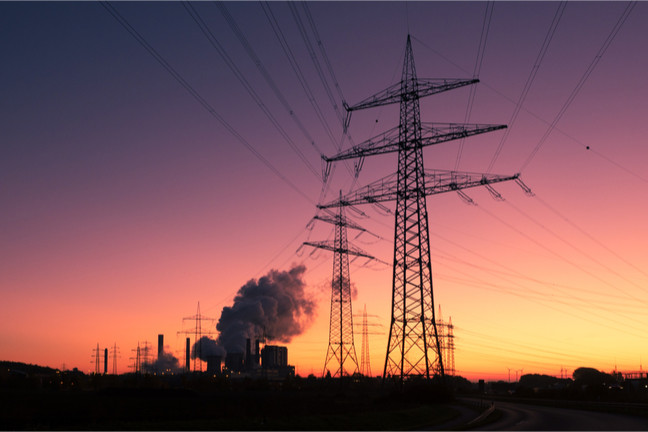
Datacenter growth in the US is delaying coal plant retirements, worsening air pollution and hindering the transition to cleaner energy sources.
To ensure adherence to these commitments, and to better understand the current and future impact of datacenters and other large loads on the electrical grid, it is critical that EIA mandate annual, comprehensive reporting for these entities.
Residents in some areas of Ohio have organized a petition proposing to amend the state's constitution to enact a ban covering data campuses larger than 25 MW, preventing giant hyperscale sites from springing up anywhere in the Buckeye State. The petition was organized by residents of Adams and Brown counties, not far from Cincinnati, and submitted to the Ohio Attorney General's office on Monday.
The challenge is getting the water deep enough to generate steam. At least in the case of the Fervo trial, this involved technologies originally developed by the oil and gas industry to bore two parallel wells to a depth of 8,000 feet (2,438 meters). The rock was then fractured to allow water to pass between the two wells where it was heated to temperatures exceeding 190 degrees Celsius.
AWS has moved quickly to flood the European continent with its elastic compute fabric, but while it may take two years to bring a new datacenter online, securing power for the facilities can take up to seven years, Pamela MacDougall, who heads energy markets and regulation for AWS EMEA, said in an interview with Reuters this week.
One year ago today, Donald Trump was inaugurated as president of the United States. Standing alongside him that day were the leaders of the tech industry's most powerful companies, who had donated to him in an unprecedented bending of the knee. In the ensuing year, the companies have reaped enormous rewards from their alliance with Trump, which my colleague Nick Robins-Early and I wrote about last month after Trump signed an executive order prohibiting states from passing laws regulating AI.
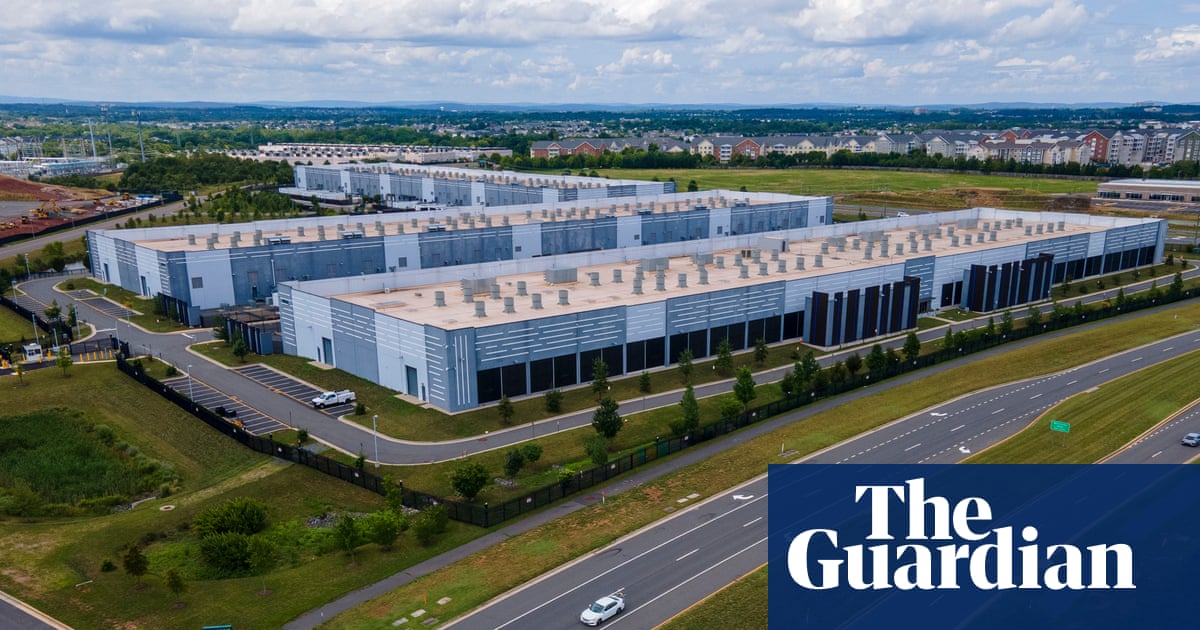
The US state of Virginia forfeited $1.6 billion in tax revenue through datacenter exemptions in fiscal 2025 - up 118 percent on the prior year - as the AI-driven construction boom accelerates. Good Jobs First, a nonprofit promoting corporate and government accountability, warns these incentives have become essentially automatic. Virginia's qualification threshold requires just $150 million in capital investment and 50 new jobs, which is modest compared to the billions spent on today's hyperscale facilities. The exemptions cover retail sales and use taxes on computer equipment, software, and hardware purchases.
Datacenters are blocking other energy users from connecting to the grid by over-reserving capacity in case they need it for future growth, according to a new report. Advisory body Uptime Institute says that power use in modern datacenters tends to remain largely constant, with significant changes in demand typically coming from business expansion. To allow for this, operators often reserve significantly more power than they require, which prevents other users from being allocated that capacity by the grid, even though it is not actually being used.
These regions were selected to ease grid pressure, we're told. Scotland's wind generation, for example, often exceeds transmission capacity. "There are sometimes mismatches between the amount of electricity generated in a certain region and the electricity grid's ability to transmit that electricity from that region to another," the document explains. "When datacenters locate in Scotland and the north of England, they can harness this generation, and reduce the overall cost of our electricity system."
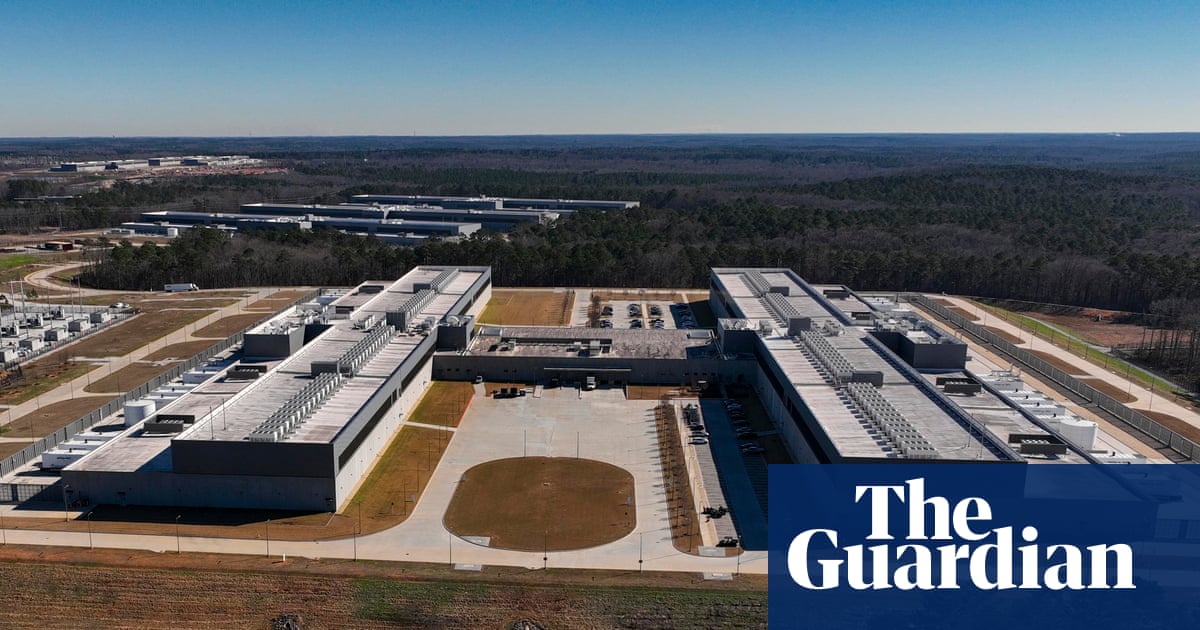
Datacenters' electricity demands have been accused of delaying the US's transition to clean energy and requiring fossil fuel plants to stay online, while their high level of water consumption has also raised alarm. Now public health advocates fear another environmental problem could be linked to them Pfas forever chemical pollution. Big tech companies like Google, Microsoft and Amazon often need datacenters to store servers and networking equipment that process the world's digital traffic, and the artificial intelligence boom is driving demand for more facilities.
But analysis from the Centre for Net Zero (CNZ) says it would cost 43 percent less to power a 120 MW data facility with renewables and a small amount of gas-generated energy, when compared with an SMR. It claims that a microgrid comprising offshore wind, solar, battery storage, and backed up by gas generation, would be significantly cheaper to run annually than procuring power sourced from a nuclear SMR.
Those in France at least will now be partly powered via a CAPN, in addition to long-term Power Purchase Agreements (PPAs) Data4 already has in place for solar and wind energy. The contract involves a "cost and risk-sharing mechanism" based on the actual volumes of energy produced - a so-called behind-the-meter arrangement where it can secure energy at a reduced cost over the long term.