#devops
#devops
[ follow ]
#cicd #automation #ai #kubernetes #observability #software-development #ai-agents #aws #career-advancement



#ai-agents
DevOps
fromDevOps.com
1 week agoAI Agents in DevOps: Hype vs. Reality in Production Pipelines - DevOps.com
AI agents in DevOps can autonomously detect issues, take actions, and learn from feedback, but their real-world application varies significantly.
DevOps
fromDevOps.com
3 days agoMicrosoft Foundry Tackles the AI Agent Tool Problem Nobody Talks About - DevOps.com
Toolboxes in Foundry streamline AI agent development by centralizing tool management and authentication, reducing operational friction and enhancing governance.












fromBusiness Matters
2 months agoThe Digital Balancing Act: How Growing Businesses Can Move Faster Without Sacrificing Security
Because of this massive shift, the pressure on business owners has never been higher. Consumers today have zero patience. If your mobile application is slow, or if your website lacks the features they want, they will instantly move to a competitor. To survive and grow, a modern business must be able to create and update its digital tools incredibly fast. However, rushing to build technology introduces a terrible risk: you might accidentally leave your digital doors wide open to criminals.
Software development
fromDevOps.com
2 months agoArcjet SDKs Make It Simpler for Developers to Include Security Functions - DevOps.com
Company CEO David Mytton said the release of v1.0 of its Arcjet JavaScript SDK makes it possible for developers to address many of the issues as applications are being developed that DevOps teams would otherwise need to address later in the software development lifecycle (SDLC). Additionally, Arcjet is beta testing a similar SDK for Python developers, who often have even less application security expertise, added Mytton.
JavaScript

Software development
fromDbmaestro
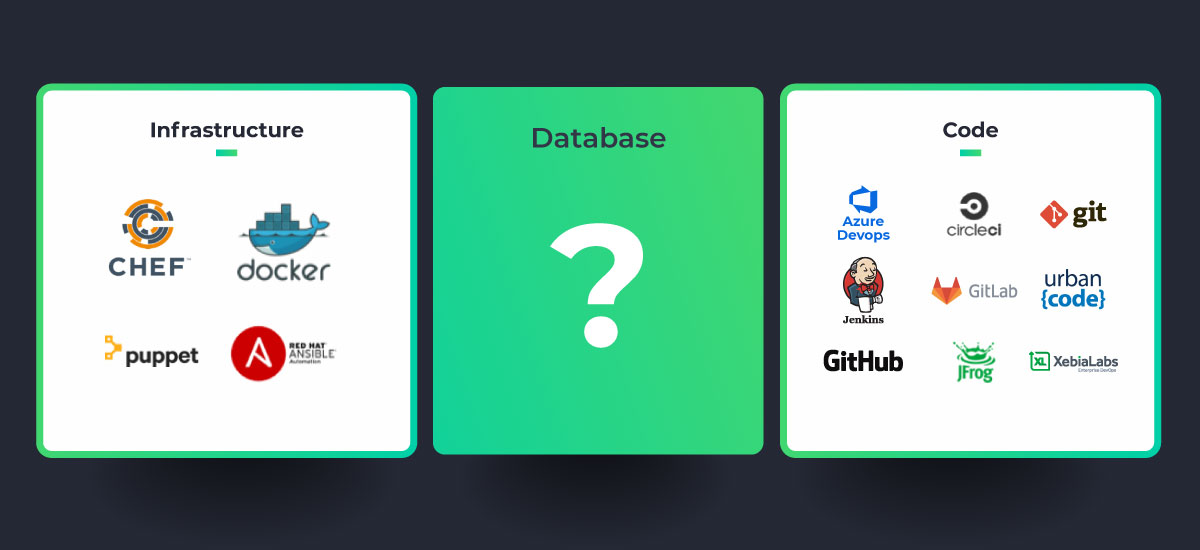
4 years agoIf You Don't Have Database Delivery Automation, Brace Yourself for These 10 Problems |
Manual database processes break DevOps pipelines; only 12% deploy database changes daily, causing configuration drift, frequent errors, slower time-to-market, and reduced productivity.
fromDevOps.com
2 months agoWhy Responsible AI Isn't Optional in DevOps - it is the Next Frontier of Ownership - DevOps.com
Recently, AI has infiltrated every corner of software delivery. It is writing code, tuning tests, fixing bugs, correlating logs and - most provocatively - making decisions inside CI/CD pipelines that used to be purely human territory. This isn't marketing hype - it is the inevitable result of handing models not just data, but influence. Influence without accountability is the sort of blind spot that turns innovation into chaos.
Artificial intelligence
fromDevOps.com
2 months agoBot-Driven Development: Redefining DevOps Workflow - DevOps.com
Industry professionals are realizing what's coming next, and it's well captured in a recent LinkedIn thread that says AI is moving on from being just a helper to a full-fledged co-developer - generating code, automating testing, managing whole workflows and even taking charge of every part of the CI/CD pipeline. Put simply, AI is transforming DevOps into a living ecosystem, one driven by close collaboration between human judgment and machine intelligence.
Software development
fromInfoWorld
3 months agoWhat is GitOps? Extending devops to Kubernetes and beyond
Over the past decade, software development has been shaped by two closely related transformations. One is the rise of devops and continuous integration and continuous delivery (CI/CD), which brought development and operations teams together around automated, incremental software delivery. The other is the shift from monolithic applications to distributed, cloud-native systems built from microservices and containers, typically managed by orchestration platforms such as Kubernetes.
Software development
Environment
fromBerlin Startup Jobs
3 months agoJob Vacancy: Senior Infrastructure Engineer (f/m/d) // alcemy | IT / Software Development Jobs | Berlin Startup Jobs
Use machine learning and cloud-native production control software to reduce cement and concrete CO2 emissions and optimize plant operations.
fromMedium
2 years agoUnlock the Secrets of Top Tech Highest Performers
For almost ten years, the DORA research initiative has explored the effectiveness and metrics of top-performing organizations driven by technology. This effort has gathered insights from over 36,000 professionals from various sizes of organizations and a wide range of industries. DORA aims to unravel the link between operational practices (capabilities) and their outcomes, focusing on significant achievements both organization-wide and to its members.
Software development
fromInfoWorld
4 months ago4 New Year's resolutions for devops success
It has been a dramatic and challenging year for developers and engineers working in devops organizations. More companies are using AI and automation for both development and IT operations, including for writing requirements, maintaining documentation, and vibe coding. Responsibilities have also increased, as organizations expect devops teams to improve data quality, automate AI agent testing, and drive operational resiliency. AI is driving new business expectations and technical capabilities, and devops engineers must keep pace with the speed of innovation.
Artificial intelligence
fromInfoQ
4 months agoDevOps Is for Product Engineers, Too
As the name suggests, sociotechnical refers to the ways in which social and technical aspects of an organization relate to one another. In the context of technology companies, you can think of the organization itself as a sociotechnical system. Something that's important to note is that sociotechnical theory doesn't just acknowledge these two aspects, it emphasizes that they're inherently interconnected.
DevOps


fromComputerWeekly.com
4 months agoHow to make developer self-service succeed | Computer Weekly
However, the job of a software developer today is about more than just writing code. Thanks to the prevalence of DevOps, software developers tend to have a huge responsibility: they own the feature development, bug fixes, deployment pipeline, performance monitoring, cloud infrastructure and security of their code. Software development trends are constantly adapting to help software teams keep pace with the growing requirements of an increasingly digital society, and business leaders are recognising the value of software-powered business initiatives.
Software development
Artificial intelligence
fromChannelPro
4 months agoBreaking boundaries: Empowering channel partners to unite DevOps and MLOps for a stronger software supply chain
Maintaining separate DevOps and MLOps pipelines creates inefficiencies, delays, and reduced traceability that hinder delivering AI-powered features.
fromBusiness Matters
5 months agoBest DevOps Certification Courses to Take for High-Paying Jobs in 2026
The demand for DevOps engineers is exploding as companies embrace migrating storage to the cloud, automating workflows, modernizing applications, and rolling out software at scale. DevOps remains one of the most in-demand and high-paying career options for IT professionals in 2026. If you're a newbie, sysadmin, software developer or engineer, IT admin or an individual who looks forward to having a more lucrative and rapidly growing career in the IT industry then finding the best devops certification will definitely make an impact for you.
DevOps
fromInfoWorld
5 months agoWhat is devops? Bringing dev and ops together to build better software
A portmanteau of "development" and "operations," devops emerged as a way of bringing together two previously separate groups responsible for the building and deploying of software. In the old world, developers (devs) typically wrote code before throwing it over to the system administrators (operations, or ops) to deploy and integrate that code. But as the industry shifted towards agile development and cloud-native computing, many organizations reoriented around modern, cloud-native practices in the pursuit of faster, better releases.
Software development
fromDbmaestro
4 years agoDatabase delivery automation with GitLab: a deep dive |
Most of the time, databases are considered separate entities with their own development cycles. As a result, there is a major disconnect between database development and DevOps. You often see a situation where the application gets updated quickly with bug fixes and new features, yet the databases are lagging behind, slowing down the release process. The Isolation of databases from DevOps created a gap between the application developers and database admins/devs that led to bottlenecks and errors in the development process.
Software development
from24/7 Wall St.
5 months agoJFrog (FROG) Is Up 24% Today: 3 Things We Learned From Earnings
JFrog (NASDAQ: FROG) stunned investors with a blowout third quarter that sent shares soaring more than 24%. The DevOps platform provider not only delivered its eighth straight beat on both revenue and earnings but also showcased accelerating cloud adoption, record profitability, and a growing foothold in AI-driven software delivery. Here are three key takeaways from the results and management's commentary.
Software development
DevOps
fromBerlin Startup Jobs
5 months agoJob Vacancy: Cloud and DevOps Engineer (Kubernetes) // DATATRONiQ | IT / Software Development Jobs | Berlin Startup Jobs
Cloud and DevOps Engineer role at DATATRONiQ maintains Kubernetes clusters, secures production infrastructure, and enhances CI/CD for an AI-driven Industrial IoT platform.
fromInfoWorld
5 months agoGoogle's new query builder to tackle SQL complexity in cloud workload monitoring
The query builder solves a large SQL bottleneck by transforming log analysis from a time-consuming task into a real-time, self-service capability that's fit for any DevOps or site reliability professional. This is an immense time-saver that can collapse typical investigation windows from hours to minutes,
DevOps
fromBerlin Startup Jobs
6 months agoJob Vacancy: IT Developer // GreenAutarky GmbH | IT / Software Development Jobs | Berlin Startup Jobs
We are a Berlin company with international employees working on decentral collaborative AI services in real estate. We change how people live and work, by making buildings think and act adaptive to occupant needs. It is not another App. We save highest possible energy and run AI in compliance with GDPR. We look for developers who know AI on edge as well as power of Edge&Cloud.
Software development
fromInfoQ
5 months agoThe Way We Manage Compliance Is Wrong... And Is Changing! Bringing DevOps Principles to Controls and Audit
"Bringing DevOps Principles to Controls and Audits", not the most exciting title in the world, but I'm actually going to be talking about a revolution. What I'm talking about is an open-source project that me and my colleagues at Container Solutions are working on. My goal is that by the end of it, you'll be interested enough to check it out, perhaps give feedback, maybe even get involved.
Software development
[ Load more ]