#east-london-jewish-history
#east-london-jewish-history
[ follow ]
#antisemitism #london #queer-britain #urban-development #hatzola #jewish-community #community-support
Arts
fromThe Art Newspaper - International art news and events
3 days agoShould English museums charge tourists? Plus, Raphael at the Met and Senga Nengudi at the Whitechapel Gallery-podcast
The UK government is considering charging tourists for entry to national museums, challenging the current policy of free admission.
London politics
fromLondon Business News | Londonlovesbusiness.com
1 week agoThey Must Have Been 'Zionist' Ambulances in Golders Green - London Business News | Londonlovesbusiness.com
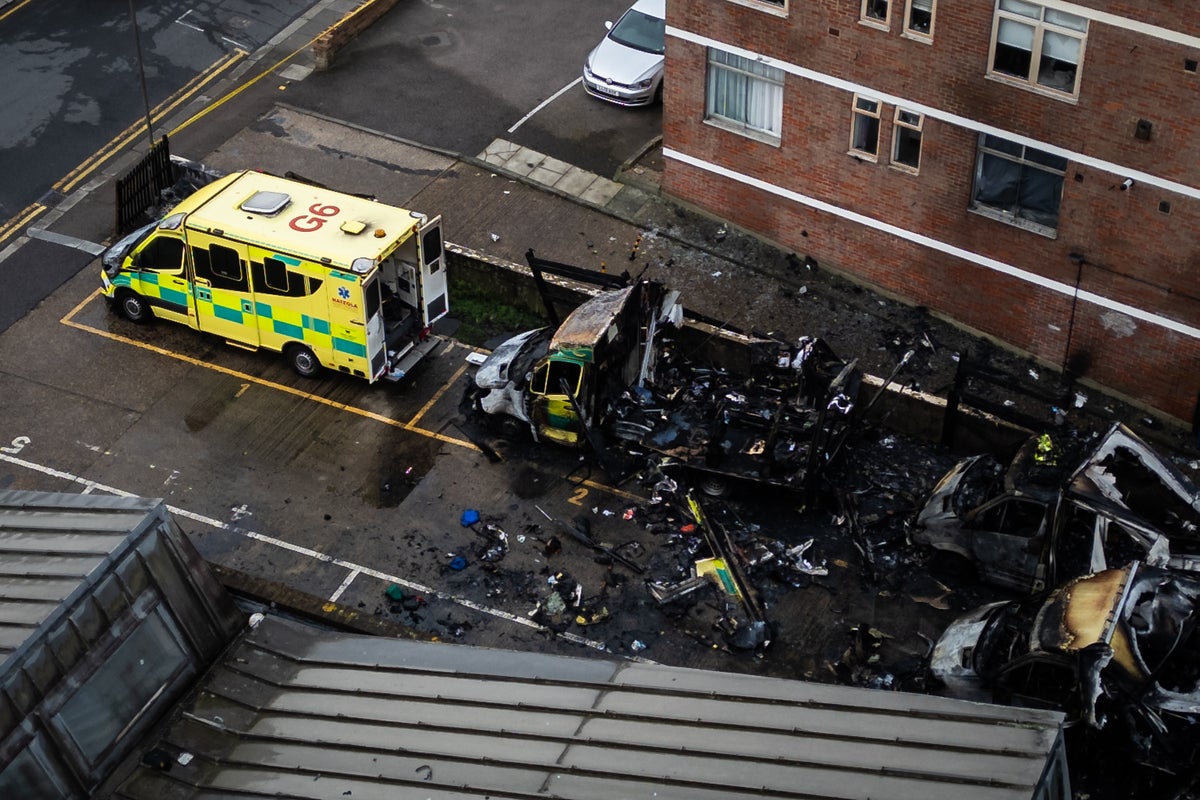
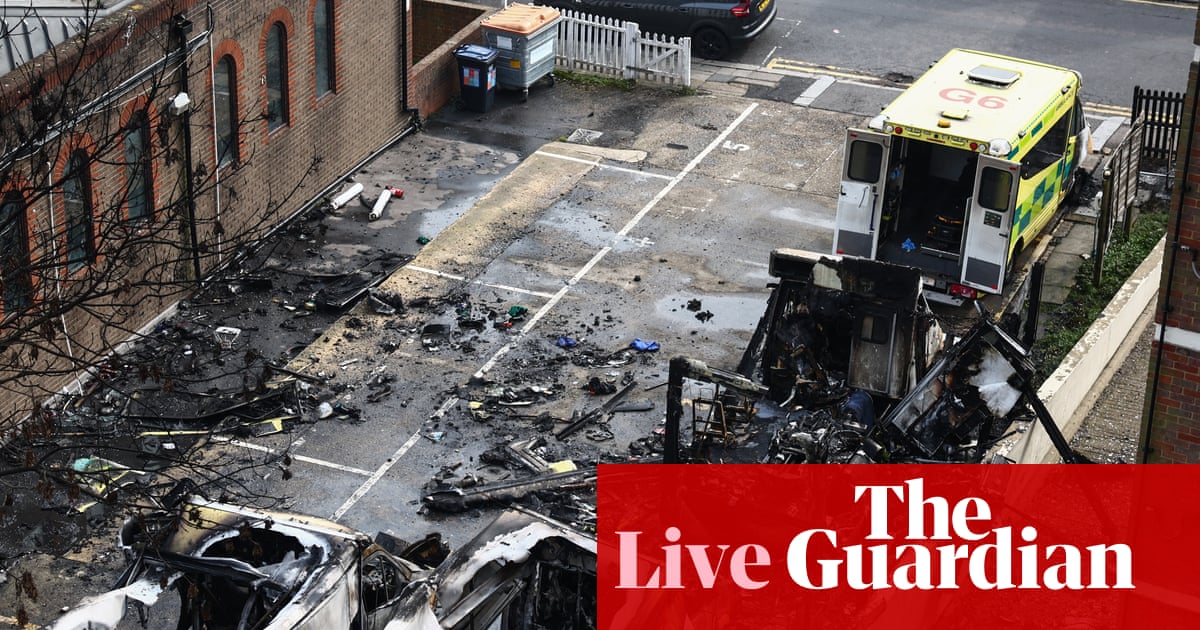
Setting fire to ambulances outside a synagogue reflects a troubling shift in perception, where religious symbols are politicized and justified as targets.


_pr.jpg)
fromLondon On The Inside
5 days agoSay Cheese(cake) | A Cheesecake-Off Is Coming to Hackney Wick
The Cheesecake-Off 2026 will feature some of London's best restaurant and bakery teams, including Big Mamma Group and Cakes & Bubbles by Albert Adrià, competing for the ultimate cheesecake title.
London food
#london


London politics
fromLondon Business News | Londonlovesbusiness.com
1 week agoArmed police to protect Jewish community after sickening Golders Green attack - London Business News | Londonlovesbusiness.com
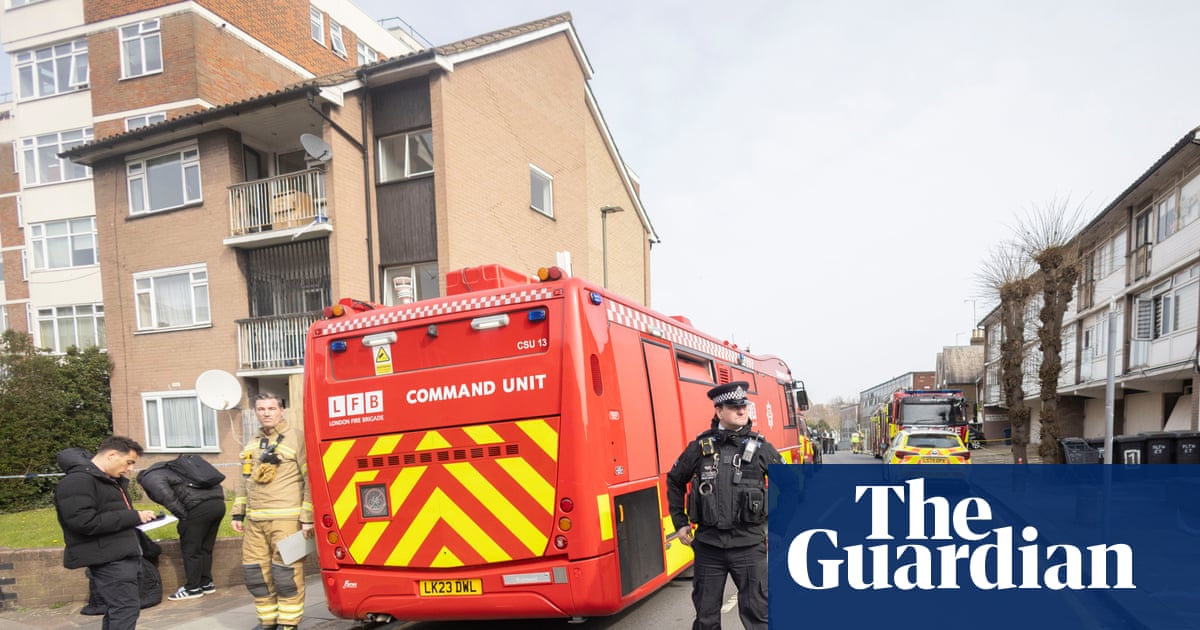
The Metropolitan Police are increasing armed patrols in London to enhance safety for Jewish communities ahead of Passover.
fromTime Out London
3 weeks agoA new 15 million music venue will open in a legendary old east London theatre
The Victorian building is set to become a 2,300-capacity venue, which the company says will showcase 'a wide range of artists'. The building dates back to 1896, when it was used as a theatre and opera house, before closing its doors in 1933. After that, it became a cinema - though this, too, closed in 1969.
London music
Design
fromWallpaper*
3 weeks agoThis stunning shared workspace just opened in east London
Co-working spaces combine workplace sociability with independent work flexibility, with Conductor in Stratford exemplifying design-led environments that prioritize productivity and wellbeing through hospitality-inspired spatial experiences.

Renovation
fromdesignboom | architecture & design magazine
1 month agolithuania's 'lost shtetl jewish museum' takes shape as a gleaming, clustered village
A modern museum in Lithuania honors a Jewish village destroyed in 1941 through abstract house-like structures arranged as a compact settlement in a meadow landscape.
fromTime Out London
1 week agoLondon's new Museum of Youth Culture has revealed its opening date - here's a sneak peek inside
The Museum of Youth Culture is set to open in Camden, featuring a collection of 100,000 items that document Britain's hidden teen history, from rockers' leather jackets to modern school leavers' hoodies.
London
London startup
fromwww.standard.co.uk
1 month agoGail's bakery in London targeted in repeated anti-Zionist attacks as residents express fear and anger
A Gail's bakery in north west London was vandalized twice in one week with anti-Zionist graffiti and slogans, targeting the Israeli-owned business and sparking local concern about ethnicity-based attacks.
London
fromTime Out London
2 weeks agoThis new east London museum has been crowned one of the best places to visit in the world in 2026 by TIME magazine
The V&A East Storehouse in London was featured on TIME's World's Greatest Places for its innovative approach to reimagining museums as interactive conversations rather than one-way presentations.
London food
fromTime Out London
3 weeks agoFrom St Patrick's Day parades to fish finger wraps, these are the 6 best free things to do in London this weekend
London offers numerous free activities and events this weekend, including St Patrick's Day celebrations, art exhibitions, jazz performances, and food giveaways, allowing visitors to enjoy the city without significant spending.
Arts
fromThe Art Newspaper - International art news and events
1 month agoUK exhibition celebrates the artisans throughout history who went to war
Frontline-made objects salvaged from battlefields reveal the skills, identities, and lived experiences of ordinary soldiers across conflicts from the World Wars to modern wars.
fromianVisits
2 months agoLondon's Alleys: Ann's Place, Whitechapel, E1
This part of London sits just outside the historic City walls, so it attracted traders who wanted to avoid the strict rules binding City merchants. The land was later acquired by Thomas Wentworth, 1st Earl of Cleveland, who developed it, hence the main road being named Wentworth Street. If you're wondering about Ann's Place, that was probably after his wife, Anne Hopton.
History
London politics
fromLondon On The Inside
1 month agoNorth vs South London | Ten Reasons Why Each Side Is Better
North London claims superiority through Roman history, the Barbican, anti-fascist heritage, major protest movements, and superior underground transport infrastructure compared to South London.
fromTime Out London
2 months agoControversial development plans have been revealed for Brick Lane's legendary Truman Brewery
Brick Lane is one of London's most beloved, and buzzing, areas. Home to the largest Bangladeshi community outside of Bangladesh, nowadays the cobbled street in the East End is known just as much for its curry houses and vintage shops as its ubiquity of fashionable young shoppers, TikTokkers and trendy coffee shops. At the centre of Brick Lane is the great Truman Brewery. Currently, the building that was once London's largest brewery is home to food and vintage markets, record stores, music venues and more.
Real estate
fromwww.dw.com
2 months agoGermany updates: Bundestag marks Holocaust Remembrance Day
Two men reportedly fired shots at an elite police unit during a car chase in southern Germany Tuesday evening, causing a road accident in which five people were lightly injured. Officers from the Spezialeinsatzkommando (special deployment unit, or SEK) had attempted to arrest three men, aged 23, 24 and 30, in the small town of Absberg near the city of Nuremberg on suspicion of illegal possession of weapons.
Germany news
fromwww.bbc.com
2 months agoHornsey Town Hall taken off at-risk register
Bringing such a culturally and historically significant building back into public use has been a huge privilege for everyone involved. This restoration has taken years of considered collaboration and care, guided by a shared commitment to do justice to the Town Hall's heritage while giving it a new lease of life and protecting it for future generations to enjoy.
Remodel
fromSun Sentinel
2 months agoA century-old synagogue building in Brooklyn was slated for demolition. Now it could be used again.
Officially known as Congregation Chaim Albert but known colloquially as the Kingsbrook Synagogue, the synagogue was part of a Jewish hospital founded in 1928 in response to antisemitism in nearby hospitals and to meet the needs of local Jewish patients. For nearly 100 years, the synagogue has served Jewish hospital patrons and residents in the surrounding neighborhood of East Flatbush and Crown Heights.
New York City
fromLondon On The Inside
2 months agoA New Half Marathon Is Coming to East London This Year
The Hackney Half is one of the most popular races in the city, which means getting a spot at the event is no easy feat. Good thing then that another half marathon will be hosted in east London this year. After the success of the Run Shoreditch 10K, the organisers (the very same behind the Hackney Half, the Oxford Half and the Saucony London 10K) are turning it onto a half distance race for 2026.
Running
fromwww.independent.co.uk
2 months agoJeremy Corbyn backs iconic Hackney music venue in battle against local development
Whether it's investigating the financials of Elon Musk's pro-Trump PAC or producing our latest documentary, 'The A Word', which shines a light on the American women fighting for reproductive rights, we know how important it is to parse out the facts from the messaging. At such a critical moment in US history, we need reporters on the ground. Your donation allows us to keep sending journalists to speak to both sides of the story.
US politics
fromTime Out London
2 months agoThe UK's only museum dedicated to LGBTQ+ history is reopening this week
Before Queer Britain launched in King's Cross in 2022, there wasn't a single museum in the whole of the UK that focused on LGBTQ+ history. Four years later, it's still the only space of its kind. The museum closed for redevelopment at the end of November, but this week it's back with six brand new displays and a rich lineup of special temporary exhibitions. Queer Britain will reopen its doors at 2 Granary Square in King's Cross on Wednesday February 4.
LGBT
fromTime Out London
2 months ago8 London museum exhibitions we can't wait to see in 2026
Great news, culture vultures; it's the start of a brand new year, and that means a host of new exhibitions to look forward to. January is pretty quiet for new openings - we're all too busy watching The Traitors and trying not to spend any money - but there's plenty of unmissable culture on the horizon in the capital, from flashy fashion and design retrospectives to deep-dives into ageing, fandom and the studio behind everyone's favourite claymation canine and inventor duo. Joyless health kicks got you feeling glum? Stop meal prepping and start planning an enriching cultural diet instead, with our guide to the biggest and best museum openings coming up over the next year.
Arts
UK news
fromTime Out London
2 months agoThe surprising east London postcode that has been named the 'coolest' place to live in the city by the Times
Poplar is the capital's coolest London neighbourhood for 2026, favored by creatives, with diverse architecture, studios, cultural venues, pubs, cafes, and nightlife.
fromThe Art Newspaper - International art news and events
1 month agoLondon's Mosaic Rooms, dedicated to art from the Arab region, reopens after expansion
London's Mosaic Rooms is reopening on 18 February after a year-long refurbishment, with new facilities, a new charitable status and a new director. But the organisation's focus, says its director Pip Day, remains the same: art and culture from the Arab world and beyond. Since the Mosaic Rooms launched in 2008 it has been a consistent platform in the UK for major artists from the Arab region, such as Heba Y. Amin, Sandi Hilal and Alessandro Petti, and Mohammed Omar Khalil.
Arts
fromianVisits
1 month agoYou can now have afternoon tea in the Old Bailey
The afternoon starts with a tour of the Old Bailey, including the courtrooms, the judges' dining room, and the cells below. If you've booked the afternoon tea, you're taken back up to the richly decorated Great Hall for an afternoon tea surrounded by all the pomp and grandeur that the hall can deliver.
London
fromTime Out London
1 month agoA 750 million new neighbourhood could be built in east London
Last month, plans were submitted for Whitechapel Healthcare and Research Campus, a £750m development that would provide homes for key workers and supposedly address needs for more green spaces and community facilities. The proposal for the campus comes from investment firm BGO in collaboration with PLP Architecture and Barts Health NHS Trust. It's part of the newly announced Barts Life Science Cluster.
UK news
fromwww.theguardian.com
2 months agoThe pie and mash crisis: can the original fast food be saved?
The pavement along Barking Road in Plaistow is a blur through the front windows and deserted, and there are only two customers in the shop. Another sign this one on the counter says CASH ONLY. Card machine companies often tell proprietor Nathan Jacobi that he's missing out by not catering to customers who favour cashless transactions. They're the ones missing out, he says. Cos they ain't getting pie and mash.
London food
fromianVisits
1 month agoLondon's Alleys: Martin Lane, City of London, EC4
For most of its life, the alley's main feature was the church of St Martin Orgar, possibly named after Ordgarus, a Dane who donated the church to the canons of St Paul's. Sadly, most of the church was destroyed during the Great Fire of London. The badly damaged remains were restored and used by French Protestants right up to 1820.
London
[ Load more ]