#global-energy-markets
#global-energy-markets
[ follow ]

World politics
fromFortune
2 weeks agoJamie Dimon defends US decision to wage war in Iran, and says the West may have actually waited too long to fight it | Fortune
The U.S.-Israeli campaign in Iran is criticized for its unclear strategy and uncertain outcomes, yet some view it as an unavoidable choice.
World news
fromLondon Business News | Londonlovesbusiness.com
4 weeks agoForeign Office issues global travel warnings amid 'escalation in the Middle East' - London Business News | Londonlovesbusiness.com
Global travel disruptions are affecting popular destinations due to the conflict involving the US and Israel in Iran.
#israel-iran-conflict
World news
fromwww.dw.com
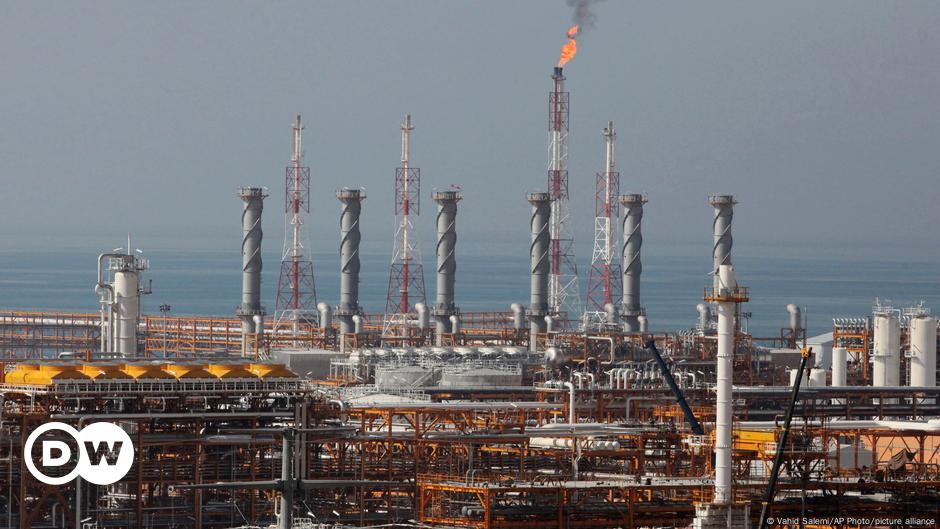
1 month agoIran war: Why is the South Pars gas field so important?
Israel attacked Iran's South Pars gas field, prompting Iranian retaliation against energy facilities in Saudi Arabia, UAE, and Qatar, marking the first direct targeting of fossil fuel production sites in the regional conflict.
World news
fromwww.dw.com
1 month agoIran war: Why is the South Pars gas field so important?
Israel attacked Iran's South Pars gas field, prompting Iranian retaliation against energy facilities in Saudi Arabia, UAE, and Qatar, marking the first direct targeting of fossil fuel production sites in the regional conflict.
fromThe New Yorker
1 month agoThe Iran War Is Another Reason to Quit Oil
In the first two weeks of the war, there has been a surge in the number of Americans looking to save money on energy-by asking for quotes on home solar systems and looking up electric vehicles online. We can expect similar trends in other countries. In India, where many kitchens depend on increasingly scarce and costly liquefied petroleum gas cylinders, consumers are racing to buy induction stoves.
Environment
World politics
fromFortune
1 month agoVenezuela has the world's largest proven oil reserves, but it can't solve for the Strait of Hormuz 'math problem' | Fortune
Venezuelan oil production increases cannot offset massive global supply losses from Iran's closure of the Strait of Hormuz, which handles 20% of world oil and liquefied natural gas daily.
Russo-Ukrainian War
fromBusiness Insider
1 month agoZelenskyy says Russia has already earned back $10 billion of its 2026 deficit in 2 weeks of the Iran war
Russia earned approximately $10 billion from Middle East conflict in two weeks, offsetting 10% of its 2026 oil trade deficit while benefiting from rising global oil prices.
#iran-oil-exports
World news
fromwww.theguardian.com
1 month agoWhy Iran's vital Kharg Island oil hub is still untouched by US-Israel bombers
Kharg Island, handling 90% of Iran's oil exports, remains unattacked despite US-Israel bombing campaigns, as striking it would cause catastrophic global oil price increases to potentially $150 per barrel.
Europe news
fromwww.mediaite.com
1 month agoScott Bessent Snaps at CNBC Reporter for Disputing the Trump Admin's Russian Oil Gambit
Treasury Secretary Bessent defended Trump's 30-day exemption allowing 130 million barrels of Russian oil at sea to reach markets, arguing it addresses a 10-14 million barrel daily global deficit from Iran tensions and Saudi-UAE production diversions.
Russo-Ukrainian War
fromLondon Business News | Londonlovesbusiness.com
1 month agoGreek oil tanker damaged in suspected Black Sea missile or drone strike - London Business News | Londonlovesbusiness.com
A Greek-flagged oil tanker chartered by Chevron was damaged in a suspected drone attack in the Black Sea while traveling to a Russian port, with all crew members safe and the vessel's seaworthiness intact.
Russo-Ukrainian War
fromFortune
1 month agoU.S. lifts sanctions on Russian oil already loaded onto tankers, about 5-6 days' worth of normal shipments through the Strait of Hormuz | Fortune
The U.S. temporarily eased sanctions on Russian oil shipments for 30 days to stabilize global energy markets amid Middle Eastern supply disruptions, though Ukraine argues this provides Russia billions for its war effort.
Russo-Ukrainian War
fromRadioFreeEurope/RadioLiberty
1 month agoUkraine Warns US Easing Of Russian Oil Sanctions Will Boost Moscow's War Chest
The US temporarily lifted sanctions on Russian oil to stabilize global energy markets, potentially providing Russia $10 billion to fund its war against Ukraine, drawing criticism from Ukraine and European allies.
World news
fromwww.theguardian.com
1 month agoMiddle East war creating largest supply disruption in the history of oil markets'
Iran's blockade of the Strait of Hormuz creates the largest oil supply disruption in history, exceeding previous crises, prompting the IEA to authorize record emergency reserve releases.
fromwww.scientificamerican.com
1 month agoWar in Iran triggers an unprecedented disruption in global oil
The war in Iran has choked the world's supply of oil to a trickle, the International Energy Agency said in a new report released on Thursday. According to the organization, which tracks and helps set policy for the global energy sector, the widening conflict in the region has created an unprecedented disruption in the global oil market—one that will almost certainly force energy and other fuel-dependent costs to rise.
World politics
#oil-prices
World news
fromwww.theguardian.com
1 month agoOil price tops $100 again as Iran strikes economic targets across Middle East
Oil prices exceeded $100 per barrel as Iranian attacks on Middle Eastern energy facilities disrupted regional shipping and port operations, overwhelming efforts to stabilize markets through massive government reserve releases.
World news
fromwww.dw.com
1 month agoIran war: How long before Gulf nations stop pumping oil?
Israel's strikes on Iran's energy infrastructure and Iran's closure of the Strait of Hormuz threaten to shut down Gulf oil production and disrupt global energy markets, with oil prices spiking to $120 per barrel.
World news
fromwww.dw.com
1 month agoIran war: How long before Gulf nations stop pumping oil?
Israel's strikes on Iran's energy infrastructure and Iran's closure of the Strait of Hormuz have triggered oil price spikes and threaten Gulf oil production shutdown due to export storage constraints and regional conflict escalation.
World news
fromwww.theguardian.com
1 month agoOil price tops $100 again as Iran strikes economic targets across Middle East
Oil prices exceeded $100 per barrel as Iranian attacks on Middle Eastern energy facilities disrupted regional shipping and port operations, overwhelming efforts to stabilize markets through massive government reserve releases.
World news
fromwww.dw.com
1 month agoIran war: How long before Gulf nations stop pumping oil?
Israel's strikes on Iran's energy infrastructure and Iran's closure of the Strait of Hormuz threaten to shut down Gulf oil production and disrupt global energy markets, with oil prices spiking to $120 per barrel.
World news
fromwww.dw.com
1 month agoIran war: How long before Gulf nations stop pumping oil?
Israel's strikes on Iran's energy infrastructure and Iran's closure of the Strait of Hormuz have triggered oil price spikes and threaten Gulf oil production shutdown due to export storage constraints and regional conflict escalation.

fromwww.dw.com
1 month agoHow renewable energy shields countries from oil shocks
Energy is the lifeblood of our societies and our industries. And we're still highly dependent on fossil fuels. The world still gets about 80% of its primary energy from fossil fuels, the main source of greenhouse gas emissions driving climate change. That dependence makes economies and societies vulnerable to geopolitical shocks.
Environment
fromwww.dw.com
1 month agoWhy the US says India can buy Russian oil again
India is an essential partner of the United States, and we fully anticipate that New Delhi will ramp up purchases of US oil. This stop-gap measure will alleviate pressure caused by Iran's attempt to take global energy hostage.
US politics
Russo-Ukrainian War
fromwww.theguardian.com
1 month agoUS grants waiver to allow India to buy Russian oil amid Iran war
The US Treasury issued a 30-day waiver allowing India to purchase Russian oil stranded at sea, framed as a temporary measure to stabilize global energy markets amid Middle East tensions.
World news
fromwww.aljazeera.com
1 month agoWhich oil and gas facilities in the Gulf have been attacked?
Energy facility damage in the Middle East has caused global oil and gas prices to spike, with Iran denying responsibility despite reports of broadened attacks on civilian infrastructure across Gulf states.
#strait-of-hormuz

World news
fromwww.aljazeera.com
1 month agoHow US-Israel attacks on Iran threaten the Strait of Hormuz, oil markets
Iranian threats to close the Strait of Hormuz, through which 20-30% of global oil and gas supplies transit, risk triggering significant increases in global oil prices and worldwide economic instability.
World news
fromwww.aljazeera.com
1 month agoHow US-Israel attacks on Iran threaten the Strait of Hormuz, oil markets
Iranian threats to close the Strait of Hormuz, through which 20-30% of global oil and gas supplies transit, risk triggering significant increases in global oil prices and worldwide economic instability.
Miscellaneous
fromFortune
1 month agoOPEC+ to resume oil output increases as Iran conflict rages | Fortune
OPEC+ increased oil production by 206,000 barrels daily in April amid Middle East tensions, though the modest hike may prove insufficient to stabilize markets threatened by potential Strait of Hormuz disruptions.
fromwww.dw.com
2 months agoIndia's oil shake-up: Can Venezuela really replace Russia?
After months of pressure over India's purchases of discounted Russian and sanctioned Iranian crude, New Delhi appears to have bowed to US President Donald Trump's demand by agreeing to phase out Russian oil imports and shift toward buying more barrels from the United States and potentially Venezuela. Trump said Monday on his Truth Social platform that Prime Minister Narendra Modi planned to "stop buying Russian oil," which the US president said would help end the war in Ukraine.
World news
[ Load more ]