#homelessness-policy
#homelessness-policy
[ follow ]


Silicon Valley real estate
fromtherealdeal.com
1 month agoGubernatorial hopeful Mahan hits LA with plan to incentivize private sector on resi development
San Jose Mayor Matt Mahan prioritizes homelessness solutions and developer incentives for residential projects while running for governor, advocating for pragmatic sequential action over performative politics.
Mission District
fromKqed
1 month agoSan Jose Council Advances Plan to Spread Homeless Shelters Citywide | KQED
San José is considering a policy to distribute homeless shelters across all neighborhoods rather than concentrating them in Downtown and South San José, though mayors worry such restrictions may slow shelter expansion.
East Bay (California)
fromThe Oaklandside
1 month agoBlack Joy Parade in Oakland...on the podcast
Oakland's ninth annual Black Joy Parade drew tens of thousands of residents celebrating community pride while the city addresses homelessness, immigration enforcement concerns, and police leadership transitions.
Mission District
fromwww.mercurynews.com
1 month agoSan Jose changes how it will handle homeless residents' stored personal belongings
San Jose approved new property-handling procedures for homeless encampments to improve retrieval rates and clarify how personal belongings are managed during site clearances.
East Bay (California)
fromThe Oaklandside
1 month agoCut homelessness by 50% in Oakland? A new plan says it's possible
Oakland's new Office of Homelessness Solutions released a strategic plan targeting 50% reduction in unsheltered homelessness within five years, requiring $3.2 billion in additional funding beyond current city and county spending.
fromwww.theguardian.com
2 months agoFleeing New Zealand to live in Australia? I'm right there with you, Jacinda Ardern | Johanna Cosgrove
Just this week our prime minister announced that the government is giving police officers new powers to move on rough sleepers or people displaying disorderly behaviour in town and city centres. Breaching an order risks a fine of up to NZ$2,000 or three-month jail term. Instead of investing in infrastructure to support the most vulnerable members of our community, authorities want to sweep the problem under the rug and punish them for it.
Miscellaneous
US politics
fromSan Jose Spotlight
2 months agoSerial entrepreneur seeks District 9 San Jose council seat - San Jose Spotlight
Mike Hennessy, a 70-year-old lifelong San Jose resident and serial entrepreneur, is running for District 9 council promising commonsense governance, public safety, homelessness action, and no new taxes.
fromLos Angeles Times
2 months agoNithya Raman stunned the L.A. political world in 2020. Now, she wants to do it again
But after six years at City Hall, Raman is no longer an outsider. She has her own record, which is in many ways intertwined with the mayor's, particularly on homelessness, an issue the onetime allies have worked closely together to remedy. As a City Council member, Raman, whose previous campaigns were backed by Democratic Socialists of America Los Angeles, has sometimes walked a political tightrope, exasperating her progressive base on issues like policing.
US politics
New York City
fromwww.amny.com
2 months agoExtreme cold: Death toll rises to 16 in NYC, Mamdani said none lived in homeless encampments amNewYork
Sixteen people died outdoors in New York City during an extended below-freezing stretch; thirteen deaths involved hypothermia and three were overdose-related.


California
fromwww.mercurynews.com
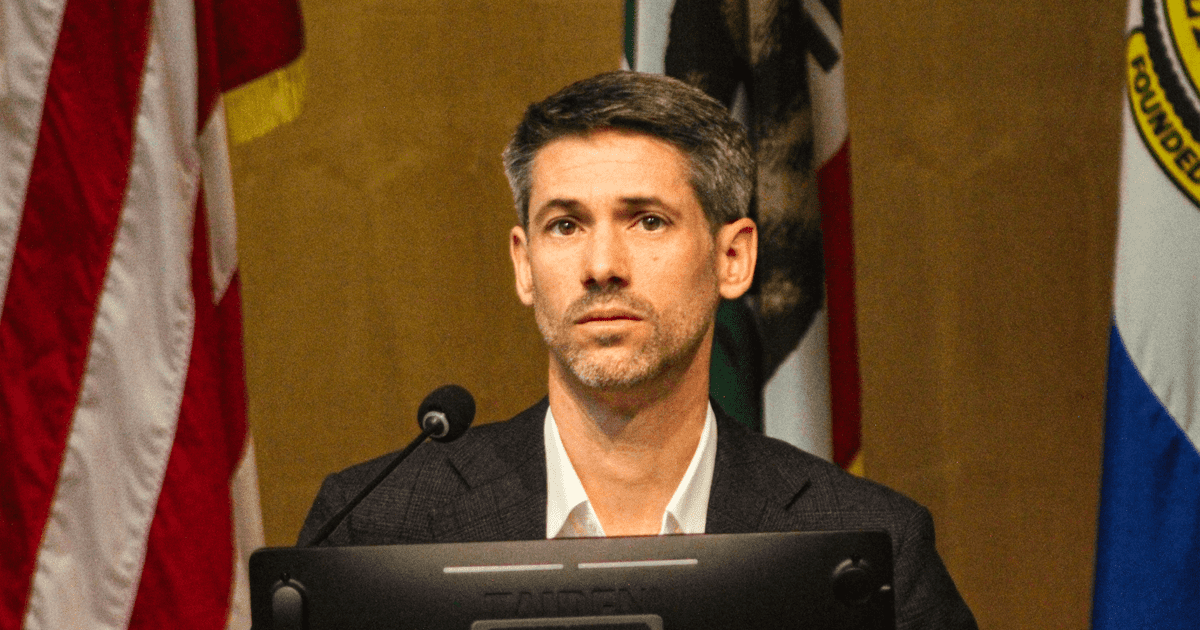
3 months agoCalifornia can do better': San Jose Mayor Matt Mahan enters crowded race for governor
San Jose Mayor Matt Mahan entered California's crowded gubernatorial race emphasizing pragmatic, results-focused governance and prioritizing faster responses to homelessness and public safety.
fromTruthout
3 months agoA Tech Bro Think Tank Is Trying to Roll Back Evidence-Based Homelessness Policy
The Cicero Institute, created by tech investor Joe Lonsdale, has spent the past few years promoting aggressive policies targeting encampments for the unhoused and pushing cities to move away from Housing First, the U.S.'s primary model for responding to chronic homelessness. Over the summer, HUD quietly adopted several of Cicero's key recommendations. And the result was widespread panic among the local agencies responsible for keeping people housed.
US politics
fromPortland Mercury
3 months agoYOUR SUNDAY READING LIST: Gun-Happy Federal Agents, Wrongful Imprisonment, and How to Get Fitted for a Chastity Belt
GOOD MORNING, SUNDAY! It's the perfect time to catch up on some of the great reporting and stories the Mercury churned out this week! (PRO TIP: If you despise being "the last to know," then be one of the first to know by signing up for Mercury newsletters! All the latest stories shipped directly to your email's in-box... and then... YOUR HEAD.)
Portland
fromLos Angeles Times
3 months agoL.A. violated open meeting law with plan to clear homeless encampments, judge rules
The city of Los Angeles violated the state's open meeting law when council members took up a plan to clear 9,800 homeless encampments behind closed doors, a judge ruled this week. In a 10-page decision, L.A. County Superior Court Judge Curtis Kin said the City Council ran afoul of the Ralph M. Brown Act by approving the encampment strategy during a Jan. 31, 2024, closed session.
California
from48 hills
4 months agoSF's plan for crime and unhoused people looks more and more like Trump's every day - 48 hills
The Attorney General, the Secretary of Health and Human Services, the Secretary of Housing and Urban Development, and the Secretary of Transportation shall take immediate steps to assess their discretionary grant programs and determine whether priority for those grants may be given to grantees in States and municipalities that actively meet the below criteria, to the maximum extent permitted by law:
SF politics
fromSan Jose Inside
5 months agoNewsom's Veto Hints at Shift in CA Homelessness Strategies
Newsom said Assembly Bill 255, which would have allowed cities to use up to 10% of their state funds to pay for "recovery housing," was unnecessary. That's because using state funds for sober housing is already allowed, the governor said. He said "recent guidance" makes that clear. That was a big surprise to Assemblymember Matt Haney, who had spent the past two years working on the bill Newsom was now saying had been moot all along.
California
fromMission Local
5 months agoSupe blasts move to store RVs at Dogpatch's Pier 68
The former Union Iron Works shipyard, now a historic district occasionally used for workforce training, is a swath of largely unoccupied land dotted with a few remaining abandoned industrial buildings. A large-scale redevelopment project encompassing Pier 68 and Pier 70 has been in progress for years, adding retail, restaurant, and office space to the waterfront. But in the meantime, the pier may be used to store RVs towed by the city.
San Francisco
Public health
fromtherealdeal.com
6 months agoSanta Monica shouts down waterfront homeless housing proposal
Los Angeles County halted two Ocean Avenue interim housing projects after community opposition, seeking alternative sites and centralized oversight for homelessness and behavioral health programs.
New York City
fromHouse Digest
6 months agoMamdani Plans To Make NYC A More Affordable City To Live In. Here's How - House Digest
Zohran Mamdani, a 33-year-old democratic socialist, won NYC Democratic primary and runs on rent freezes, low-income housing, free buses, childcare, and homelessness solutions.
fromKqed
11 months agoNewsom Pushes Cities to Ban Homeless Encampments Across California | KQED
Policies that prohibit individuals from sleeping outside anywhere in the jurisdiction without offering adequate indoor shelter, effectively banishing homeless individuals from the jurisdiction's borders, are both inhumane and impose externalities on neighboring jurisdictions.
San Francisco
[ Load more ]