#jesse-katz
#jesse-katz
[ follow ]
#literature #cbs-news #investigative-journalism #bari-weiss #ben-lerner #memory #narrative-nonfiction #immigration




fromEast Bay Express | Oakland, Berkeley & Alameda
5 days agoHistory is no joke ... or is it?
On this site birthed in 1963 lays lain layed lies the location original whereabouts around here of the Berkeley Copywriter's Guild, A place where word geeks were often found with their smug understanding of grammar and their tiny worn-down blue pencils marking up all the fun words for boring ones.
East Bay food
Photography
fromenglish.elpais.com
3 weeks agoWriting, watching, photographing: the heart of the matter according to Larry Sultan
Larry Sultan's writings reveal that writing was integral to his artistic practice, documenting his reflections on seeing, family memory, and photography's limits through correspondence, notebooks, diaries, and essays.
US Elections
fromThe Nation
3 weeks agoGeorge Packer's Liberal Imagination
The Short American Century, spanning 1945-2016, progressed through four distinct eras of confidence, skepticism, exuberance, and hubris before ending with Trump's 2016 election, which shattered liberal consensus about permanent American dominance.

Public health
fromLos Angeles Times
4 weeks agoCommentary: Horrified by the state of the union, he's an angry protester. But he's also optimistic
Trump fatigue syndrome drives citizens to either disengage from politics or actively protest, with some like Bert Voorhees choosing civic engagement to defend American democracy against perceived authoritarian threats.
Arts
fromHi-Fructose Magazine - The New Contemporary Art Magazine
4 weeks agoF. Scott Hess: Art History & The Dreams of a Reluctant Realist - Hi-Fructose Magazine
Artist F. Scott Hess transformed a 40-year-old fever dream about art history into a detailed 54" x 96" painting that explores his complex relationship with artistic legacy and fame.
fromwww.berkeleyside.org
1 month agoAround Berkeley: Rebecca Solnit, Michael Pollan, Jeff Chang book talks; Louise Pearl show
Louise Pearl's one-woman show Pass the Nails and Shame The Devil recounts the experience of her family's ordeal building their own house amid Oakland's 1980s crack epidemic as her strong-willed, Louisiana-born mother and gather a motley crew of men to make this dream home into a reality.
East Bay (California)
fromDefector
1 month agoA Complimentary Profile Of Jason Lee That Was Surprisingly Difficult To Publish | Defector
It's kind of a little local community hang spot as much as it is a retail store. You could buy analog cameras or photo books at the shop. If you're like me, you could browse in order to motivate yourself to dig your old film camera out of the closet. Or you could just hang out, talk art, and make friends.
Los Angeles
Books
fromMetro Silicon Valley | Silicon Valley's Leading Weekly
2 weeks agoTayari Jones in Menlo Park | Metro Silicon Valley | Silicon Valley's Leading Weekly
Tayari Jones discusses her novel Kin, which follows two Louisiana-raised best friends separated after high school as they pursue different paths and search for identity.
Portland
fromOregon ArtsWatch * Arts & Culture News
1 month agoA politics of hope: Author Christopher Mathias talks about his book, 'To Catch a Fascist' * Oregon ArtsWatch
Christopher Mathias documents anti-fascist activists who use espionage and investigation to expose and undermine white supremacist and neo-Nazi extremists operating in America.
fromPsychology Today
1 month agoThe Politics of Looking Away
Like us, you may feel paralyzed in the face of the relentless images of violence we see every day. Suffering children, military occupations, the devastated neighborhoods, the cries of parents mourning their dead-these scenes haunt us. Whether it is happening in Palestine or Minneapolis, we are witnesses to suffering, and that witnessing takes a heavy toll. Clearly, the devastating situations in the West Bank and Gaza and in Minneapolis differ
Social justice
fromPoynter
3 weeks agoWhat are your favorite nonfiction books by journalists? - Poynter
"Race Against Time: A Reporter Reopens the Unsolved Murder Cases of the Civil Rights Era" quickly became one of my favorite nonfiction books written by a journalist. I appreciated how he showed the grueling, day-to-day work local journalism requires, and how many layers of people fought him in revealing the despicable work of the Ku Klux Klan.
Books
Books
fromwww.7x7.com
3 weeks agoLocals We Love: Author Kristina Voegele's 'Annie in Retrospect' is a Love Letter to Our City and Ourselves.
A novel follows a woman who slips into her 25-year-old body with midlife knowledge, exploring identity loss, memory, and San Francisco's transformation through disorientation, grief, and acceptance.
Television
fromLos Angeles Times
2 months agoColumn: Congrats on scoring football game tickets. The TV version is superior
Televised football exemplifies television's superior formal design—pacing, visuals, and broadcast techniques make football better on TV than in person, satisfying casual and devoted fans.
fromKqed
1 month agoA Novel Tracks the Fallout of Free Love, and the Girls Who 'Went Away'
In 1968, a "good girl" is squeaky clean. She studies hard, follows the rules, gets into college and doesn't embarrass her parents. She doesn't lie or drink or do drugs. She doesn't participate in the Summer of Love or experiment with any of its alternative ways of living. She definitely doesn't have premarital sex, get pregnant and upend everyone's meticulously laid plans for her future.
Books
fromLady Freethinker
2 months agoAuthor Charlotte Laws on Power, Animals, and the Stories We Tell Ourselves
One is " Omniocracy," a sweeping work of political philosophy decades in the making, proposing a new ethical foundation for society that rejects moral absolutes and instead grounds moral consideration for all beings in science and policy. In Laws' view, traditional political systems are inherently prejudiced: they work for humans only, excluding the vast majority of sentient beings. An omniocracy, she argues, would account for all living beings as constituents whose interests must be weighed in the decisions that affect them.
Philosophy

fromwww.mediaite.com
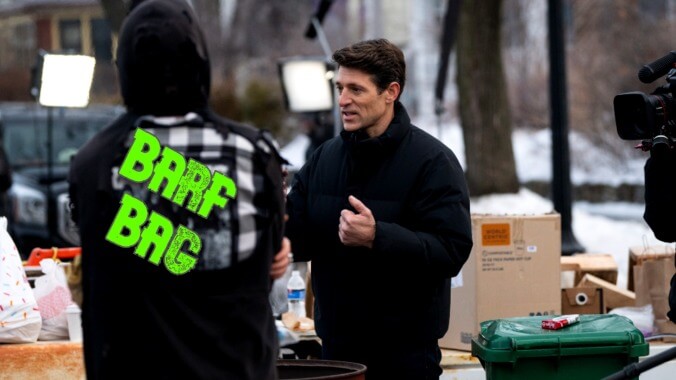
2 months agoThat's Just Not True!' CNN's Elie Honig Clashes With Tiffany Cross Over Charlie Kirk
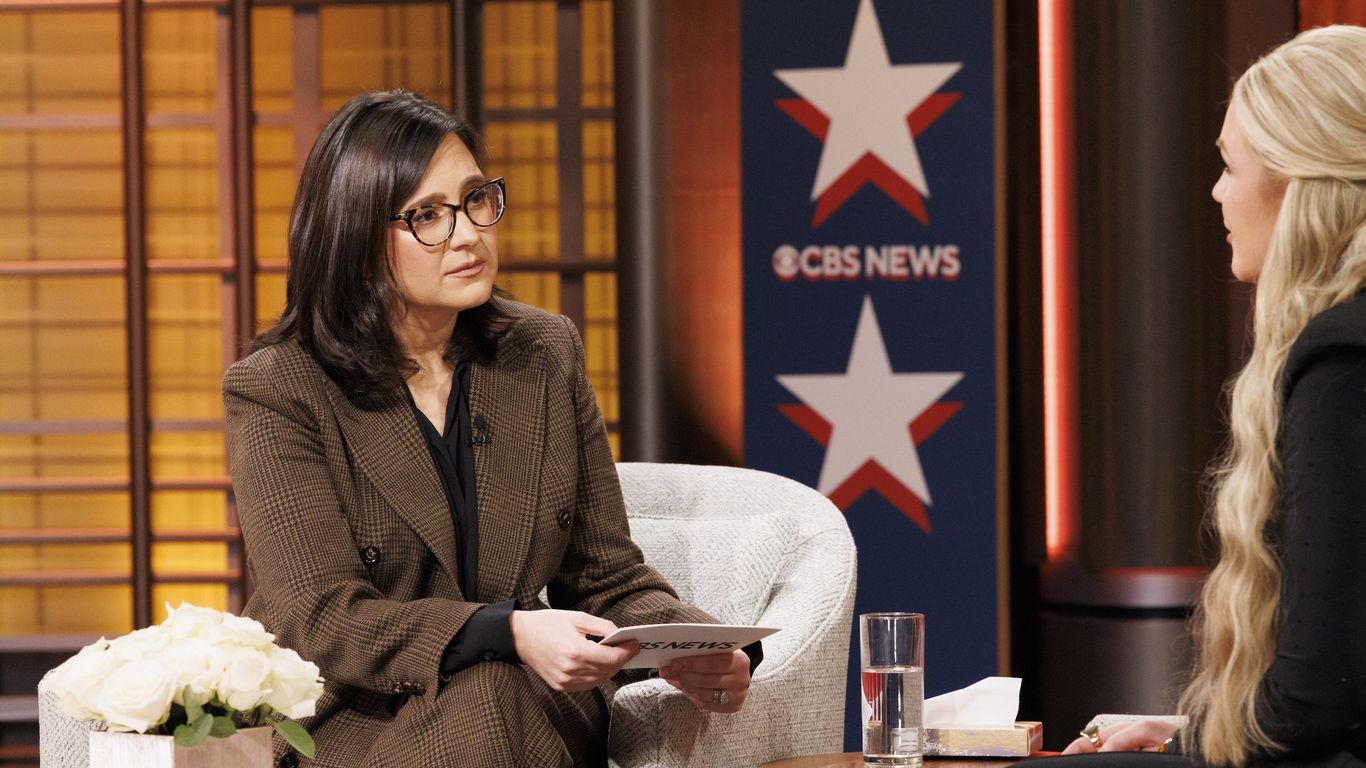
Elie, I take your point that you think it's both sides, but let me just say the data, respectfully, disagrees with you. According to government and independent analysis, since 2001, 85% of political deaths have been from right-wing extremists. There was a study posted on the DOJ about right-wing extremism being one of the biggest issues in America. Of course, it quietly disappeared when Donald Trump came into office, submitted Cross.
Right-wing politics
fromDefector
2 months agoWho The Hell Was This? | Defector
It was a bonnie morning 410 million years ago in what are now the Rhynie chert fossil beds in Scotland. The mists had begun to lift and swirl over the landscape, where hot springs burbled, lichen papered over rocks, and worms slithered as only worms can. Here, almost all life stayed close to the ground. The second-tallest organism at the time, a plant called , grew to a few centimeters at most.
Science

fromDefector
2 months agoBari Weiss Is The Symptom | Defector
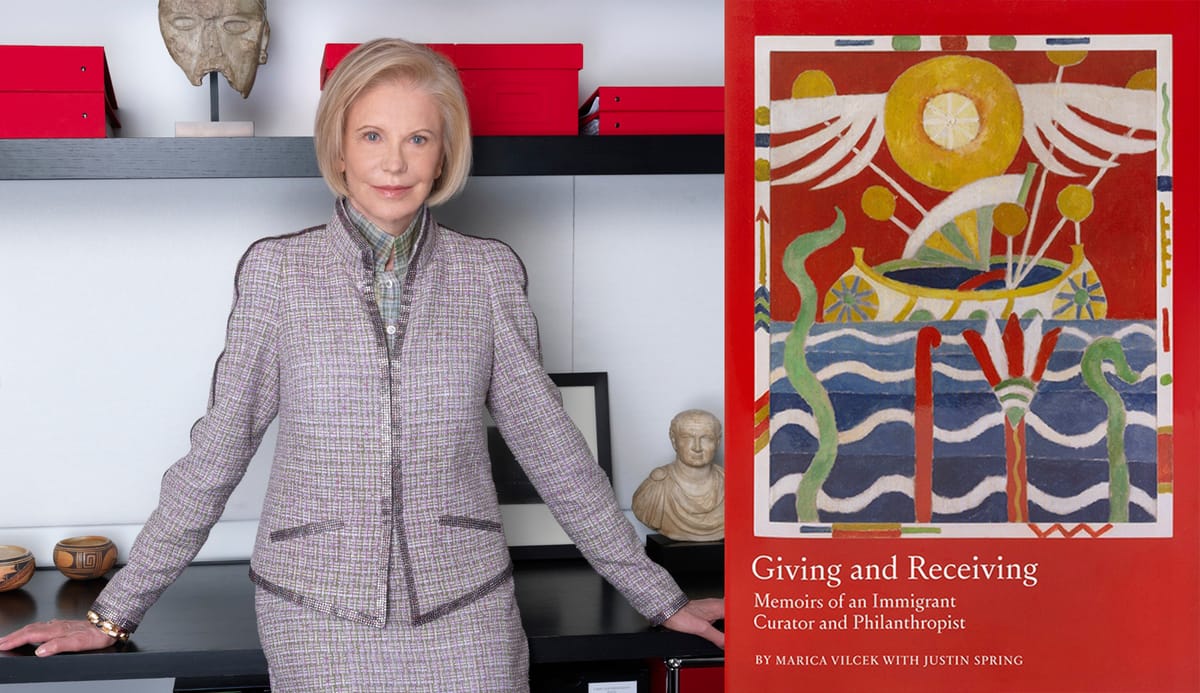
"My general view here," the CBS News editor-in-chief wrote in a memo before shelving the now-infamous 60 Minutes report on El Salvador's CECOT concentration camp, "is that we do our viewers the best service by presenting them with the full context they need to assess the story. In other words, I believe we need to do more reporting here." Expediency, personal prerogative, servility to power, all smuggled under the cover of journalistic scruple:
Media industry
Science
fromwww.theguardian.com
1 month agoA World Appears by Michael Pollan review a kaleidoscopic exploration of consciousness
Machine metaphors limit understanding of consciousness; plants and other organisms display complex, cognitive-like behaviors that call for broader, non-mechanistic frameworks.
Television
fromWashingtonian - The website that Washington lives by.
1 month ago"Survivor" Star Stephen Fishbach's Novel Pulls Back the Curtain on Reality TV - Washingtonian
Escape! uses Survivor experience and television-industry insight to explore reality-TV redemption and power dynamics among eight contestants stranded for a million-dollar prize.
fromThe New Yorker
1 month agoBriefly Noted Book Reviews
This devastating début novel takes the form of an oral history about a tragedy that shatters a family. At its heart is a couple who arrived in the U.S. in the late nineteen-nineties as refugees from Afghanistan. They prospered, and brought up four children in an affluent suburb in Virginia. Rotating testimonies from people they know-family friends, a cousin, lawyers-offer theories about what led to the novel's central catastrophe.
Books
fromThe Atlantic
2 months agoICE Is Turning Real Conflict Into Viral Content
Going back to Renee Good, the idea that there was an ICE agent that was filming while involved in this life-or-death-you know, supposedly for him-situation, right? You're claiming that, but at the same time you're using your phone to document this.
US politics
Books
fromwww.theguardian.com
2 months ago'How do you really tell the truth about this moment?': George Saunders on ghosts, mortality and Trump's America
Ghost stories are used to explore mortality, memories, and ethical legacy, forcing characters to confront past actions and discover more truthful perspective.
fromPublishersWeekly.com
1 month agoWI2026: PW Talks with Xochitl Gonzalez
In addition to writing fiction, you're a staff writer for the and a screenwriter. How do you think of your career? I think of myself as a storyteller. I'm nosy, so once I'm telling a story, I want to know what happens. I do find, with fiction, I can't toggle in and out of it. It's like acting, where you have to stay with that character, in that world.
Books
fromThe Atlantic
2 months agoBring Back Moral Fiction
It was once commonly understood that fiction was in the wisdom business, that it offered not only aesthetic pleasure but also moral improvement. This function of literature was not tough to spot. One of the first English novels was Samuel Richardson's 1740 work, Pamela: Or, Virtue Rewarded-a title not meant ironically. Through the 19th century, many authors turned directly to the reader with philosophical and social (if sometimes ironic) commentary: "It is a truth universally acknowledged"; "It was the best of times"; "All happy families are alike." For readers not up to the challenge of full George Eliot novels, her enterprising publisher compiled a volume of Eliot's many Wise, Witty, and Tender Sayings, in order to more broadly distribute "a morality as pure as it is impassioned."
Books
fromThe Atlantic
2 months agoLess 'Lolita,' More Late-Stage Capitalism
Whatever you might think you're going to get from the familiar setup of Jennette McCurdy's Half His Age (a lonely high-school girl in Anchorage begins an extremely questionable sexual relationship with her teacher), any presumptions are dispelled from the very first page. When Waldo, the teenage narrator of the novel, observes her boyfriend's "slimy tongue that loop-de-loops over and over like a carnival ride, mechanical and passionless," she's setting a tone: irreverent, graphic, bilious.
Books
[ Load more ]