#middle-east-intervention
#middle-east-intervention
[ follow ]
#iran #ceasefire #israel #lebanon #us-iran-relations #strait-of-hormuz #diplomacy #hezbollah #negotiations
#iran
World news
fromLondon Business News | Londonlovesbusiness.com
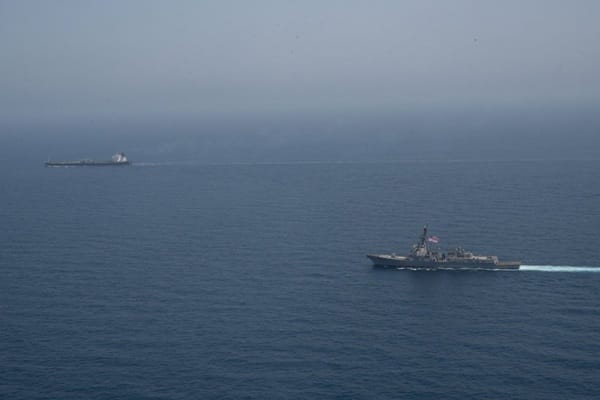
16 hours agoUS intercepts Iranian vessel in Arabian Sea as maritime tensions escalate - London Business News | Londonlovesbusiness.com
The U.S. intercepted an Iranian vessel in the Arabian Sea, escalating maritime tensions linked to sanctions and energy flow conflicts.




#middle-east

fromThe Conversation
2 days ago'Just war' has guided Catholic thinking on conflict for centuries - including criticism of Iran war
Historically, the conversation about a war's justness began by asking whether a responsible sovereign had declared it. Today, some just war scholars argue only the United Nations holds this authority, since the U.N. charter forbids the use of force against another nation except for self-defense.
Philosophy



fromwww.npr.org
2 weeks agoIn Syria, instability allowed ISIS fighters to flee camps, but many of their families still detained
"I'm struggling a lot. I'm really scared for my situation, for my son's situation as well. I'm just very desperate to get out of here." Hoda Muthana, one of three American women in the camp, highlights the dire conditions and her fears.
US news
fromwww.aljazeera.com
3 days agoHow Iran war has triggered soaring cost of medicines
Pharmacists have noted a spike in the price of medicines and contraceptives like condoms, as a result of the war. In the United Kingdom, pharmacies are charging 20 to 30 percent more for over-the-counter medicines, and the common painkiller paracetamol has more than quadrupled in price.
World politics
fromwww.npr.org
1 month agoAs overseas terrorists regroup, is the Iran war increasing danger in the U.S.?
Increasingly we are seeing less indicators of large-scale organized, complex threats or attacks, and instead [have seen] efforts focused on individuals either who have been radicalized by Islamist propaganda and may not have ever had contact with ISIS or al-Qaida, for example; and others who have had contact, of which we are able to have more indications of.
Right-wing politics
#iran-conflict
World politics
fromThe Walrus
1 month agoHow Will the Iran War End? Even Trump May Not Really Know | The Walrus
Trump's stated justifications for Iran conflict are contradictory, ranging from nuclear weapons to regime change to imminent threats, with supporters attributing this to strategic unpredictability while critics question the coherence of policy.
fromThe New Yorker
1 month agoWhy Iran's Allies Have Yet to Join the War Effort
The Houthis, a Zaydi Shiite Islamist rebel group, which the U.S. has designated as a foreign terrorist organization, are among Iran's most powerful and resilient allies. They are a key part of the so-called Axis of Resistance, an informal Iran-led military coalition in the Middle East. During his speech, al-Houthi suggested that the Houthis were ready to lend military support to Iran: 'We are fully prepared for any necessary developments,' he said.
World politics
fromwww.aljazeera.com
1 month agoAttacks from all sides: Why Iraq was dragged into US-Israel war on Iran
Within hours of the United States-Israeli attacks on Iran, US assets in Iraq's Kurdistan region came under retaliatory attacks from Tehran-backed groups, dragging the country into the conflict that has since expanded across the Middle East and beyond. Since then, US assets located in Iraq have come under multiple attacks from pro-Iran groups and Iran's powerful Revolutionary Guard Corps (IGRC).
World news
World news
fromwww.theguardian.com
1 month agoMiddle East in flames': what the papers say about the war on Iran
US and Israeli attacks on Iran and Ayatollah Ali Khamenei's death dominated global media with divided international reactions ranging from criticism of recklessness to support for bold action.
World news
fromThe Washington Post
1 month agoThreat from Iran conflict spreads across Middle East in 72 hours
A coordinated U.S.-Israeli strike on Iran triggered rapid regional escalation affecting over 300 million civilians across more than a dozen nations within 72 hours, spreading far beyond original military targets.
[ Load more ]