#samson-ezeiruaku
#samson-ezeiruaku
[ follow ]
#contemporary-art #art-exhibition #art #cultural-heritage #community #brazilian-art #painting #creativity
#art
fromIrish Independent
4 weeks agoArts
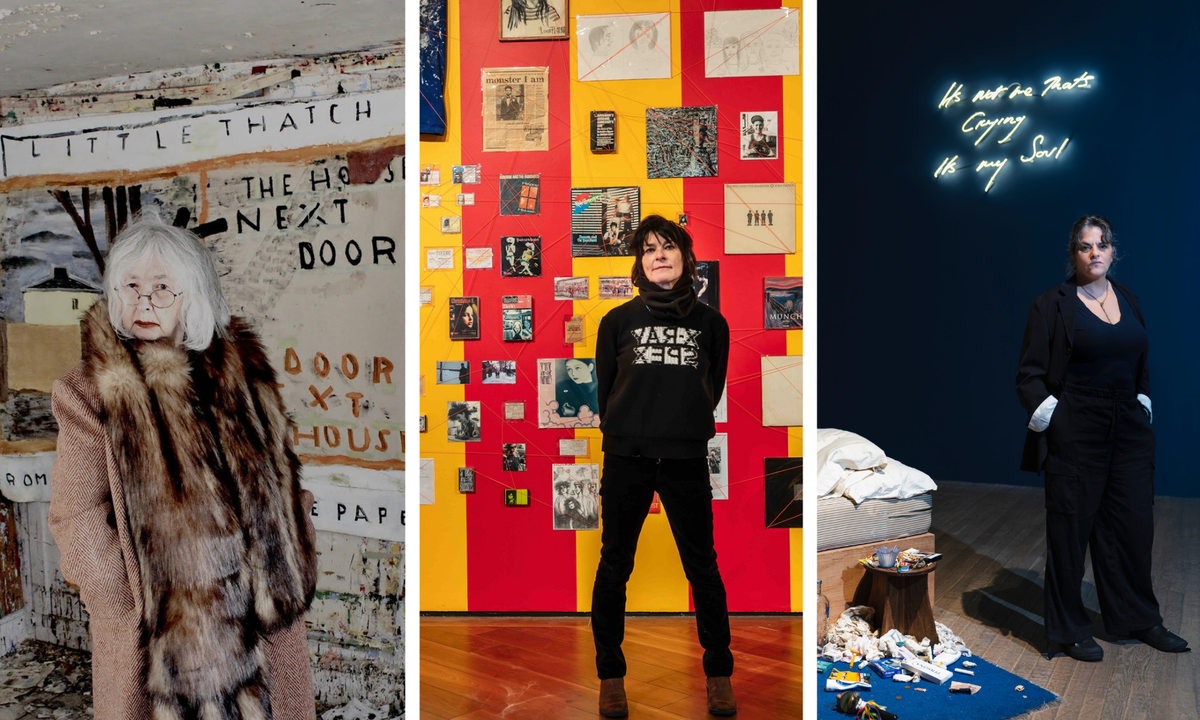
'You have to step in and experience it' - artists on the rise of AI-generated art and the 'essential' gallery visit
Miriam Fitzgerald Juskova's exhibit combines paper quilling with mathematics, showcasing intricate art that engages viewers and emphasizes the value of handmade creations.
Arts
fromIrish Independent
4 weeks ago'You have to step in and experience it' - artists on the rise of AI-generated art and the 'essential' gallery visit
Miriam Fitzgerald Juskova's exhibit combines paper quilling with mathematics, showcasing intricate art that engages viewers and emphasizes the value of handmade creations.
fromwww.theguardian.com
2 days agoStreet culture is about revolution': Brazilian hip-hop' painter Paulo Nimer Pjota
Paulo Nimer Pjota describes his artistic process as akin to a hip-hop producer, sampling imagery and motifs from diverse sources, including ancient civilizations and Brazilian folklore.
Arts
fromArchDaily
1 month agoThe First Pan-African Biennale Establishes a Platform for a Decolonized, African-Led Architectural Future
The inaugural edition is organized around the central theme "Shifting the Center: From Fragility to Resilience," reclaiming African architecture's place as a site of spatial intelligence and cultural memory.
Renovation
#african-diaspora


Social justice
fromCN Traveller
1 month ago"Black excellence is everywhere, Black connection is not": Inside the event designed to connect, unite and inspire Black thinkers
The Diaspora Salon in Marrakech convenes African and diaspora intellectuals, artists, and entrepreneurs to discuss culture, power, and economic futures across multiple disciplines.
fromThe Art Newspaper - International art news and events
1 month agoZurich's Museum Rietberg transfers 11 Benin Bronzes to Nigerian government
A commemorative bronze head, from around 1850, is a representation of the ancestor of a chief and would have been placed in the king's ancestral shrine.
Berlin
fromBOOOOOOOM!
1 month agoIllustrator Spotlight: Cezar Berje
Cezar Berje's visual approach is a mix of chaos-vibrant colours, symbols, and new age psychedelia. His illustrations often suggest universes within universes, with each part of the image telling its own story through symbols and references.
Graphic design

Fashion & style
fromKALTBLUT Magazine
2 months agoBackstage at Orange Culture Fall/Winter 2026 - Backyards of Memory - KALTBLUT Magazine
Orange Culture's FW26 'Backyards of Memory' revisits childhood nostalgia through gender-fluid, sculptural designs that honor memory, warmth, and resilience after loss.
Miscellaneous
fromdesignboom | architecture & design magazine
1 month agoinspired by the japanese engawa, a new installation opens at accra's limbo museum
Limbo Museum in Accra opens an architectural installation reinterpreting the Japanese engawa concept using woven structures from salvaged billboard material within an unfinished concrete frame.
fromThe Art Newspaper - International art news and events
1 month agoBritish artist Simon Fujiwara tackles Guernica, syphilis and the death of a Japanese pornstar in Luxembourg survey exhibition
This depicts Guernica after the battle. The figures are no longer fighting. They're in a giant pile. They're exhausted and there's a sunrise on a new day behind them. The title of the work is A Whole New World (for Who?). It's asking what's going to happen after the conflicts that we have. Who's going to be taken into that new world?
Arts
Arts
fromThe Art Newspaper - International art news and events
1 month agoGullah artist Sam Doyle's narrative portraits stand out Outsider Art Fair in New York
Sam Doyle's paintings at the Outsider Art Fair showcase his unique cultural narratives and artistic style, reflecting Gullah heritage and significant historical figures.
fromColossal
2 months agoRegina Silveira Pieces Together an Evolving Narrative of Latin America
Regina Silveira has spent the better part of three decades considering the relationship between media and meaning, particularly as it relates to Latin America. First presented in 1997, "To Be Continued..." features 100 black-and-white reproductions of photos, newspaper clippings, propaganda, advertisements, and more. Silveira nests each image into an oversized puzzle piece, which cuts off faces and scenes to leave fragments of pop culture icons, flora and fauna, and even the occasional mugshot spliced next to one another.
Arts
Arts
fromThe Art Newspaper - International art news and events
2 months agoMore than 600 works by Afro-Brazilian artists returned to Brazil
A voluntary repatriation returned 666 Afro-Brazilian works from Detroit to Muncab in Salvador, marking Brazil's largest cultural repatriation and a symbolic act of reparation.
fromHyperallergic
2 months agoKoyo Kouoh's Final Show
Each artist functions almost as a musical key signature of their own, which together 'refuse the orchestral bombast and goose-step military marches and come alive in the quiet tones, the lower frequencies.' That description comes from Rasha Salti, one of the exhibition advisors who spoke at yesterday's announcement of the roster. It's an apt invitation to think of curation as an act of composition, with Kouoh's vision singing at every turn.
Arts
fromThe Art Newspaper - International art news and events
2 months agoEnzo fair is fun and fee-free
After hearing gallerists' complaints about the rising cost of fair participation, he says he began planning Enzo last summer with the goal of creating a low-cost, collegial environment. "There's no build-out, there's no division, there are no walls," he says. "It feels almost like one presentation amongst nine galleries I really love."
Arts
fromArtnet News
1 month agoLudovic Nkoth on Painting the 'Emotional Texture of Everyday Scenarios'
Stars under the border began with a simple image of people resting together in an open field, but that idea quickly expanded into something more complex, both visually and formally. I kept thinking about aspiration: how it persists beneath systems that try to define or limit us. The title suggests this tension. Stars suggest hope or possibilities existing in an endless veil of darkness, while a border implies a sense of limitation and separation.
Arts
fromColossal
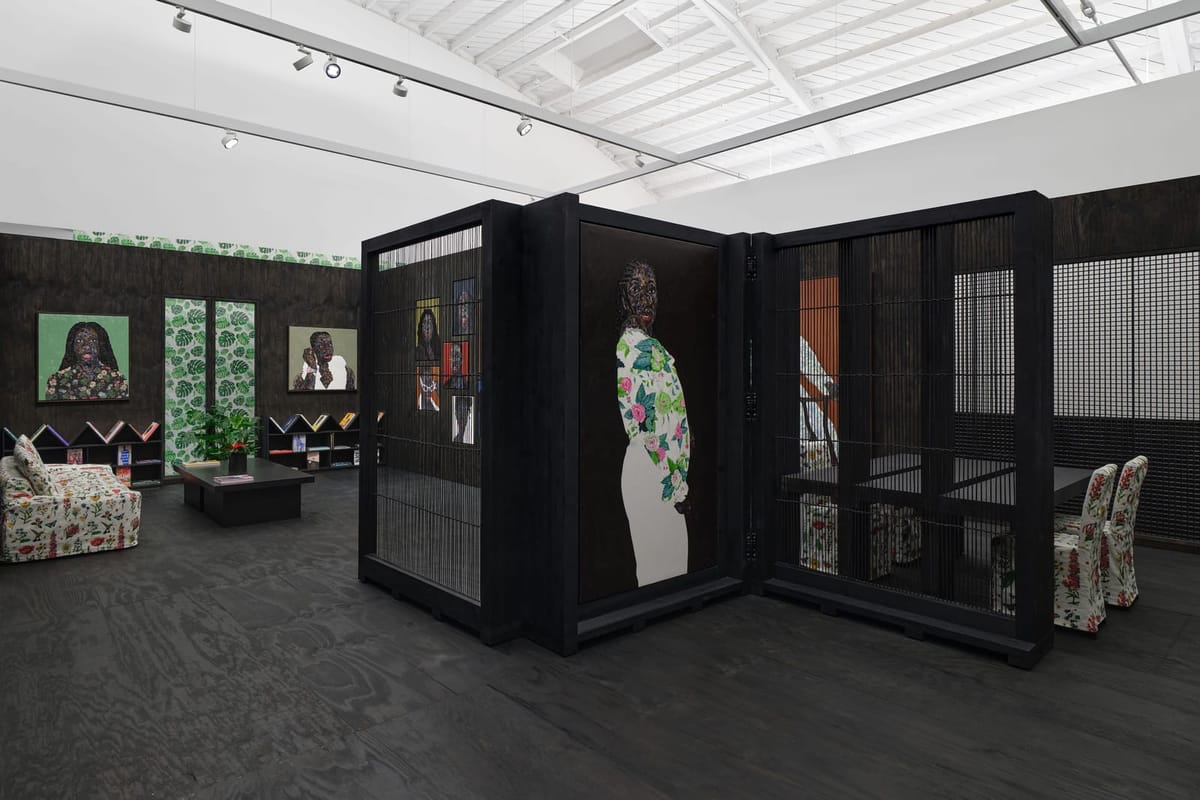
2 months agoAmoako Boafo Weaves His Portraiture into an Architectural Replica of His Accra Studio
Although this truism is typically offered as a negative, it can also be read as a positive that provides comfort and stability amid new environments. In I Bring Home with Me, Ghanaian artist Amoako Boafo recreates his Accra studio in an architectural reproduction within Roberts Projects ' Los Angeles gallery. Boafo is known for his stylized portraiture of Black people, whose skin the artist renders in swirling gestures made with his fingers.
Arts
fromHyperallergic
2 months agoDavid Driskell's Gifts to Black Art
Driskell started collecting in 1955 after taking a position as an art professor at Talladega College. As he explained in a 2017 lecture at the Whitney Museum of American Art, he put aside a small budget for art each year from his beginning salary of $3,000.
Arts
fromJuxtapoz
2 months agoJuxtapoz Magazine - Misfits: Daniel Nunez Explores a New Freedom @ GR Gallery, New York
"The four large-scale canvases that constitute the core of ' Misfits' maintain the fundamental elements of the artist's visual lexicon while radically reconfiguring compositional structure and spatial organization. These works advance a design freedom that is simultaneously forceful and controlled, achieving a balance between expressive intensity and formal restraint. As such, the series marks a decisive moment in Nuñez artistic evolution and possibly an initial step toward a more profound and transformative reorientation of his practice."
Arts
fromFuncheap
2 months agoEva Lake: Free Art Opening Reception (Foreign Cinema)
Modernism is pleased to present its second exhibition of collages by Eva Lake. In Relics of Beauty, striking images are constructed from an array of art history and archaeology photography paired with pop-culture imagery of 20th-century women. The result is a body of work that rewrites the historical record with softness and femininity, and challenges the pervasive societal notions surrounding beauty.
Arts
fromThe Mercury News
2 months agoSan Jose artist brings wind, light to bear in her paintings
Artist Ayelet Gal-On does not just paint; she builds, layering oil, acrylic and plaster on canvas. Gal-On's signature subjects for "Taken by the Wind, Swept by the Light," her upcoming solo exhibition at Gallery 9 in Los Altos, are white dresses that appear to hang on a line, defying the stillness of the canvas. "I love the process of playing with color," says the artist.
Arts
fromColossal
2 months agoTraditional African Baskets and Pottery Meet Pop Culture in Donte K. Hayes' Sculptures
Redolent of African basketry, hairstyles, headwear, and pottery, Donté K. Hayes ' abstract ceramic sculptures may be interpreted as poetic vessels, even though they lack traditional openings. While we easily associate clay pots and round woven forms with ideas related to storage, protection, and even spiritual significance, they also nod to the human head as a holder-a kind of receptacle for culture, language, personal expression, and dreams.
Arts
[ Load more ]