Printed signs get reprinted every week, while full LCD signage burns power all day just to show a static promo. E-ink has quietly solved this in e-readers by holding text without sipping battery, but it has not shown up in everyday public spaces where signs still get taped to shelves. Samsung's new 13-inch Color E-Paper is a panel that tries to live in that middle ground, digital enough to update remotely, quiet enough to blend in.
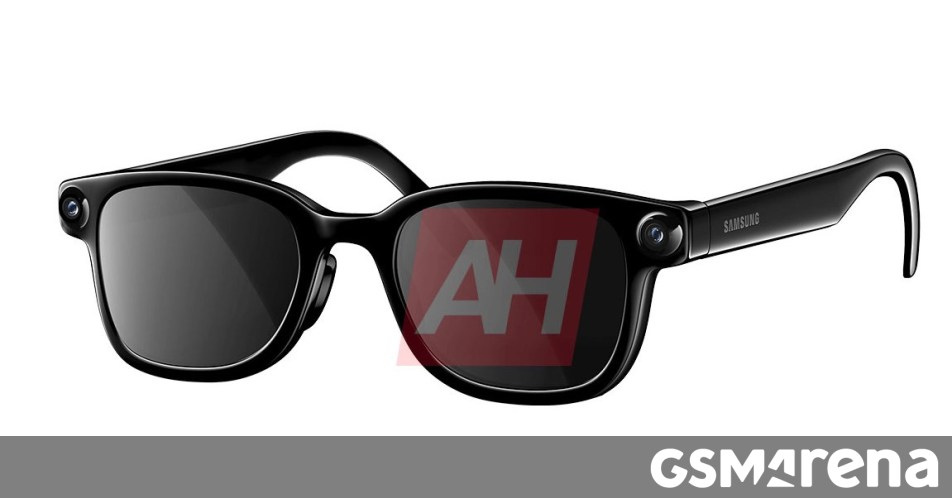
Samsung has long been rumoured to be developing several smart wearable devices of various form factors. During a recent earnings call, a company official announced the South Korean tech conglomerate's plans to launch the next-generation augmented reality (AR) glasses in 2026. While Samsung has yet to reveal exactly what its AR glasses will offer, they are confirmed to support multimodal artificial intelligence (AI) capabilities. This development builds upon Samsung's previously announced partnership with global eyewear brands Gentle Monster and Warby Parker for its AI glasses.
In this case, we're talking about the Milano Cortina 2026 Winter Olympics, taking place from February 4 to February 22. As usual with these devices, Samsung will gift one to each athlete who is competing, almost 3,800 in total from approximately 90 countries. So it's a very limited edition - look out for these on eBay soon, as that's where most of them usually end up.
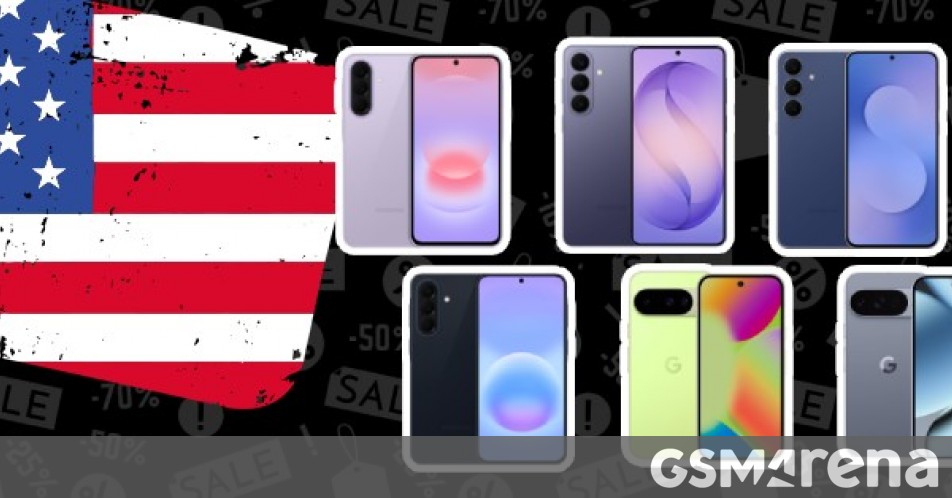
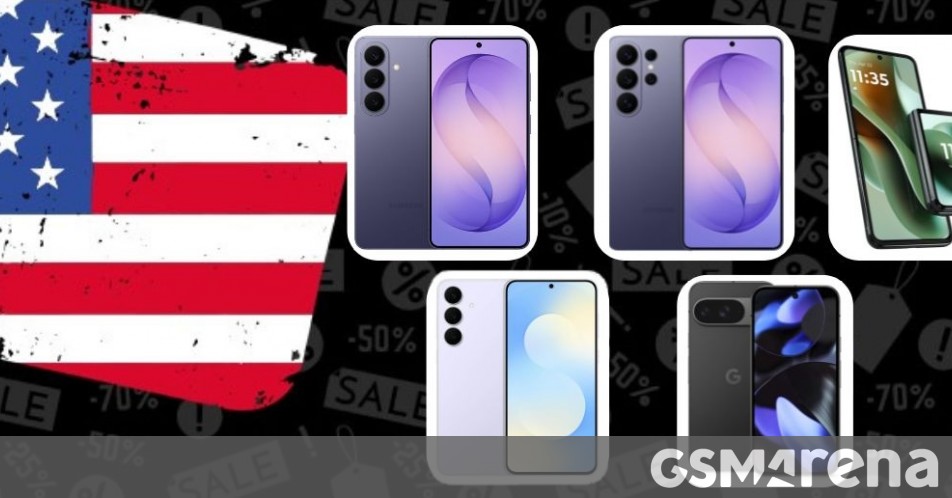
Smartphone shipments have been falling for the last nine months in the U.S. The concerning trend has affected the majority of smartphone manufacturers. But despite the downturn, phone makers are optimistic for a few valid reasons. The US smartphone market shrunk by 24 percent year-over-year in Q2 this year. Let's look at how the leading smartphone manufacturers have fared, and how they are trying to wade through the uncertain times.
The increasing demand for AI among tech companies is one of the reasons why the global shortage of memory chips remains an ongoing issue. And while it's expected to adversely affect the production of smartphones, Samsung Electronics co-CEO T M Roh has warned that TVs and home appliances may also be hit by shortages and increased prices. "As this situation is unprecedented, no company is immune to its impact," said Roh via Reuters.
On smart TVs, ACR can capture hundreds of images of what's on your screen each minute, whether that content originates from the TV's built-in apps or a connected device like a dedicated streaming box or game console. The screenshots are sent to your TV's manufacturer, who can use the data gathered to target ads on your TV, or sell the data to other ad providers to target ads on other platforms.
Like its minimalist Music Studio speakers or new Micro RGB TVs. We did get a closer look a previously undisclosed set, a flagship 130-inch Micro RGB TV framed by a giant metal easel with embedded speakers. It's one of the most striking sets we've ever seen, but it's much more in the realm of concept than reality. (That's not to say they won't sell it, just that we've heard no plans and if they do it will be hideously expensive.)
The Music Studio Series comprises the Music Studio 7 (LS70H) and the Music Studio 5 (LS50H). The Music Studio 7 is the premium and immersive model, equipped with a 3.1.1-channel spatial audio speaker configuration, featuring left, center, right, and upfiring speakers. According to Samsung, this speaker features an AI-powered Dynamic Bass Control, which minimizes distortion, and is compatible with audio playback at up to 24-bit/96kHz resolution. The Music Studio 7 can also connect to Wi-Fi-compatible Samsung soundbars and TVs, acting as rear speakers.
The photography setup is also unchanged from last year's model, with a 50MP main camera, 5MP ultrawide, 2MP macro and 13MP selfie lenses. The base model has 4GB of RAM and 128GB of storage, but can be upgraded with up to 2TB of additional storage via microSD. Its 5,000mAh battery also supports fast-charging, a feature we're happy to see becoming more of an industry standard this year.
For years, Samsung has made products that try to camouflage what they are by displaying works of art. The Frame TV is the most famous example, but the company also released the Music Frame, a speaker disguised as a picture frame, at last year's CES. Now, instead of hiding a speaker with a piece of art, Samsung worked with designer Erwan Bouroullec to make a speaker into a piece of art.
As a reminder, Micro RGB is a unique new technology similar to Mini LED displays. Unlike the white backlights used on Mini LEDs, though, it uses tiny red, green and blue LEDs that produce more accurate colors and offer smaller and more controllable dimming zones. However, because pixels can't be turned on and off individually like Micro LED or OLED, Micro RGB contrast ratios aren't as high. They promise to be brighter and more color accurate than other technologies, though, hence the high prices and "premium" branding.
Through December 19, exclusive club members will receive a curated home entertainment bundle tailored for significant annual events, including five premium TVs with Samsung's advanced image technology, plus a full suite of premium audio gear to complete the experience. You'll get a 98-inch Smart TV that's ideal for football viewing in February, a portable projector for cozy October movie nights, and so much more.
Samsung has announced a partnership with India's food delivery platform Swiggy's Instamart, a "10 Mins Grocery App," for quick delivery of its Galaxy devices in India. Swiggy, through Instamart, has been delivering Samsung (and other brands') smartphones in India since March. However, with this partnership, Samsung will be able to make its Galaxy-branded devices more accessible to customers by leveraging Swiggy's delivery network.
Now, a fresh leak reveals the possible launch timeline of the Galaxy Watch Ultra 2. It is likely to debut alongside the Galaxy Watch 9. The existing Galaxy Watch Ultra model features a 1.5-inch circular Super AMOLED display and a 47mm titanium case. It has an IP68 rating for dust and water resistance, as well as a MIL-STD 810H durability certification.
Global shipments for foldable smartphones were up 14% in Q3 2025, reaching record quarterly levels, and Samsung was the undisputed leader with an estimated 64% share of all shipments for the quarter. The latest report from Counterpoint Research estimates that Samsung's Galaxy Z Fold7 and Z Flip7 were the best sellers, which helped the Korean brand extend its lead. Samsung's Q3 performance represents a 32% rise in global foldable shipments compared to the same period last year.
The 512GB capacity holds about 100,000 photos, 80 hours of 4K video or 150 full console games, depending on file sizes. You can load your entire photo library onto it, download Netflix shows to watch on flights, and install dozens of Switch games without constantly juggling what stays and what goes. Considering modern smartphone cameras capture massive RAW files and 4K video that chew through storage in a blink, this much space is necessary rather than excessive.
A prototype A77 has been spotted in the Geekbench online database, with 8GB of RAM, Android 16 on board, and a mystery chipset that's related to Samsung's Exynos 2400 and 2400e but based on the CPU clock configuration, is lower-end than both of those. This SoC has a CPU with three Prime cores clocked at up to 2.78GHz, three performance cores clocked at up to 2.3GHz, and four efficiency cores clocked at up to 1.82GHz. So it's still deca-core like the Exynos 2400 and 2400e, but its CPU clocks are lower than what we've seen in both of those.
Global investors are focusing on Samsung Electronics as the group sets out a five-year artificial intelligence investment programme worth $310 billion over the coming five-year period, with analysis from Sunnov Investment Pte. Ltd. highlighting how the plan reshapes expectations for capital spending across the semiconductor industry. The commitment concentrates on AI specific semiconductors and on domestic manufacturing capacity in South Korea.
DDR5 isn't normally associated with AI accelerators. Those typically employ GDDR or HBM, which trade capacity for the higher bandwidth required for those workloads. However, the systems into which these accelerators are deployed do use DRR5 for the system memory to feed the CPU and to store intermediary data, like the key value caches used to prolong a model's short-term memory over extended periods.
Samsung is looking to launch a credit card in the US, reports The Wall Street Journal. The card will be a partnership between Samsung and British bank Barclays and it will use Visa as the payment network. This is clearly intended to compete with the Apple Card that rival Apple offers. That one is backed by Goldman Sachs and Mastercard (though we hear that Goldman Sachs wants out).
The AI5 chip is Tesla's next-generation hardware chip for its self-driving program, Optimus humanoid robots, and other AI-driven features in both vehicles and other applications. It will be the successor to the current AI4, previously known as Hardware 4, which is currently utilized in Tesla's newest vehicles. AI5 is specially optimized for Tesla use, as it will work alongside the company's Neural Networks to focus on real-time inference to make safe and logical decisions during operation.
By early November, anyone in the U.S. who owns a Family Hub fridge with a 21.5″ or 32″ screen will start seeing the ads, even if they bought the appliance well before the news was announced. Commenters on Reddit and Tiktok are reacting with outraged shock to the concept of their kitchens becoming the next venue for the performance of late-stage capitalism, and for good reason.
Nvidia CEO Jensen Huang has gone from a little-known tech executive to a globally famous AI superstar very, very fast - and one photo from his trip to South Korea this week shows it. During the trip - which coincides with President Donald Trump's meeting with China's leader, Xi Jinping - Huang did what many businesspeople do on trips and met some contacts for dinner.