#sub-200
#sub-200
[ follow ]
#athletics #olympics #speed-skating #800m #training #winter-olympics #injury-prevention #sports-technology #running
fromAlternative Medicine Magazine
3 days agoWhat You Do After Training Matters More Than You Think
After a tough workout, your body enters a state of stress: muscle fibers are damaged, energy stores are depleted, and hydration levels drop. This is a critical moment. If your body gets the right nutrients, it starts rebuilding immediately. If not, recovery slows down, and so does progress.
Alternative medicine




fromwww.bbc.com
2 weeks ago'I still hold the record, but Max Dowman is some player'
The record nearly got beaten this week by Max and records are there to be broken. How he took his goal was quite amazing - the balance, the feet, the composure and the strength. So, I may have the record, but he's going be some player.
Arsenal
fromSnowBrains
1 month agoIt's Time to Stop Debating & Start Putting the Bar Down - SnowBrains
I have evolved from someone who didn't think much of the bar except for resting my legs to thinking of it as an obvious life-saving precaution. Dr. Bourne shared several examples from Mammoth in which the bar could have saved lives, including the death of her former ski coach, who fell from a chairlift to his death, most likely from a medical event which may have been treatable.
Snowboarding
fromwww.theguardian.com
2 weeks agoThe one medal I don't have': confident Keely Hodgkinson targets a first world title
Yeah, training's gone really well. I'm very happy with where I am. As you get into an indoor season and you start racing and running faster and the reps get shorter and the recovery gets longer, I think you just naturally come into even more shape, which is obviously really exciting.
Skiing
fromIndependent
2 weeks agoDerval O'Rourke: 'I don't ever think I need to be managed, but I did need to be minded'
Derval O'Rourke recently saw the trailer for the new Rory McIlroy documentary about his Masters victory and there's a line in it about last year being his 17th attempt to win the green jacket.
Running
fromBuzzFeed
1 month ago19 Athletes In Their First Olympic Games, Last Olympic Games, And Now
ICYMI: The 2026 Winter Olympics are currently underway in Milano Cortina. From the "Quad God" to all the athletes winning gold, there has been a ton of buzz around this year's games. And while we watch history happen, let's take a walk down memory lane and see how fan-favorite Olympians have transformed over the years: 1. To start, Michael Phelps made his first Olympic appearance at the 2000 Summer Games in Sydney, Australia, when he was just 15 years old:
World news
fromThe Atlantic
1 month agoWhat Pressure Does to an Athlete's Body
Those of us who watch the Olympics as bystanders tend to smugly judge athletes for succumbing to pressure without understanding what we even mean by the term. The first thing to know about pressure is that it has actual physical properties. Feeling it is not a sign of a too-thin veneer of character. Pressure might as well be a snakebite, given its very real qualities in the bloodstream and how it can paralyze even the strongest legs. The way to deal with pressure, and become
Science
fromiRunFar
3 weeks ago2026 IAU 50k World Championships Results: British Sweep for Alex Milne and Naomi Robinson
Although the 4 a.m. start allowed athletes to avoid the worst of the heat and pollution levels, the air quality index was 178 at the start time, a level that is considered unhealthy, and the temperature hovered near 21 degrees Celsius (70 degrees Fahrenheit). The combination made for challenging conditions from the start.
Running
fromwww.mercurynews.com
1 month agoJadin O'Brien's path: A track star gets a message, and winds up part of the US Olympic bobsled team
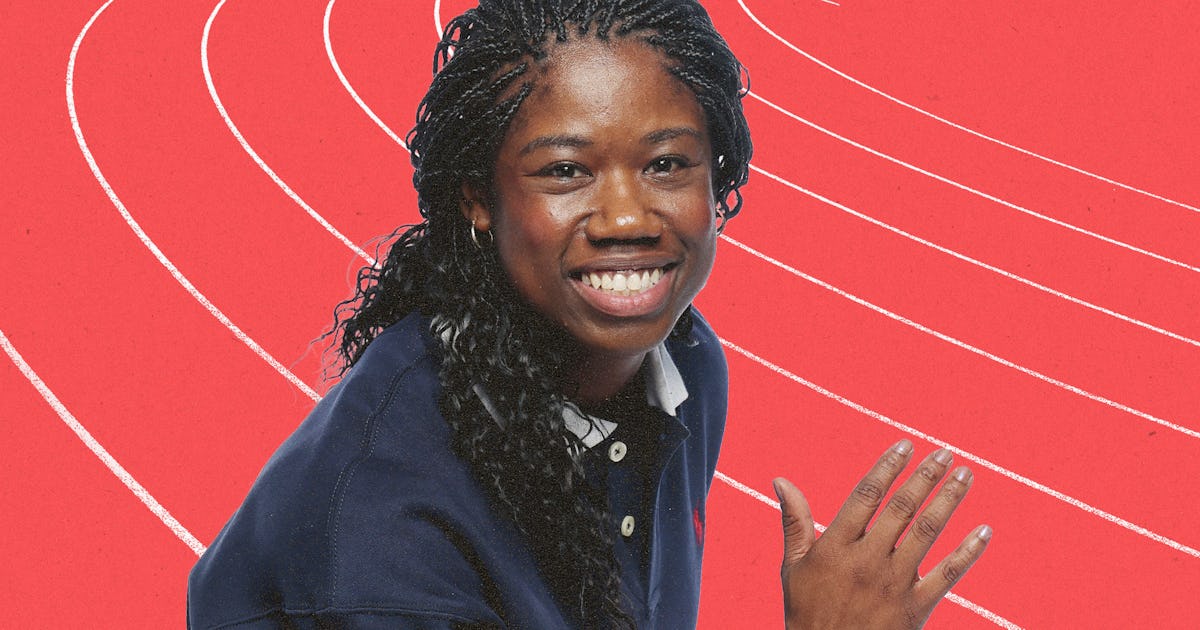
Jadin O'Brien thought she was being scammed. The Milan Cortina Olympics and the sport of bobsled, for that matter were not anywhere near O'Brien's radar a couple years ago, when the Notre Dame track and field star saw that someone sent her a direct message on Instagram. The message was ignored. Several months later, the same person slid into O'Brien's DMs again.
US news

Running
fromiRunFar
3 weeks agoMany Small Leaps for Runnerkind: Wondering About Non-Linear Improvement in Running
Runners experience breakthrough moments where performance suddenly improves, often after returning to regular training or during consistent improvement phases, driven by accumulated physiological adaptations.
fromPsychology Today
1 month agoTips From a Psychologist Who Trains Olympic Athletes
If you're watching the Olympics this year, or have watched in the past, you've probably wondered how the top athletes in the world bolster themselves emotionally for high- stress situations, being exposed and visible to millions of viewers in difficult moments, and how they deal with failure and defeat and become resilient. Dr. Cindra Kamphoff, whose MD-level background in sports psychology, two decades of work with professional and Olympic athletics, and The High Performance Mindset podcast, has developed techniques that are helpful to people inside or outside of the sports arena.
Mental health
fromiRunFar
3 weeks agoAI-Powered Optimization: New Frontiers in Peak Running Performance
Super shoes and ultralight gear make a difference, but with new advancements in artificial intelligence (AI) that can look at our running form and compare it to the ideal, analyze our nutrition intake from a simple photo and help us plan our diets, and offer guidance on training and recovery, the interwovenness of technology and running is only set to increase.
Running
World news
fromwww.mercurynews.com
2 months agoHigh-speed chaos on ice: What to know about short track speedskating at the Winter Olympics
Arianna Fontana, the most decorated short-track speedskater, will aim for more Olympic medals at Milan Cortina; short track features group races, protections, and frequent collisions.
fromSnowBrains
2 months agoThe Top 9 Fastest Winter Olympic Events - SnowBrains
The events of the Winter Olympic Games range from the elegance of figure skating to the high-stakes adrenaline of events such as skeleton and downhill Skiing. Whether competitors brave vertical drops of the alpine slopes or the claustrophobic, icy chutes of the sliding track, these competitors turn these already dangerous tracks into the fastest arenas on Earth. In these events, the difference between gold and a catastrophic crash is extremely minute and at speeds that would earn a speeding ticket on most roadways.
Snowboarding
fromStrength Running
1 month agoCross Training and Running: How to Add Other Sports to Your Training - Strength Running
Cross training and running go together like peanut butter and jelly. If you build it into your schedule intentionally, strategically, and with a clear understanding of what you're trying to accomplish, you'll thrive. Megan makes the case that cross-training serves runners for several distinct reasons, and the right reason for you will shape how you approach it.
Running
fromwww.npr.org
1 month agoOlympic athletes push their bodies to the limit. Should we?
"We have a golden retriever, and so I walk her three or four miles a day, and I do a weight training class twice a week," says Brown, 62, of Arlington, Va. She knows muscle mass will decline without regular strength training. "We have a fun group with a personal trainer and we call ourselves the Beastie Girls," she says, describing how her group helps her stick with it. She also plays tennis and golf.
US news
fromIndependent
2 months ago'He thought that if it worked for a fighter pilot, it might work for a football player as well'
In 2017, Bjorn Mannsverk's phone rang. A year before, what was meant to be a special 100th anniversary for Bodo/Glimt ended in heartbreak as the Norwegian club were relegated from the top flight. A fresh approach was needed to get the club back on track. Having been stationed in Bodo before in his role as a fighter pilot with the Royal Norwegian Air Force, Mannsverk was familiar with the town, but not the football club.
Soccer (FIFA)
#enhanced-games
Running
fromESPN.com
1 month agoOlympic swimmer Hunter Armstrong to compete in Enhanced Games
Olympic swimmer Hunter Armstrong plans to compete in the Enhanced Games while maintaining eligibility for the 2028 Los Angeles Olympics, testing boundaries between traditional and performance-enhancing drug-friendly competition.
Running
fromESPN.com
1 month agoOlympic swimmer Hunter Armstrong to compete in Enhanced Games
Olympic swimmer Hunter Armstrong plans to compete in the Enhanced Games while maintaining eligibility for the 2028 Los Angeles Olympics, testing boundaries between traditional and performance-enhancing drug-friendly competition.
Skiing
fromBusiness Insider
1 month agoI'm a 2-time Olympic freeski medalist. I don't drink coffee or scroll between runs.
Olympic freestyle skier Alex Hall maintains a disciplined daily routine centered on early waking, shared team meals, and consistent training while traveling globally for competitions.


fromInsideHook
2 months agoWhat's the Point of Chasing a Plank PR?
It's just what it looks like: I time my planks then file them away, determined to last a little longer tomorrow. And sometimes I do, for several days in a row, then one day I'll collapse nearly a minute short of my personal best. I'll pound the mat like Charlton Heston at the end of Planet of the Apes, then I'll get myself together - you've got to stay cool at Equinox - and move on with my day.
Exercise
fromWIRED
1 month agoAI, Fancy Footwear, and All the Other Gear Powering Olympic Bobsledding
Men's four-person bobsledding made its Olympic debut in Chamonix, France, in 1924; women's two-person bobsledding didn't enter the Games until 2002 in Salt Lake City. Women's monobob arrived in 2022. While the earliest bobsleds were made of wood, the sport has been synonymous with steel for years, although in recent decades it has been replaced by carbon fiber, which provides greater lightness and strength.
Science
fromwww.mercurynews.com
2 months agoGlitter, grit and the 50-km grind: What to know about cross-country skiing at the Winter Olympics
Cross-country skiing, the rugged grandfather of snow competition, will give its brightest stars a defining stage at the Milan Cortina Winter Games. Sporting greats such as Jessie Diggins of the United States and Italy's own Federico Pellegrino arrive at the Feb. 622 Games still in form but nearing the end of their careers. A cornerstone winter event, cross-country skiing traces its roots to centuries-old Nordic traditions and is considered one of the purest tests of endurance.
Skiing
fromwww.theguardian.com
2 months agoFrom scrums to the slopes: how rugby's life lessons have helped hone Team GB's Winter Olympians
The most humbling thing is being at the top of the run with the Paralympic team, who are mostly visually impaired, and they just disappear into the distance while I'm still putting my boots on. As performance director of GB Snowsport, nevertheless, Myall's job is to give the nation's talented crop of snowboarders, freestyle, alpine and mogul skiers a decisive edge when the Games commence in Milan next week.
Skiing
fromScience of Running
1 month agoFit and Fast: Achieving Robustness in Training
In this episode of the On Coaching Podcast, Steve Magness and Jon Marcus discuss the concept of 'fit but flat,' exploring the phenomenon where athletes excel in metabolic fitness but fail to perform competitively due to a lack of neuromuscular coordination. Using examples like middle-distance runner Ingram Brion, the hosts delve into how metabolic training alone can lead to race failures.
Running
fromScience of Running
9 months agoNCAA Track Champs: Key Takeaways for Racing and Training
In this episode of the On Coaching podcast, hosts Steve Magness and John Marcus dive deep into the insights and lessons from the recent NCAA Championships. They highlight key performances, such as record-breaking steeple chases and tactical 1500 meters races, and discuss the evolving dynamics of modern racing, including the impact of super shoes. Additionally, they emphasize the importance of mental preparation, holistic athlete development, and how coaches can foster environments that encourage risk-taking and peak performances.
Running
Running
fromLos Angeles Times
1 month agoPrep talk: Servite sprinters ready to compete at winter track championships
Arcadia High's California winter championships will showcase emerging high school sprint talent including Servite sprinters, sophomores Jace and Jorden Wells, Jaelen Hunter, and Ejam Yohannes.
[ Load more ]