#supply-chain-resilience
#supply-chain-resilience
[ follow ]
London startup
fromLondon Business News | Londonlovesbusiness.com
1 month agoHow UK manufacturers can build supply chain resilience in uncertain times - London Business News | Londonlovesbusiness.com
Supply chain resilience requires real-time visibility and diversified suppliers across multiple geographic locations to quickly recover from disruptions.
#critical-minerals
fromBusiness Insider
6 months agoUS politics
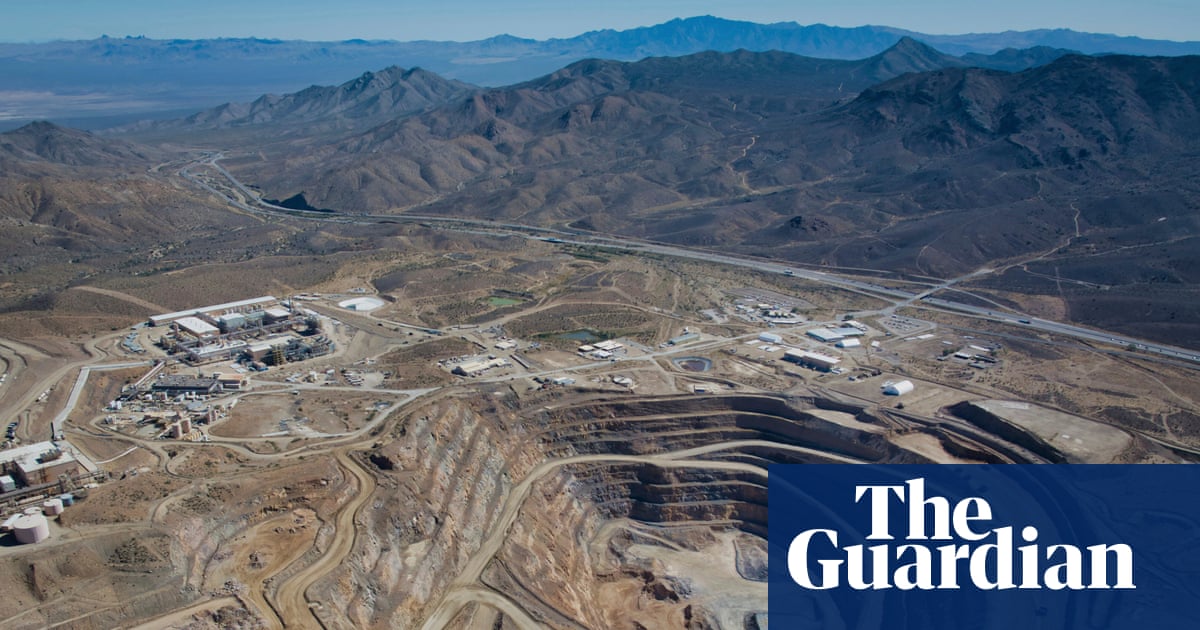
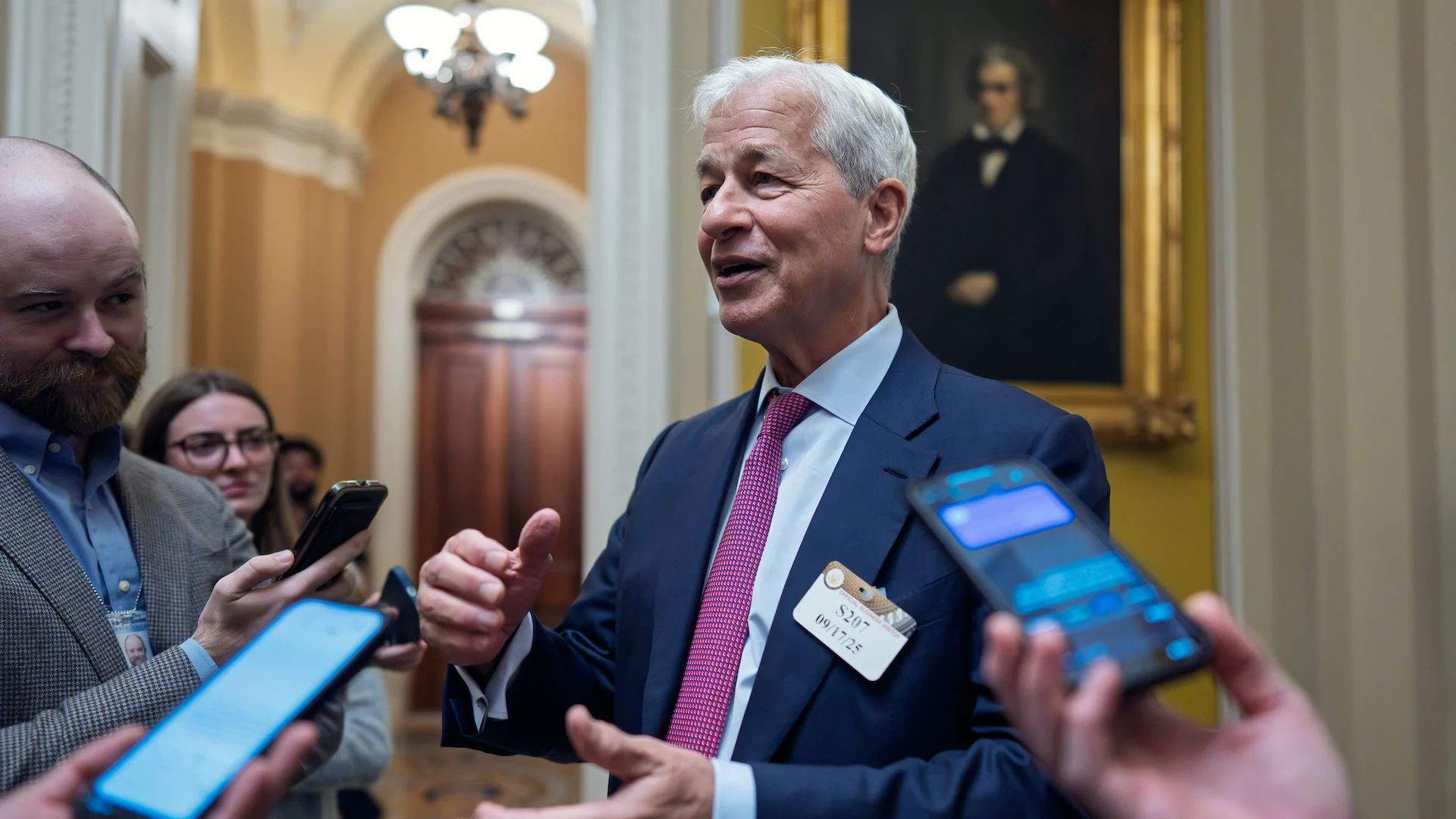
'We need to act now': Jamie Dimon warns the US is too reliant on 'unreliable sources' as JPMorgan launches huge investment plan
The United States must reduce reliance on foreign suppliers of critical minerals, products, and manufacturing to protect economic and national security.
World politics
fromFortune
1 month agoCritical minerals demand snowballed to $2.5 trillion last year and could triple by 2030, UN projects | Fortune
Critical mineral demand could triple by 2030 and quadruple by 2040, driven by digital economy and energy transition needs, with 2023 mineral trade reaching $2.5 trillion.
fromCornell Chronicle
1 month agoNYCST grants boost New York state space tech industry | Cornell Chronicle
As global competition in space accelerates, New York is mobilizing its premier research institutions through NYCST to address workforce shortages, close capability gaps and mature the critical technologies our nation needs. For decades, our state has been a home to innovative aerospace companies. Through NYCST, we are now aligning that heritage with our top-tier research institutions to ensure that industry can develop and scale up breakthrough technologies right here in New York.
Science
Europe news
fromFortune
1 month agoThe Iran war is giving rise to a centuries-old economic theory-and laying waste to the WTO-based world order | Fortune
Global trade is shifting from efficiency-driven globalization to mercantilism, prioritizing national security and friend-shoring over free trade principles.
World politics
fromwww.theguardian.com
1 month agoCanadian PM Mark Carney offers to team up with Australia as strategic cousins' to push back against dominant superpowers
Canada and Australia should collaborate as strategic partners on critical minerals, defence, and trade rather than compete, leveraging their combined 34% of global lithium and significant uranium and iron ore reserves.
fromFortune
1 month agoThe Iran war could accelerate the rise of the 'poly-national' company | Fortune
To stay ahead in a world that's shifted from globalization to national interests, companies must 'operate as a network of businesses with a U.S. center, but a local face.' This variation of strategy has long been deployed by consumer-facing global giants like Coca-Cola and Procter & Gamble, which prioritize global experience in leaders and connect strong regional operations.
World politics
Europe politics
fromTheregister
1 month agoEurope's EV battery cost gap with China could shrink to 30%
Europe's EV battery cost gap with China could narrow from 90% to 30% by 2030 through proper government support, factory scaling, and manufacturing improvements, requiring a €500 sovereignty premium per vehicle.
from24/7 Wall St.
2 months ago5 Top 2026 Stock Picks Are Companies Backed by Massive US Government Stakes
In recent years, particularly under the current administration as of early 2026, the U.S. government has shifted toward some direct equity investments and partnerships in strategic private companies, often framed as efforts to bolster national security, reduce reliance on foreign supply chains (especially from China), and support key industries like semiconductors and critical minerals. This approach has been likened across Wall Street to an informal "American sovereign wealth fund" and has led the government to acquire significant stakes in certain publicly traded firms.
US politics
Environment
fromLondon Business News | Londonlovesbusiness.com
2 months agoWhy London's boardrooms are taking a hard look at cleaning chemicals - London Business News | Londonlovesbusiness.com
London organisations are shifting cleaning-chemical procurement from lowest-cost buying to compliant, traceable, and bespoke formulations driven by ESG and regulatory risk.
fromBusiness Matters
2 months agoA Practical View from the Shop Floor: A Conversation with Ihab Abou Letaif
Ihab Abou Letaif is a business professional with experience in retail operations and consumer goods. His work focuses on how businesses operate day-to-day, especially in complex, high-pressure markets. He is known for a practical and disciplined approach to management. His career has been shaped by hands-on roles in operations, finance, and business development. He has worked closely with store performance, inventory control, and supply chain coordination. This has given him a clear view of how small decisions affect margins, cash flow, and long-term stability.
Business
fromBusiness Matters
3 months agoSmall defence firms to get easier access to MoD contracts under new growth unit
Small British defence companies are set to gain easier access to Ministry of Defence contracts after the government launched a dedicated unit to simplify procurement and boost spending with smaller suppliers. The Ministry of Defence has unveiled the Defence Office for Small Business Growth, a new service designed to cut through what ministers describe as labyrinthine procurement processes that have historically shut small and medium-sized enterprises (SMEs) out of the defence market.
UK news
US politics
fromwww.theguardian.com
3 months agoThe crisis whisperer: how Adam Tooze makes sense of our bewildering age
Former Biden officials defended supply-chain resilience and worker-centered trade while Adam Tooze offered critical, global-finance perspective amid Trump's early 2025 policy rollback.
Environment
fromHarvard Business Review
4 months agoFor Circular Economy Innovation, Look to the Global South
Corporate circular economy strategies focus on incremental product and operational improvements, overlooking transformative grassroots innovations that enable waste reduction, supply chain resilience, and social leadership.
fromLondon Business News | Londonlovesbusiness.com
4 months agoFive lessons 2025 has taught business leaders so far - London Business News | Londonlovesbusiness.com
I began the year with a blunt reality check: leadership today is forged in public, under pressure, and in real time. With Donald Trump already installed as US president for his second term, markets have moved faster than at any point in my career, reacting not to speculation but to executive action, rhetoric, and resolve. The first lesson this year has burned itself into my thinking: certainty beats comfort.
Business
fromLondon Business News | Londonlovesbusiness.com
5 months agoPreparing your business for seasonal peaks - London Business News | Londonlovesbusiness.com
The more accurately you can predict the demand for your services, the better your position will be when the demand actually arrives. This is particularly important in the case of perishable goods that need to be sold before the season ends. For example, if you're selling turkeys for Christmas, you'll need to take orders early on. Strengthen your supply chain before peak hits
Business

fromFortune
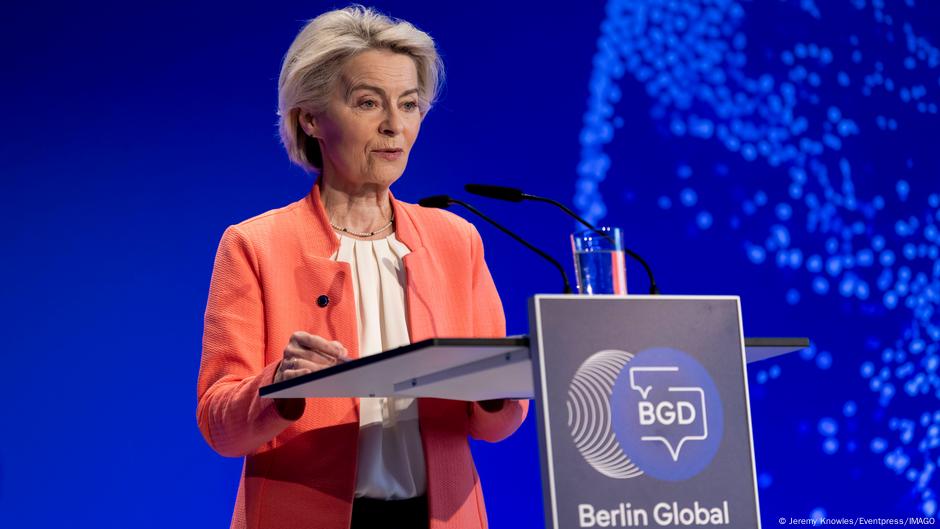
5 months agoThe U.S. aims to breathe easy amid China's chokehold on rare earths, but loosening the grip takes years of concerted effort | Fortune
The watershed moment came in July when the federal government became the largest shareholder of MP Materials, a California miner of rare earth elements for the oft-overlooked but critical magnets that help connect the global economy. The government's unusual foray into private industry was accompanied by new rules setting minimum U.S. market prices for some of these materials-a pricing floor it said was necessary to protect MP Materials from Chinese competitors it accused of "dumping" their goods at artificially low prices.
US politics
World news
fromFortune
6 months agoSaudi Arabia's minister of investment on Vision 2030 and the world's search for reliable partners | Fortune
Saudi Vision 2030 advances global collaboration and supply-chain resilience amid tectonic geopolitical and technological shifts, positioning Saudi Arabia as a long-term trusted partner.
Environment
fromLondon Business News | Londonlovesbusiness.com
7 months agoUrgent action needed by retailers to prevent further nature and biodiversity loss - London Business News | Londonlovesbusiness.com
Retailers must urgently address accelerating nature and biodiversity loss to avoid jeopardising supply chain resilience by setting targets and actionable, data-led strategies.
Agriculture
fromComputerWeekly.com
7 months agoDigital Catapult sets sights on boosting AI take-up in agrifood sector | Computer Weekly
Digital Catapult runs a 14-week AI-first accelerator for nine startups solving agrifood challenges like dairy forecasting, disease detection, emissions reporting, and habitat monitoring.
fromBusiness Insider
7 months agoAI is helping General Motors to avoid expensive supply chain interruptions like hurricanes and material shortages
When Hurricane Helene barreled through North Carolina in September 2024, General Motors' artificial intelligence system had already predicted that one of its key suppliers, Auria Solutions, would take a direct hit. The automotive acoustics and textiles company manufactures carpets for General Motors' full-size SUVs - like the Chevy Tahoe and Suburban, GMC Yukon, and Cadillac Escalade - at its plant in North Carolina. When the storm pummeled the town, the factory lost water and power, but General Motors was prepared for the production-halting damage.
Artificial intelligence
[ Load more ]