#urban-revitalization
#urban-revitalization
[ follow ]
#community-development #architecture #public-art #san-jose #adaptive-reuse #affordable-housing #public-space
Silicon Valley real estate
fromtherealdeal.com
1 month agoGubernatorial hopeful Mahan hits LA with plan to incentivize private sector on resi development
San Jose Mayor Matt Mahan prioritizes homelessness solutions and developer incentives for residential projects while running for governor, advocating for pragmatic sequential action over performative politics.
Boston food
fromBoston.com
1 month agoIn a region desperate for fresh retail, Bow Market is 'a total unicorn situation.' Why?
Bow Market transformed a vacant garage into a thriving entrepreneurial hub with over two dozen vendors and minimal vacancy, demonstrating successful adaptive reuse of underutilized urban space.
fromwww.archdaily.com
1 month agoPoetry Anthology of Light / P.M.A.Studio
This project involved the reconstruction of a dilapidated building located in Guangzhou's old town along Tongfu Xi Road, a historic street established in 1926. Once vibrant, this area has suffered from significant neglect over the years, with many buildings falling into disrepair, creating safety hazards that forced both residents and businesses to leave.
Renovation
fromIndependent
1 month ago'I've lived in a flat all my married life, I raised my family there. They're all well-adjusted. We love it'
Fionnuala May has lived on Mountjoy Square in Dublin's north inner city for 43 years. That puts her out of step with most Irish people. As a nation, wedded to our cars, we've fallen out of the habit of living in towns, says the president of the Royal Institute of the Architects of Ireland (RIAI) and county architect for Fingal.
Renovation
NYC real estate
fromSpectrumlocalnews
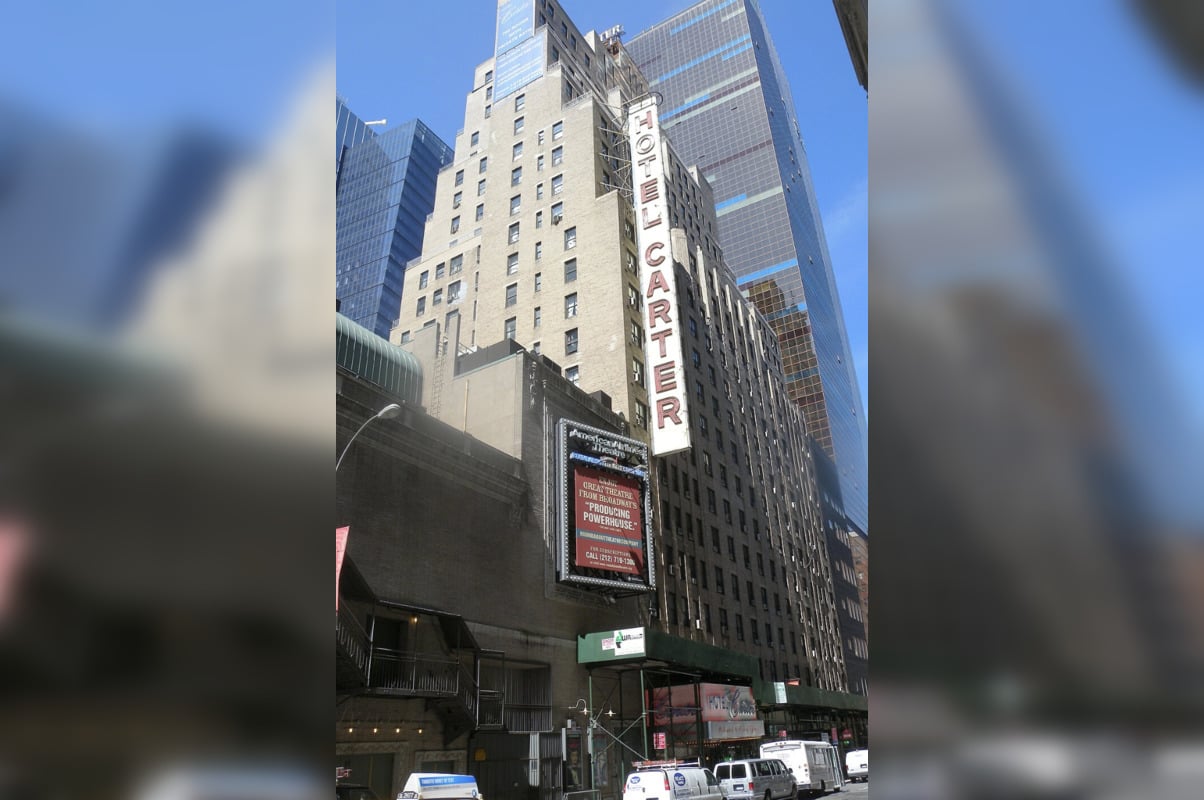
1 month agoNew bill proposes vacant buildings be converted into apartments
New York state legislation proposes a 10% tax credit to convert vacant office buildings into residential housing, addressing high downtown vacancy rates and housing shortages in upstate cities.
Berlin music
fromArchitectural Digest
11 years agoThe 34 Best Frank Gehry Buildings That Everyone Should Know
Frank Gehry revolutionized contemporary architecture through sculptural, dynamic designs that transform cities economically and culturally, exemplified by the Guggenheim Museum Bilbao and its catalyzing 'Bilbao Effect.'
Portland
fromPortland Mercury
1 month agoYOUR SUNDAY READING LIST: Backtracking Councilors, an Asian Zine Festival, and Cardi B Gives Portland Props!
Portland's Mercury newspaper highlights weekly stories including city council firearms policy debate, downtown revitalization efforts, wildlife conservation funding, and cultural events like the first Asian American Zine Fest.
Real estate
fromLos Angeles Times
23 years agoDowntrodden Downtown Builds a New, Upscale Identity in Ventura
Ventura's downtown is experiencing economic revival through new restaurants, theaters, boutiques, and residential development, transforming from a neglected seaside resort into a prosperous beach town destination.
LA real estate
fromLos Angeles Times
10 years agoNew owners plan $30-million face lift for Promenade at Howard Hughes Center
Laurus Corp. acquired The Promenade at Howard Hughes Center for a $30-million renovation to transform it from a car-centric mall into a pedestrian-friendly destination with enhanced food and entertainment offerings.
fromWashingtonian - The website that Washington lives by.
2 months agoNeighborhood Guide: Where to Eat, Shop, and Play in Silver Spring
In 1840, when Francis Preston Blair and his daughter came across a "mica-flecked" spring near present-day Georgia Avenue, he fell in love with the land and built a summer home there-calling it "Silver Spring" after the minerals he spied in the water. The area boomed as a major retail center after World War II, suffered through a period of decline in the '80s when prominent businesses including Hecht's department store relocated, and enjoyed a rebirth in the aughts after construction of a downtown mall, now called Ellsworth Place.
Washington DC
fromLos Angeles Times
11 years agoWork gets underway on stalled Fig Central complex near L.A. Live
Since purchasing the land last year, Oceanwide has reworked the design for the Fig Central development, adding a third tower in the process. The $1-billion project now consists of two 40-story high-rises and another high-rise at 49 stories. In all, 504 condos, 183 hotel rooms and nearly 450,000 square feet of retail space are planned.
LA real estate
Arts
fromTravel + Leisure
2 months agoI've Lived in Las Vegas for 3 Years, and This Is the Neighborhood Tourists Often Miss-and Why You Shouldn't
The Arts District is a walkable, creative Las Vegas neighborhood with galleries, vintage shops, restaurants, and repurposed buildings offering local culture distinct from the Strip.
fromThe Mercury News
2 months agoOpinion: Decline of Oakland's crown jewel Jack London Square due to poor management
Jack London Square should be Oakland's crown jewel: a waterfront district where people come to walk, eat, gather and feel the city's energy. It has the views, the history, the ferry access and a setting most cities would envy. And yet it's slipping - badly. Jack London Square is declining because it's being managed without urgency and allowed to drift into neglect.
East Bay real estate
Brooklyn
fromBrooklyn Paper
2 months agoLight, sound and street life collide in new Fulton Mall art installation through March 16 * Brooklyn Paper
A sound-driven light installation animates the former Macy's windows on Fulton Street, translating neighborhood noises into shifting colors to enliven Downtown Brooklyn evenings.
San Francisco
fromsfist.com
3 months agoSF Crypto Baron and Political Megadonor Kicks Down $5 Million to Revitalize Tenderloin's Larkin Street
Chris Larsen donated $5 million to revitalize Larkin Street with decorative backlit security gates, improved lighting, daily pressure-washing, and expanded street ambassador teams.


fromFast Company
3 months agoTop architects reveal their dream projects for 2026
The dream project for me isn't a skyline object or spectacle, it's a long-life system -a project whose structure is reused, materials are upgraded and recycled rather than replaced, and performance improves over time. Where sustainable strategies aren't hidden in basements, or rooftops, but become part of the architectural experience. A dream project would be an urban district reimagined, edited with a scalpel (rather than a sledgehammer) with its declining building stock given a new life through subtle upgrades, modest interventions, and attention to craft and building performance.
Remodel
Travel
fromTravel + Leisure
3 months agoThis Midwestern College Town Is One of the Best Places to Live and Retire-How to Visit
South Bend transformed from decline to revival, earning national recognition and offering attractions like the University of Notre Dame, revitalized downtown, and growing tourism.
fromArtforum
3 months agoA Tale of Two Cities
SINCE THE MID-1990s, unsheltered Brazilians, known as the sem teto,or roofless, have organized to seize abandoned buildings and transform them into rudimentary housing. São Paulo, the most populous city in the Americas, has become the symbolic epicenter of this housing struggle, if only for the cruel irony of having more vacant dwellings than unsheltered people. In its center, from which the well-to-do have long decamped,
Social justice
fromwww.sandiegouniontribune.com
3 months agoTijuana's most famous street is now partly closed to vehicles, creating a pedestrian plaza
For decades, Avenida Revolucion in Tijuana was a bustling tourist zone, attracting U.S. visitors with its colorful souvenir shops, restaurants and nightlife. But at some point, popular interest in the historic district faded. State and city officials have been trying to revitalize the area for some time to attract more tourists, with hopes of making it a place locals want to hang out, too. The latest move involves closing off a few blocks to vehicles to make way for a pedestrian promenade.
Miscellaneous
fromwww.archdaily.com
4 months agoCenter Rog Renovation and Creative Center / Mendoza Partida + BAX studio
Ana Skobe + 16 Category: Renovation, Cultural Center Collaborators: Saso Badovinac, Olga Bombac, German Bosch, Grega Cerar, Oscar Espinosa, Jure Kolenc, Carlos Parra, Damian Plouganou, Bor Pungersc Client: Ayuntamiento de Liubliana
Renovation
fromThe Art Newspaper - International art news and events
4 months agoMiami Advice: Karina Ors on Bayfront Park, an urban oasis designed by Noguchi
When the legendary sculptor Isamu Noguchi was tapped to redesign a blighted public park in Miami, he conceived of the project as a village green-a place where the community would gather with purpose, rather than just a manicured lawn. Originally built in 1925 after three years of construction, the park had fallen into complete disrepair by the time Noguchi was approached.
Arts

fromwww.theguardian.com
5 months agoIt's unexpected joy': the guerrilla mosaic artists adding colour to potholes, benches and bomb craters
Our cities are full of grey tower blocks built for efficiency rather than aesthetics. Public benches are made of cheap concrete, pavements are falling apart, old structures are left derelict. Amid this backdrop of unloved, muted ugliness, a new wave of guerrilla mosaicists are enlivening their cities with beautiful, colourful designs. These artists rarely get official sign-off for their work.
Arts
fromMetro Silicon Valley | Silicon Valley's Leading Weekly
5 months agoPopups and The Art of the Un-Deal
Having recently passed the midpoint of a defining decade, we're just becoming aware of The Great Reordering's cascading collective traumas. The retail experience transitioned from shopping bags to cardboard boxes. Campuses with movie nights, lecture series, gyms and celebrity chefs were swallowed by Zoom meetings. Empty offices hollowed our cities and flattened urban social culture. Countervailing dynamics inevitably come into play, and the oversupply of commercial space has one silver lining.
Silicon Valley real estate
Travel
fromCN Traveller
5 months agoThe Best Places to Go in North America and the Caribbean in 2026
2026 will feature major anniversaries, cultural reinvention, and significant tourism developments across North America, highlighting historic routes, centennial resorts, urban renewal, and deep geological heritage.
fromConde Nast Traveler
5 months agoThe Best Places to Go in North America and the Caribbean in 2026
The year 2026 is going to be a momentous one for the United States as it celebrates its 250th anniversary. Across the country, national parks, historic sites, and cities will gear up to show up-and show off-in ways big and small. Against this backdrop, how does one pick where to visit? Inevitably, we were led by some nostalgia: Route 66, for instance, was an easy one.
US news
New York City
fromTime Out New York
5 months agoThe city will turn this 34th Street parking lot on the East River into a public space with an outdoor gym
A former 34th Street parking lot will be transformed into a temporary waterfront public open space with ADA-accessible fitness equipment and community amenities by spring 2026.
fromdesignboom | architecture & design magazine
6 months agopreview visit of inaugural hiroshima international architecture festival 2025
designboom visits Japan's inaugural Hiroshima International Architecture Festival 2025, which runs from October 4 to November 30 across the twin cities of Fukuyama and Onomichi. Conceived as a triennial event by the Kambara-Tsuneishi Cultural Foundation, the festival invites 23 architects and artists from Japan and abroad to explore the future of cities and the role of architecture in revitalizing local communities through a series of exhibitions, site-specific installations, and talks.
Design
fromTime Out New York
7 months agoWhy Union Square is one of NYC's buzziest neighborhoods right now
Emerging from the NQRW train at 14th Street, Union Square presents a smorgasbord for the senses. The smell of patchouli sold by street vendors, the stoic silence of people playing chess, the "good luck" and "bad luck" spots drawn in chalk on the sidewalk to navigate. This slice of Manhattan where midtown turns into downtown has been an important area to New Yorkers for decades-and these days, it's one of the most exciting neighborhoods in the city.
New York City
NYC real estate
fromSFGATE
7 months agoCommercial Office Boom Threatens Affordable Apartments: 5 Key Takeaways
Resurgent office demand is undermining office-to-residential conversions, creating uncertainty for projects while targeted conversions could still revitalize downtowns and expand housing supply.
fromwww.archdaily.com
7 months agoLibraries as Urban Acupuncture: Small Interventions, Big Impact in Asia
In traditional Chinese medicine, acupuncture works through strategically placed needles that trigger healing throughout the entire body. Urban planner Jaime Lerner's concept around targeted architectural interventions find success in China as well as neighboring countries in Asia, where localities are revitalized through simple interventions. Libraries, specifically, are bringing in social, cultural, and economic transformation to the continent. Necessity drives innovation. Rapid urbanization, limited public funding, and diverse geographic and cultural contexts have forced architects and communities to think beyond traditional library models.
Remodel
fromSan Jose Spotlight
8 months agoHigh-end downtown San Jose restaurant closes - San Jose Spotlight
"It became obvious with our partners that the level of business was not sustainable," Levine told San José Spotlight. "We tried multiple pivots over the last nine months in terms of dining room layout, menus, etc. and just didn't find a formula that connected with guests."
Real estate
#san-jose

Silicon Valley real estate
fromwww.mercurynews.com
11 months agoSan Jose towers deal leaves notorious real estate empire near collapse
New ownership of the San Jose housing towers provides hope for improvement after years of issues.
Machine Investment Group plans to revitalize the complex amidst a history of mismanagement and problems.

Silicon Valley real estate
fromwww.mercurynews.com
11 months agoSan Jose towers deal leaves notorious real estate empire near collapse
New ownership of the San Jose housing towers provides hope for improvement after years of issues.
Machine Investment Group plans to revitalize the complex amidst a history of mismanagement and problems.
fromdesignboom | architecture & design magazine
9 months agosnhetta & benthem crouwel reveal undulating design for house of culture in the netherlands
"The House of Culture and Governance in Delfzijl will bring together a theater, library, and town hall under one roof, conceived to respond directly to its urban context."
Renovation
fromArchDaily
11 months agoEl Campestre Recreational Park Complex & Community Development Center / CCA Centro de Colaboracion Arquitectonica + Bernardo Quinzanos
The project revitalizes public life in Jalpa de Méndez by transforming and improving key public spaces, fostering community interaction and local economic development.
Renovation

fromArchDaily
11 months agoChina Yellow Sea Wetlands Museum Railway Park / DuShe Architectural Design
The transformation of Yancheng's railway station platform into a municipal park showcases a revolutionary approach, preserving the area's historical structures while integrating modern functions.
Renovation
[ Load more ]