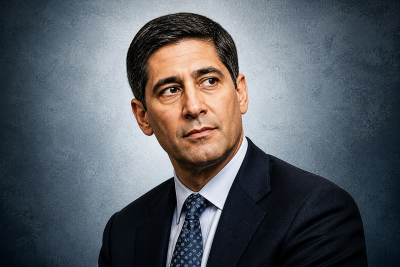
"The S&P 500 has still pushed to fresh highs, powered largely by artificial intelligence spending, resilient consumer demand, and surprisingly durable corporate earnings. Now investors face a different question: What happens when President Donald Trump gets his own Federal Reserve chair? Jerome Powell's term as Fed chair ends Friday, and Trump's nominee, Kevin Warsh, cleared the Senate Banking Committee ahead of an expected confirmation vote this week. Markets are paying close attention because Warsh has repeatedly criticized one of the biggest financial experiments in modern history - the Federal Reserve's massive balance sheet ."
"The Fed's balance sheet exploded during multiple crises. According to Fed data, total assets rose from roughly $900 billion before the 2008 financial crisis to nearly $9 trillion by 2022 after years of quantitative easing, or QE. That's where the Fed creates money electronically and uses it to buy Treasury bonds and mortgage-backed securities. The goal was simple: Lower interest rates; Support lending; Stabilize financial markets; Push investors toward risk assets like stocks."
"And it achieved its goal. Since the March 2009 market bottom, the S&P 500 has returned more than 900%. The Fed wasn't solely responsible, but ultra-loose monetary policy became rocket fuel for asset prices - though critics like Warsh contend it created "asset bubbles." The nominee has argued that easy money went too far. In speeches and interviews, he has criticized the Fed for becoming overly involved in markets and allowing its balance sheet to remain bloated long after emergency conditions faded."
The S&P 500 has climbed to fresh highs despite sticky inflation, elevated interest rates, recession fears, and geopolitical tensions. The advance has been powered by artificial intelligence spending, resilient consumer demand, and durable corporate earnings. A new question centers on what happens if President Donald Trump appoints a Federal Reserve chair. Jerome Powell’s term ends Friday, and Kevin Warsh has cleared the Senate Banking Committee ahead of an expected confirmation vote. Warsh has criticized the Federal Reserve’s massive balance sheet, which expanded sharply during crises and after quantitative easing. The balance sheet grew from about $900 billion before 2008 to nearly $9 trillion by 2022. The Fed created money electronically to buy Treasuries and mortgage-backed securities to lower rates, support lending, stabilize markets, and push investors toward risk assets. The policy helped drive strong stock returns, while critics argue it can contribute to asset bubbles and prolonged bloating after emergencies fade.
Read at 24/7 Wall St.
Unable to calculate read time
Collection
[
|
...
]