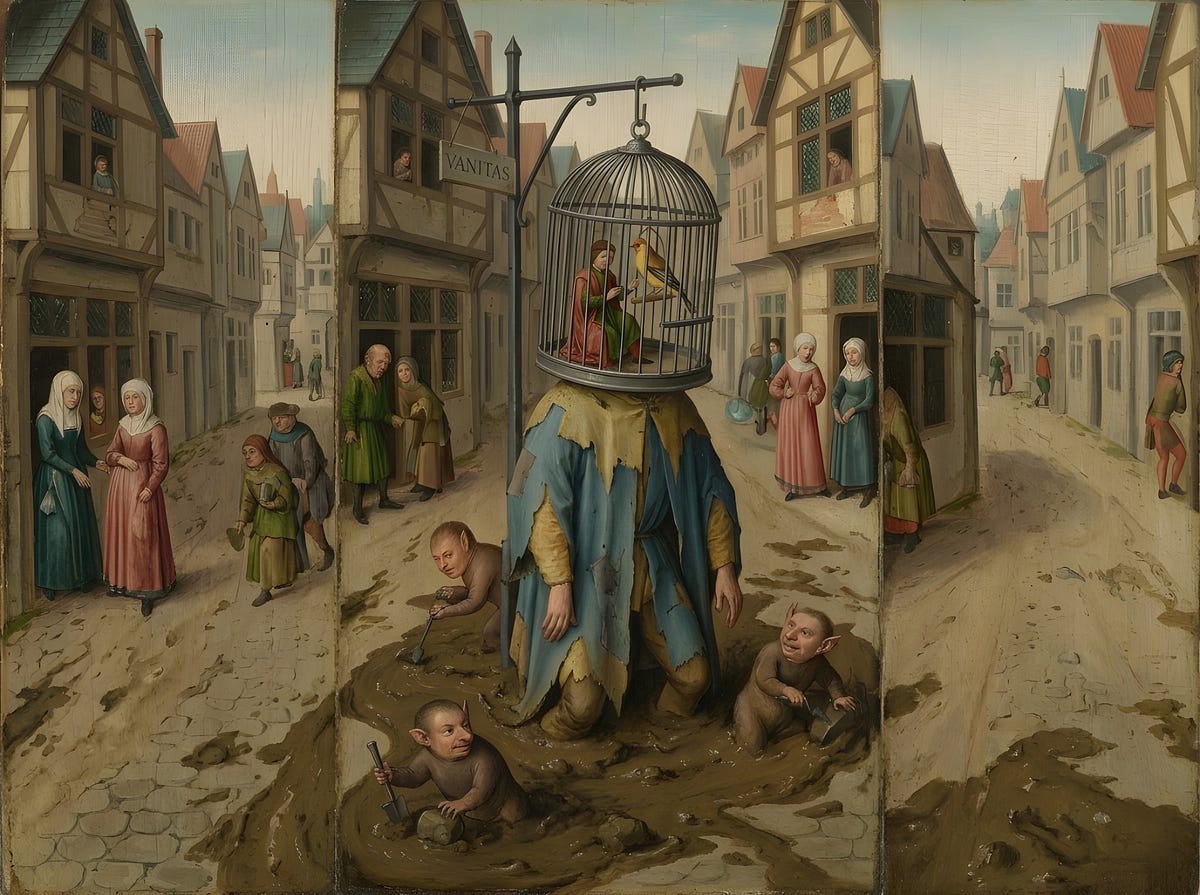
"He was wrong. Not because he was stupid. He was one of the sharpest people I'd spoken to that month. He was wrong because he'd been asked the wrong question, and his instinct, trained by a lifetime of being the person who brings the answer, was to give me one. The smarter your users, the more convincing their wrong answers."
"A user says they want ice cream. While they say they want ice cream, what they need is to cool down. Their body wants sugar. It's hot. There's a memory somewhere in there, a summer ritual, something cold in their hand. The want closes off options. The need opens them. Take "I want ice cream" at face value and you sell them ice cream. Understand the need and you can sell them a popsicle, a cold drink, air conditioning, a swim in the sea."
"Most user research stops at the want. You see it in how teams write jobs-to-be-done. The format is usually something like "when I [situation], I want to [action], so I can [outcome]." Fine in theory. In practice I've seen PMs and designers write things like "when I open the app, I want to be reminded to use my credit card, so I can earn cashback." That isn't a job. It's a feature the PM wanted to build, written in user-voice."
A research session with experienced private-equity clients showed that even highly capable people can be wrong when asked the wrong question. Their instincts, shaped by years of being the person who provides answers, lead them to propose a roadmap rather than reveal what is actually needed. Users often express wants, such as “I want ice cream,” but their underlying need is to cool down. Treating wants as the territory narrows solutions to a single product, while identifying needs expands the range of possible solutions. Many teams stop at wants when writing jobs-to-be-done, turning user statements into feature requests instead of uncovering the real need that drives behavior.
Read at Medium
Unable to calculate read time
Collection
[
|
...
]