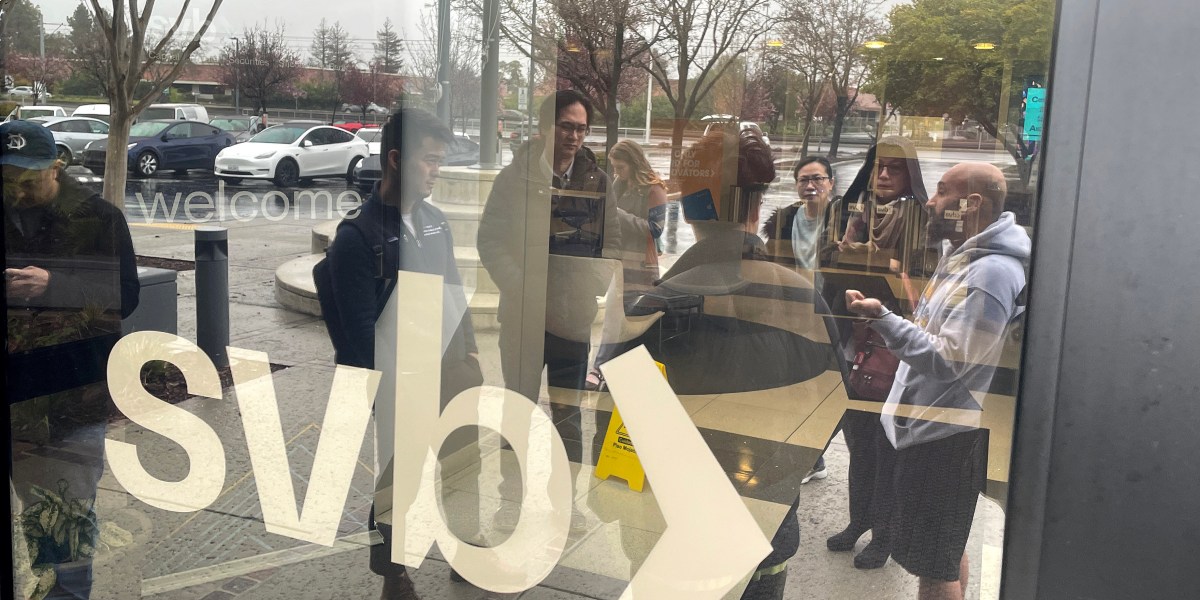
""I've never seen a situation like this change so quickly," says Wettlaufer, partner at the short-selling shop Bleecker Street Research, which opened its short position into SVB in January. Wettlaufer wasn't talking about the events of the last two and a half days-when a bank run ushered the California financial regulator into its offices to close it down not long after SVB said it was raising more than $2 billion in capital through a share sale. No-Wettlaufer was referring to the last two years."
"In 2021, as the venture market soared to new heights, Silicon Valley Bank was flying high. The bank had long sat at the very heart of the private markets as a lender and banker to some half of the industry's startup companies-not to mention as a prominent lender to venture funds, private equity funds, and a wealth manager to rich entrepreneurs. The bank has a fund of funds, investing in the likes of Accel or Sequoia Capital, and it invests directly in startups itself. The bank effectively touches every part of the private markets."
"Riding on low-interest rates at the beginning of the COVID pandemic, startup funding soared to new heights as startups reeled in billions from venture capitalists and VCs raised enormous multi-billion funds. It was all a win for SVB, as many of those startups would park their newly-won funding at Silicon Valley Bank, then draw from it as needed. Venture funds would borrow from SVB as they waited for limited partner dollars to hit the bank. As Silicon Valley Bank required some of those funds to park money as collateral for those loans, SVB was sitting pretty."
"Non-interest-bearing deposits at the bank soared to $126 billion in 2021, nearly double the $67 billion the bank held in 2020."
Silicon Valley Bank operated across private markets as a lender and banker to many startup companies, venture funds, private equity funds, and wealth managers. It also invested through a fund-of-funds and direct startup investments. During low-interest-rate conditions early in the COVID period, venture funding surged, and many startups parked large amounts of newly raised capital at the bank. Venture funds borrowed from the bank while waiting for limited partner dollars, and the bank required collateral deposits for those loans. Non-interest-bearing deposits rose sharply in 2021, reaching $126 billion, nearly double 2020 levels. This deposit base supported the bank’s position until changing conditions created fast-moving liquidity pressure.
Read at Fortune
Unable to calculate read time
Collection
[
|
...
]